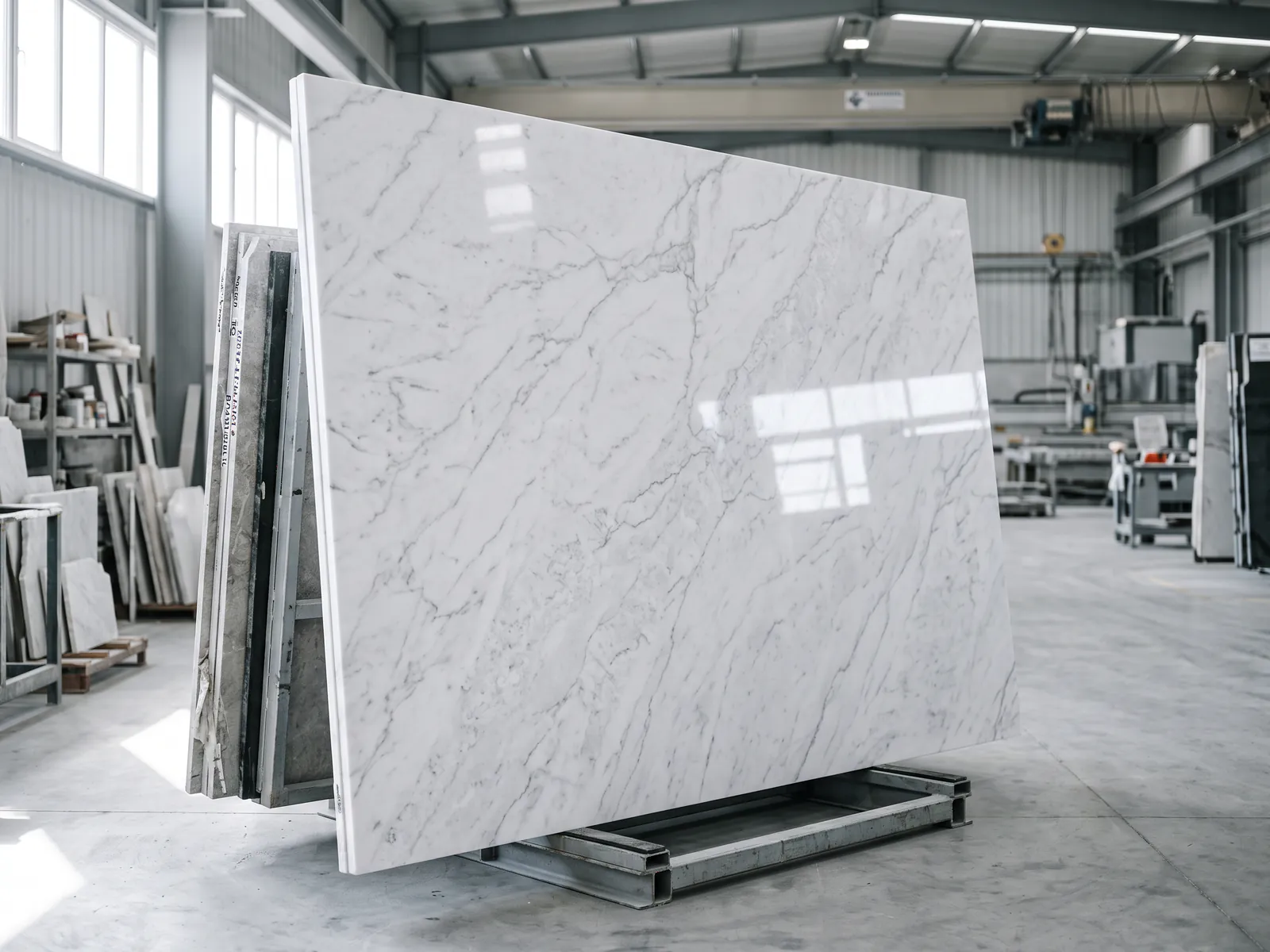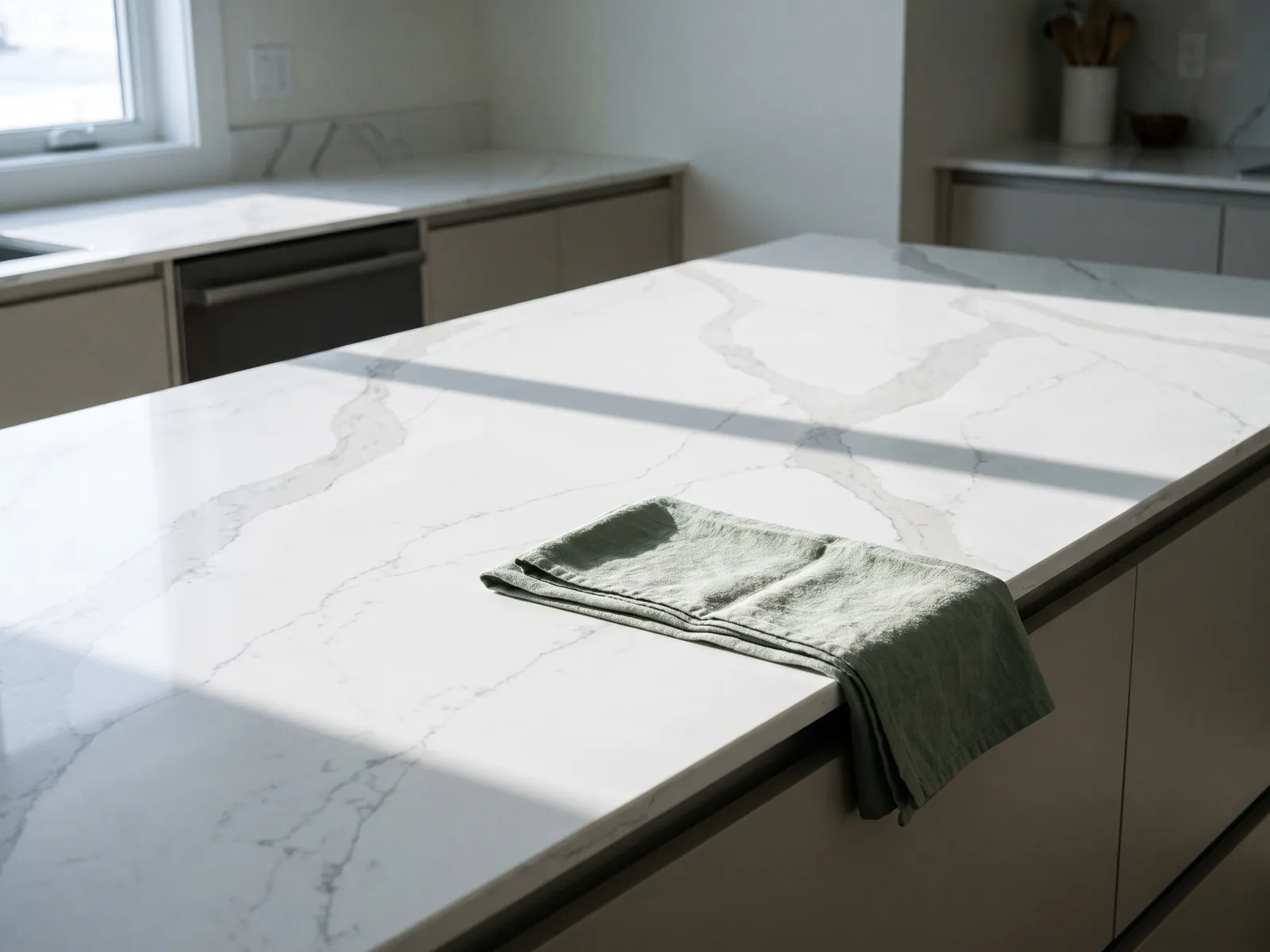
Engineered marble works in kitchens with realistic expectations: it resists stains far better than natural marble, but its resin content means hot pans can mark it and acidic spills left overnight can dull the polish. For worktops that take daily punishment, quartz is the safer engineered surface; engineered marble shines on islands, splashbacks and lighter-use kitchens.
Heat: what the resin tolerates
Engineered marble tolerates warm and resents hot. The marble content is indifferent to temperature, but the resin binding it begins to suffer above roughly 150 degrees: prolonged contact with a pan straight off the flame can leave a whitened or slightly sunken mark that no cleaner reverses. Everyday warmth, dishwasher steam, hot water, a warm plate, sunlight through the kitchen window, is a non-event.
The management is the same trivet rule quartz lives by, applied with slightly more caution because the marble-resin matrix is the softer of the two. Plan landing zones at the design stage: a stainless or solid-stone trivet inset beside the hob turns the rule into furniture and removes daily decisions. Households honest about their cooking style should route the hob run to quartz and let engineered marble take the island; the complete engineered marble guide maps the material's full temperament beyond the kitchen.
Stains and acids compared to natural marble
On staining, engineered marble is a different sport from natural: absorption under 0.1 percent means coffee, saffron oil and pomegranate juice sit on the surface rather than soaking into it, and an evening wipe usually ends the story. Natural marble in the same kitchen would be sealed, resealed and still collecting shadows around the cooking zone within a couple of years.
On acids, the two are siblings: both are overwhelmingly calcite, and lemon, vinegar, laban and tamarind etch both, dulling the polish where they sit. Engineered marble's advantage is time, the acid stays on top where a prompt wipe saves the finish, but overnight puddles still leave their ring. The kitchen rule set is short: wipe acids promptly, keep the neutral cleaner habit, and treat the surface as stain-proof but not chemistry-proof. The etch versus stain explainer is worth a read before the first lemon incident, not after.
Worktop vs island vs splashback
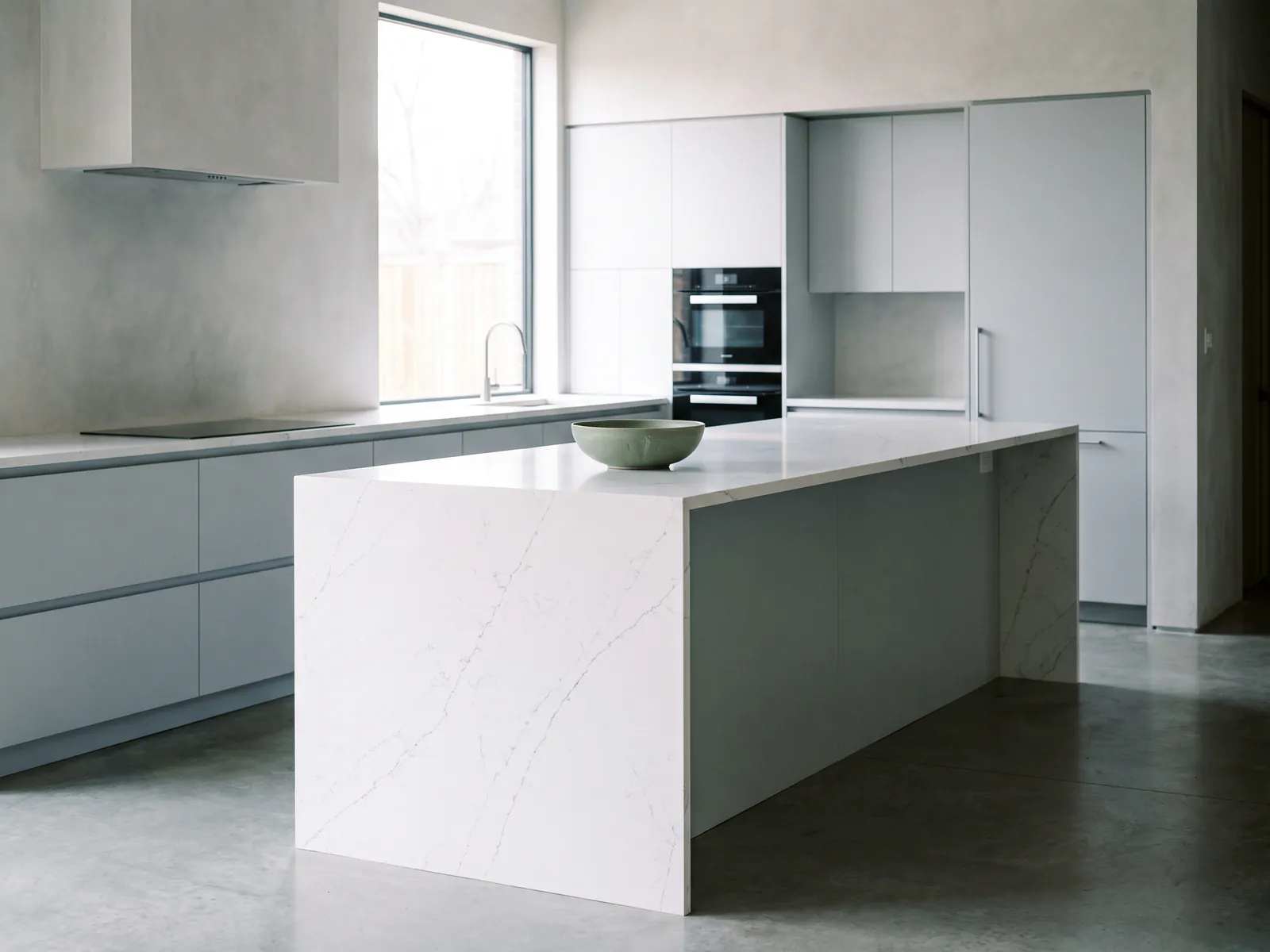
Zone the material by what each surface endures. The working worktop, the run holding hob and sink, takes knives, acids, heat and midnight cleaning products; this is the zone where quartz earns its keep and engineered marble asks for discipline. The island, in most UAE kitchens, is presentation and breakfast territory: engineered marble thrives here, delivering the marble look at the room's centrepiece with stain resistance natural stone cannot offer.
Splashbacks are engineered marble's easiest win: vertical, heat-adjacent but not heat-contact, and highly visible, a bold-veined slab behind the hob gives the kitchen its jewellery with almost no risk. Waterfall ends, shelving and coffee-corner tops follow the same low-contact logic. The elegant pattern many designers now run: quartz working runs and engineered marble island in coordinated tones, one kitchen, two engineered materials, each where it belongs. Both halves of that pairing ship from the same range.
When quartz is simply the better answer
Choose quartz over engineered marble when any of these describe the kitchen: daily high-heat cooking with heavy pan traffic; a household that will not police trivets and cutting boards; rental or multi-tenant units where care instructions do not survive handover; or a brief demanding certified food-safety surfaces, which quartz ranges carry outright. Quartz's harder mineral content and tougher resin matrix simply absorb more abuse before showing it.
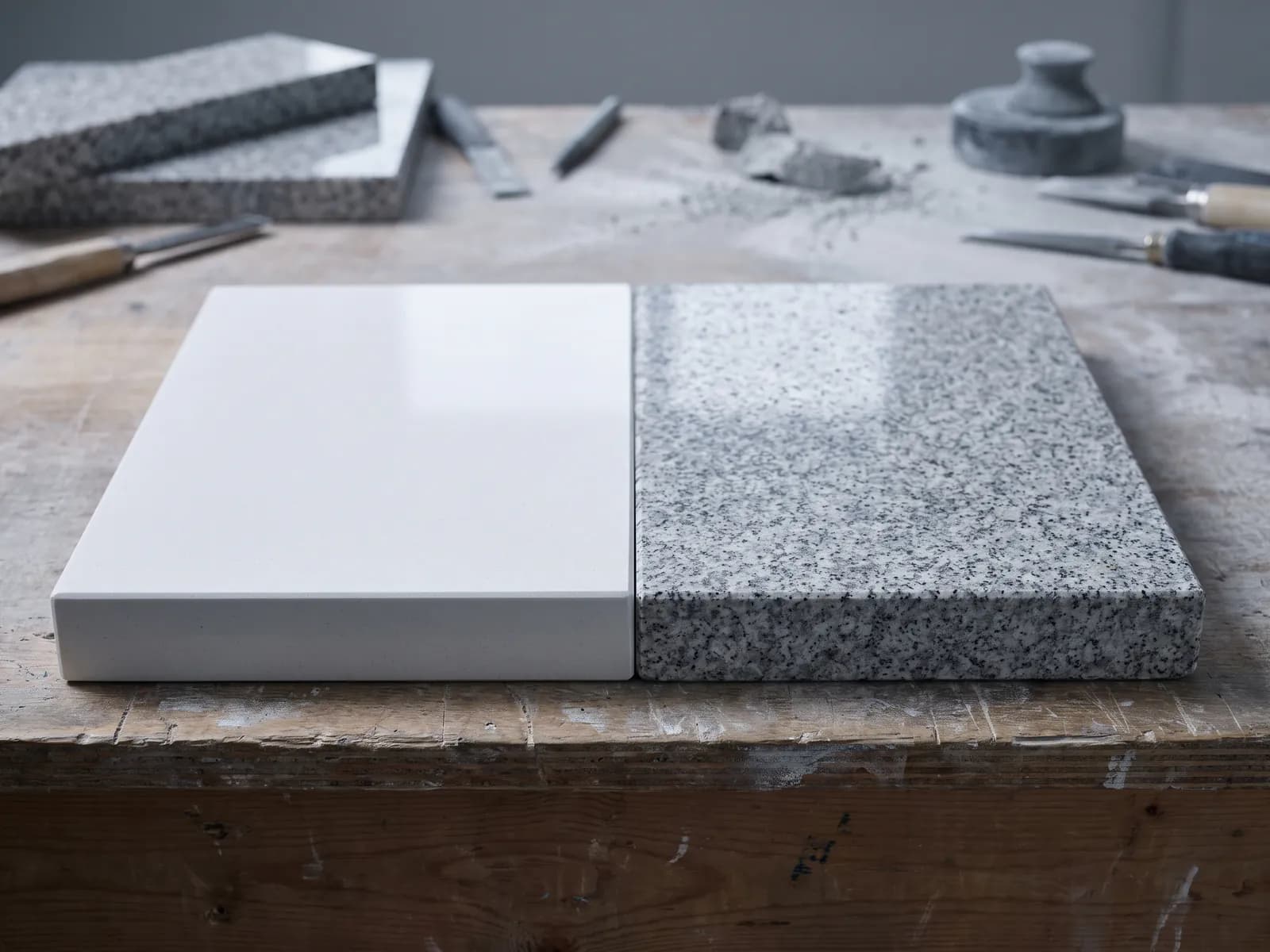
The honest hierarchy for UAE kitchen worktops: quartz first for pure service, engineered marble where looks lead and habits cooperate, natural marble only for owners who accept patina as character. Price rarely decides between the engineered options, since their bands overlap; behaviour decides. The full quartz guide covers what the material offers, and the quartz versus granite comparison handles the other worktop crossroads. Choosing between two excellent engineered surfaces is a luxury; choosing wrongly for your habits is a daily annoyance.
Care routine for kitchen marble
The routine is three habits and a short banned list. Daily: wipe the surface with a damp microfibre and a drop of pH-neutral stone cleaner, and dry around the sink where hard water prints film fastest. Immediately, whenever they happen: acids and deep pigments, lemon, vinegar, saffron, beetroot, get wiped on sight, not after dinner. Weekly: a proper clean of the whole surface including upstands and edges, plus a glance in raking light to catch dulling early.
Banned: vinegar and lemon as cleaners, limescale removers, bleach on stubborn marks, abrasive powders and green scouring pads, all of which attack polish faster than any spill. Sealing is usually unnecessary, absorption is too low for sealer to take, so skip the ritual unless the water-drop test says otherwise. Chips and persistent dull spots repolish locally, one of stone's quiet advantages. The wider care guide extends the same discipline to every marble surface in the house.
Questions, answered.
No, use boards. Knives score the resin-marble surface, and the scratches read glossy-dull in light. Boards protect knives too; stone is harder on edges than timber.
Left sitting, yes: the acid etches the marble content, leaving a dull mark. Wiped promptly, usually no harm. Treat citrus as the surface's one real enemy.
Twenty millimetres is the standard working thickness; chunkier profiles are built up with mitred edges rather than thicker slabs, keeping weight sensible on cabinetry.
Yes. Etches, scratches and dulling grind and repolish locally because the material is solid through its body, an advantage porcelain surfaces cannot match.
Global Classic Building Materials Trading LLC
Written from the Al Sajaa warehouse, Sharjah - slabs on racks, not stock photography. About the company