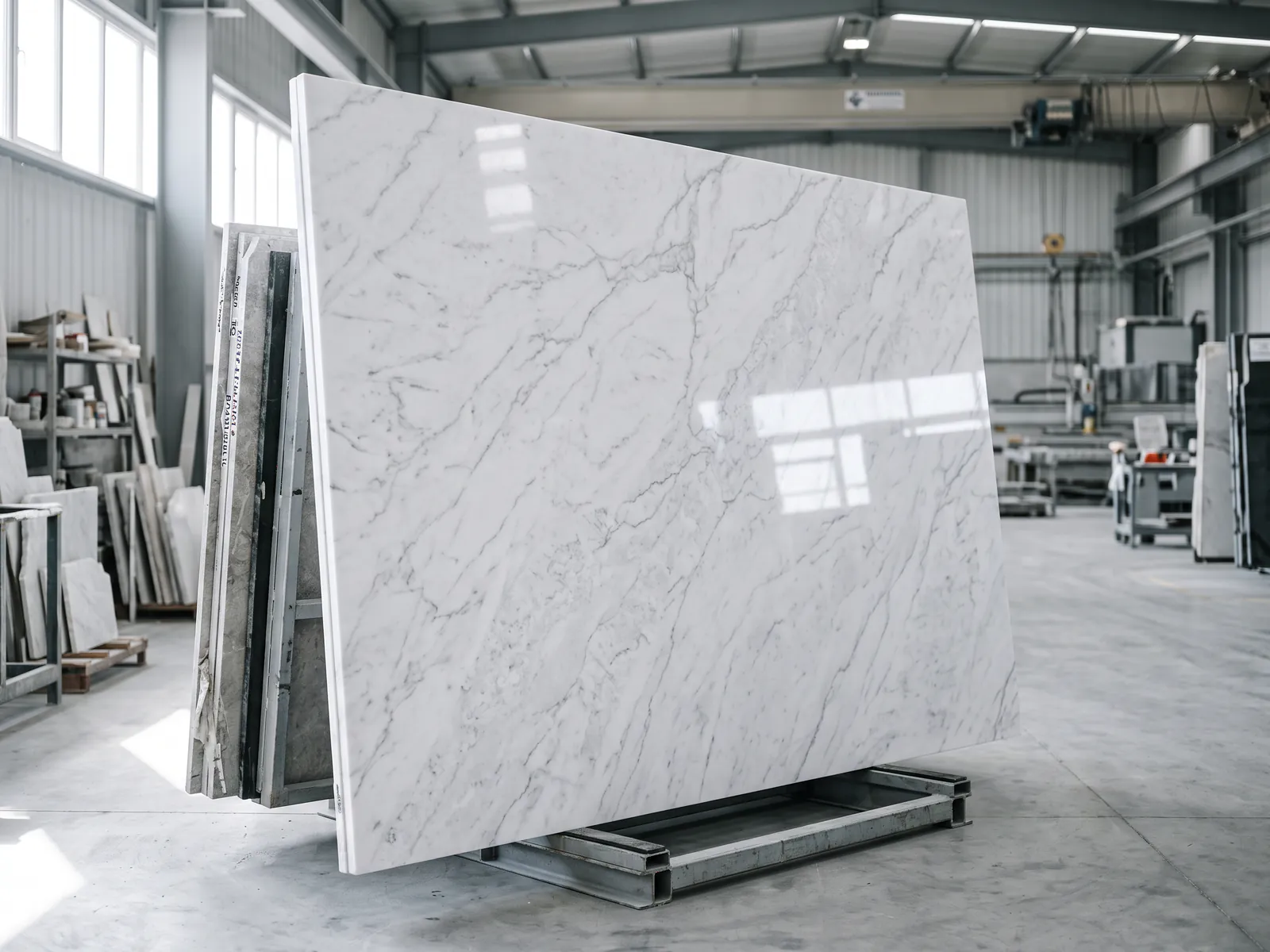
Quartz countertops are engineered slabs of about 90 percent crushed natural quartz bound with resin, which makes them non-porous, food-safe and highly stain resistant without sealing. They suit UAE kitchens because they shrug off coffee, oil and karak stains that mark natural stone. Slabs run up to 3300 by 2000 millimetres, at 20 millimetre thickness, in polished, honed and leather finishes.
What is quartz actually made of?
An engineered quartz slab is roughly 90 percent crushed natural quartz, one of the hardest common minerals, bound with polymer resin and pigments under vacuum compaction. Quartz the mineral scores 7 on the Mohs scale, harder than steel, and that hardness carries into the slab: knives, keys and daily abrasion barely register. The resin fraction is what closes the surface, taking water absorption to effectively zero, which is why a quartz worktop never needs sealing.
Colour and pattern are built in the mix, from plain whites through Calacatta-look veining, and run consistently across production batches. That consistency is a fabrication advantage as much as a visual one: when a kitchen needs three slabs, all three match. KalingaStone quartz covers 69 shades across seven series, including NSF-certified food-safe surfaces and shades with Microban antimicrobial options built into the material.
Quartz vs granite in UAE kitchens
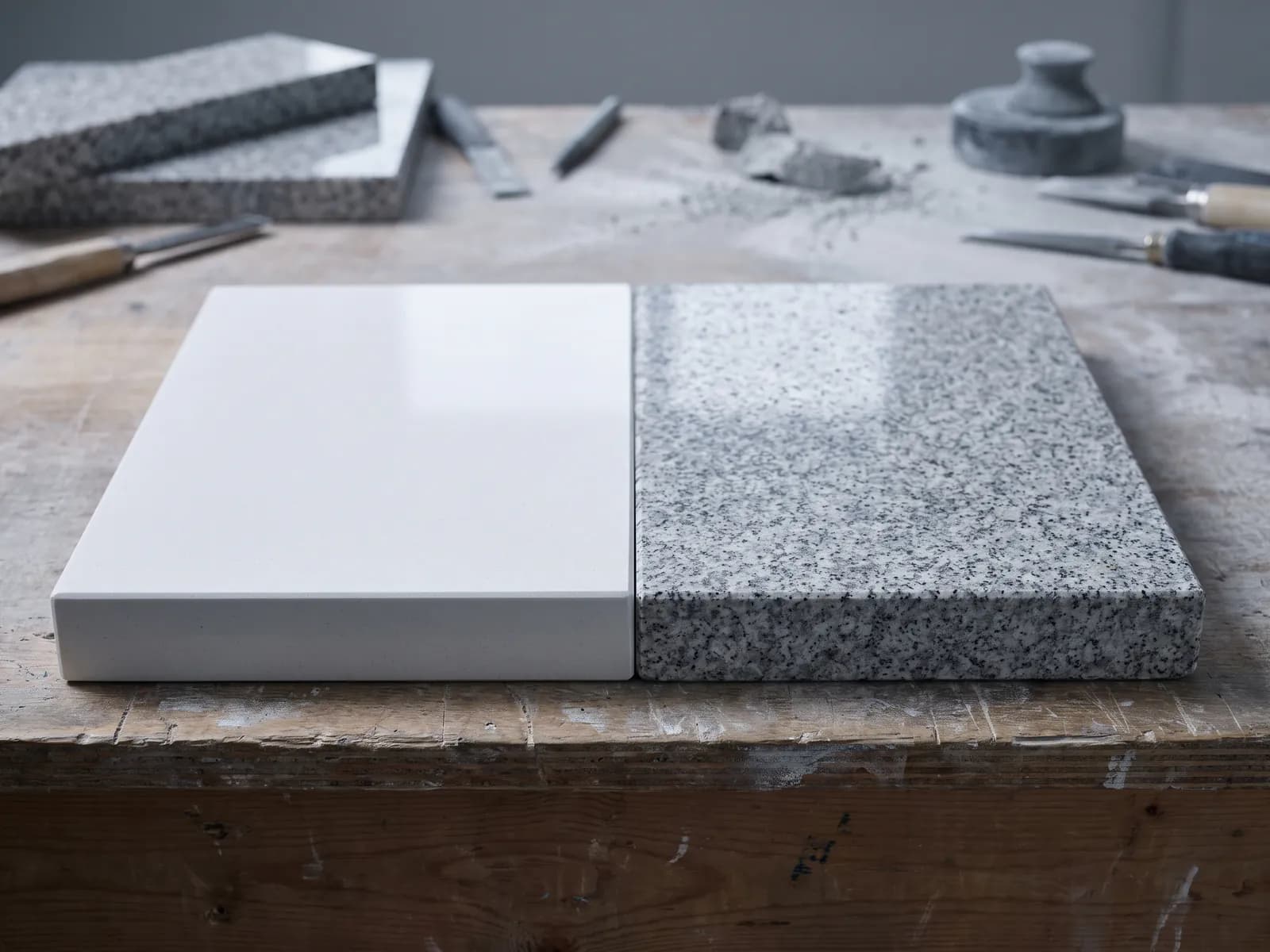
Quartz wins UAE kitchens on maintenance; granite wins on raw heat tolerance. Granite is quarried stone: it takes a hot pan without complaint, but it is porous enough to need periodic sealing, and dark polished granites show hard-water film quickly beside UAE sinks. Quartz never needs sealing, wipes clean of turmeric, karak and oil, and offers whites and consistent veining that granite geology simply does not produce.
The honest advice for most households: unless unprotected hot-pan contact is a non-negotiable habit, quartz is the pragmatic choice, and a trivet costs ten dirhams. Granite keeps its place in outdoor kitchens and under serious wok cooking. The full quartz vs granite comparison runs the numbers side by side, including where each sits on price in the current market.
Does quartz handle heat?
Honestly: quartz handles warm, not hot. The quartz mineral itself is unbothered by temperature, but the resin binding it can discolour or micro-crack under direct sustained heat above roughly 150 degrees, so a pan straight off the flame can leave a permanent mark. This is the one genuine limitation of the material and no brand is exempt from it.
The management is simple and absolute: trivets and heat pads near hobs and air fryers, always. Design helps too: specifying a stainless or stone trivet inset beside the hob during fabrication gives hot cookware a permanent landing zone and removes the daily decision. Everything short of direct hot metal, sun through a kitchen window, dishwasher steam, hot water, is a non-event. Treat the worktop as heatproof for living and heat-sensitive for cooking hardware, and it stays flawless for decades.
What do quartz worktops cost in Dubai?
As of 2026, quartz slabs in Dubai typically run AED 250 to 500 per square metre supply-only for standard ranges, with imported designer shades and jumbo formats pricing above that band; figures vary by brand and finish, and a slab covers about 4 to 5 square metres. Fabrication and installation are quoted separately by the workshop, and full-slab supply-only purchase is how volume buyers and fabricators purchase.
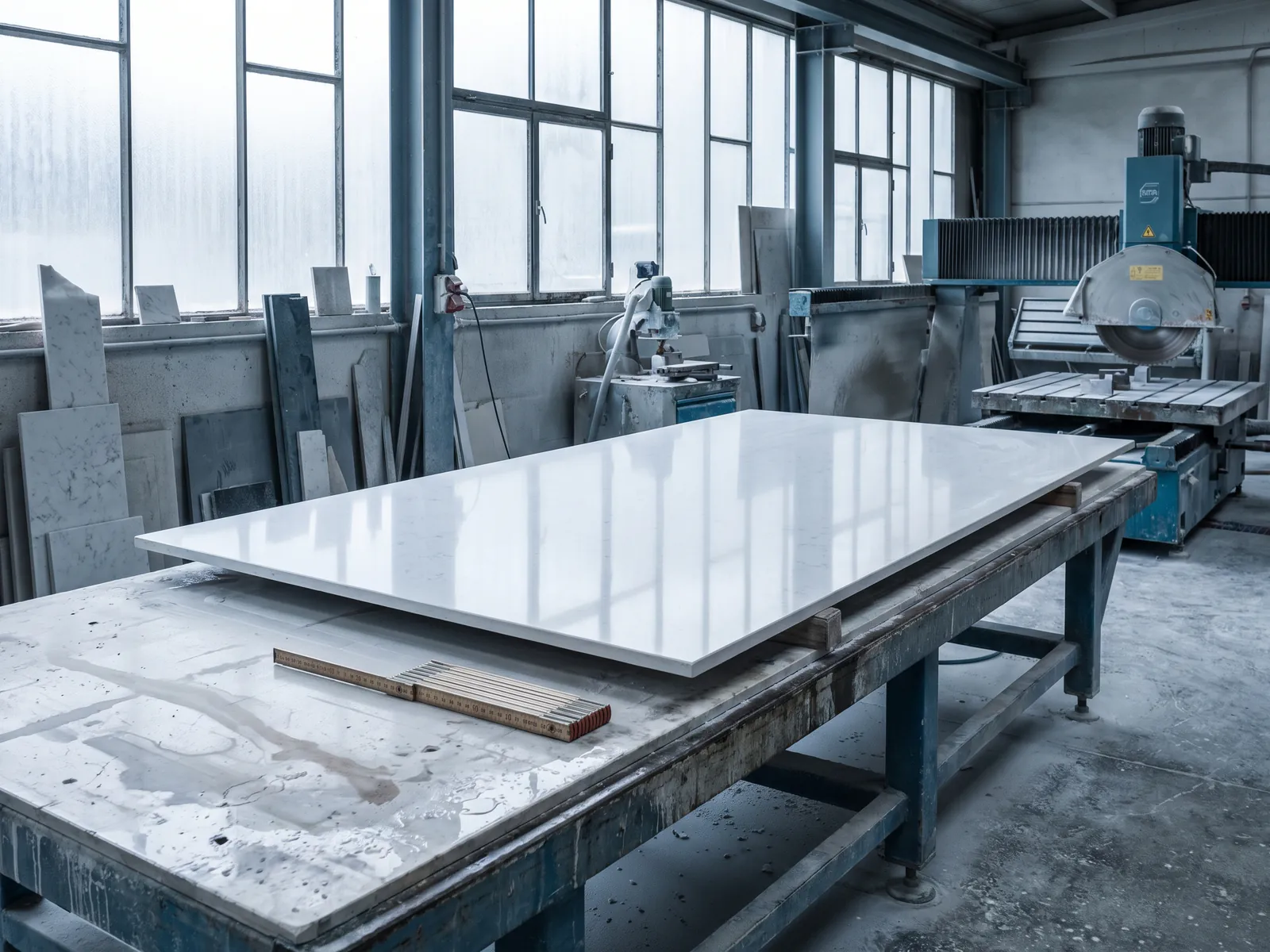
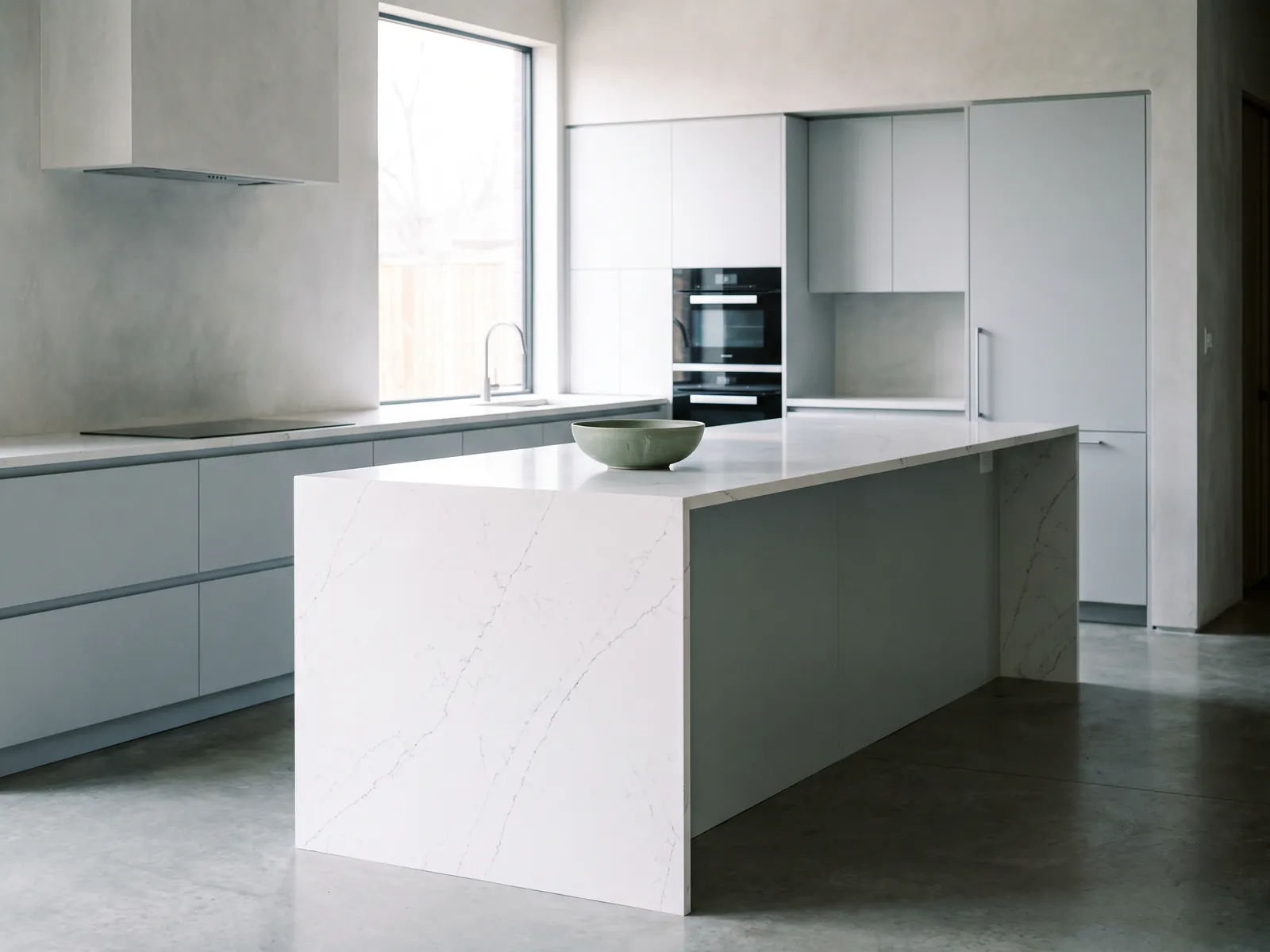
What moves a quote beyond the slab: cutouts for sinks and hobs, edge profiles, waterfall ends, full-height splashbacks and site access. A transparent quote itemises slabs consumed, fabrication and installation separately; a single blended number hides where the margin lives. Design-to-slab thinking, planning the kitchen around the 3200 by 1600 format so offcuts become splashbacks rather than waste, recovers real money. The detailed price breakdown lives in the Dubai quartz pricing guide; for trade volume, the quartz range quotes from stock in AED, usually within one working day.
Slab sizes, thicknesses and edge profiles
Standard quartz slabs run about 3150 by 1450 millimetres; jumbo formats reach 3250 by 1650, and the superjumbo tops out at 3300 by 2000 millimetres at 20 millimetre thickness. Format is a design decision, not a logistics footnote: a jumbo slab crosses most island lengths without a joint, and joints are where worktops age visibly.
Twenty millimetres is the working thickness; chunkier looks are built up with mitred aprons rather than thicker slabs, which keeps weight manageable on cabinetry. Edge profiles run from crisp pencil rounds and bevels through bullnose to mitred waterfall returns; simpler edges cost less and date more slowly. The slab size and thickness guide covers formats, weights and how fabricators charge per slab consumed, which is the number that actually drives your quote.
Which whites stay white?
The whites that stay white are the ones with quality resin systems and sensible placement, and that is a buying question as much as a material one. Cheap quartz yellows because low-grade resin ambers with UV exposure; established manufacturers stabilise their resin against exactly this. Placement still matters: any white surface parked in direct afternoon sun through clear glazing works harder than one across the room.
Within the whites, three families behave identically but read differently: pure whites show every crumb and reward tidy households; Carrara-look soft veining hides daily life best; bold Calacatta-look patterns turn the worktop into the room's feature and want the sightlines to justify it. UAE apartment kitchens usually sit best with the quieter veining; villa islands can carry the drama. The white quartz guide walks the white shade families in detail.
Questions, answered.
For most UAE kitchens, yes: no sealing, better stain resistance and consistent colour. Granite still wins for unprotected hot pans and outdoor use. It is a habits question more than a materials one.
No, never. The resin-bound surface is non-porous, so there is nothing for a sealer to penetrate. Routine cleaning with a neutral cleaner is the entire maintenance program.
Not directly. Sustained heat above roughly 150 degrees can mark the resin permanently. Use trivets beside hobs and ovens; everything below hot-metal temperature is harmless.
Quality quartz with stabilised resin resists yellowing indoors. Prolonged direct sun through glazing can slowly warm-shift budget material, so keep bargain slabs away from full-sun placements.
Yes. Non-porous surfaces give bacteria nowhere to live, and certified ranges carry NSF food-safety approval. Some series add Microban antimicrobial protection within the material itself.
Global Classic Building Materials Trading LLC
Written from the Al Sajaa warehouse, Sharjah - slabs on racks, not stock photography. About the company