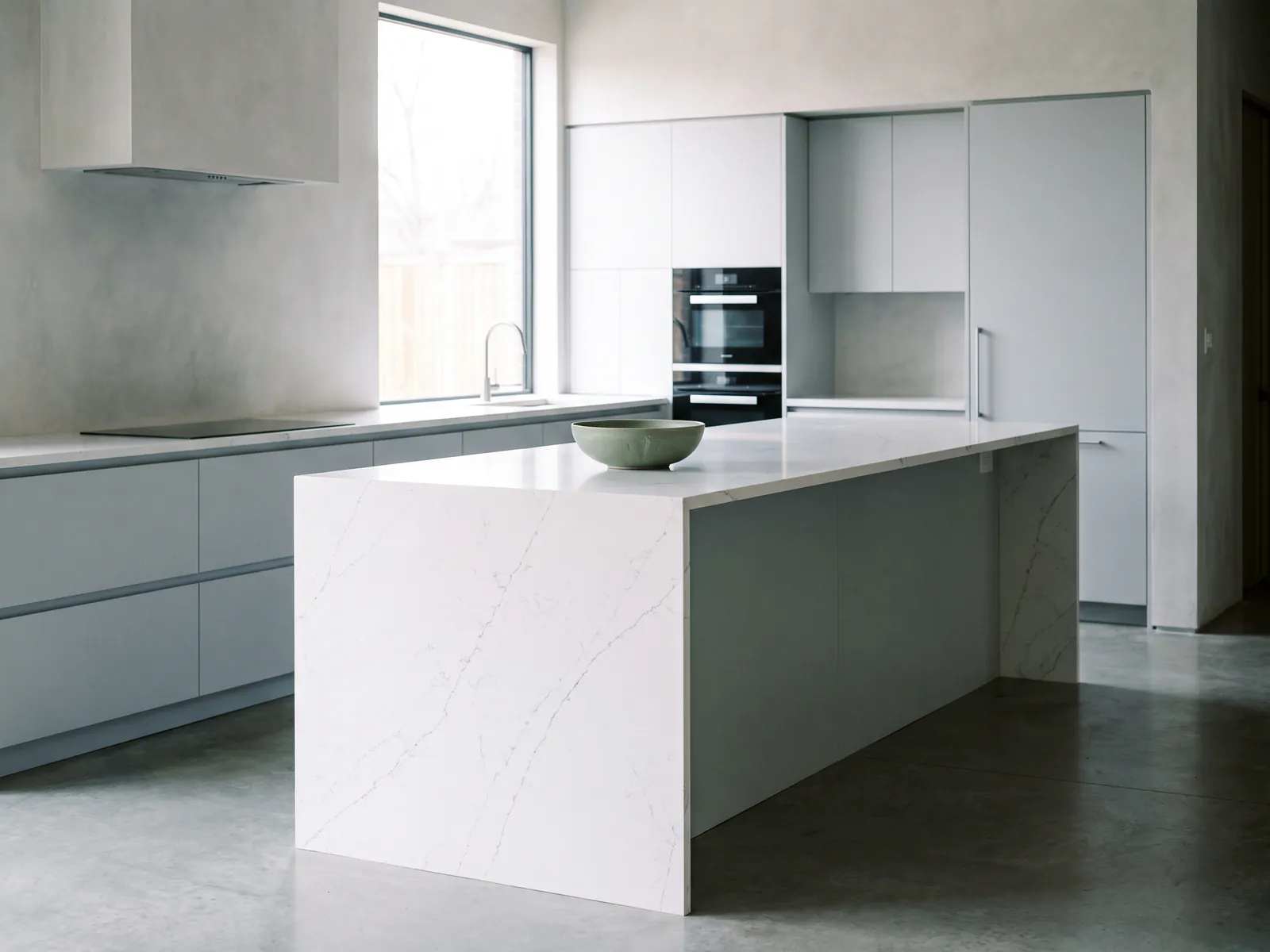
Engineered marble is a manufactured stone made from crushed natural marble, roughly 90 to 95 percent, bound with polyester resin and pigments, then pressed and cured into slabs. The result is denser and less porous than quarried marble, with consistent veining and colour across every slab. In the UAE it is specified for flooring, cladding and vanities where natural marble's staining and variation are unacceptable.
How is engineered marble made?
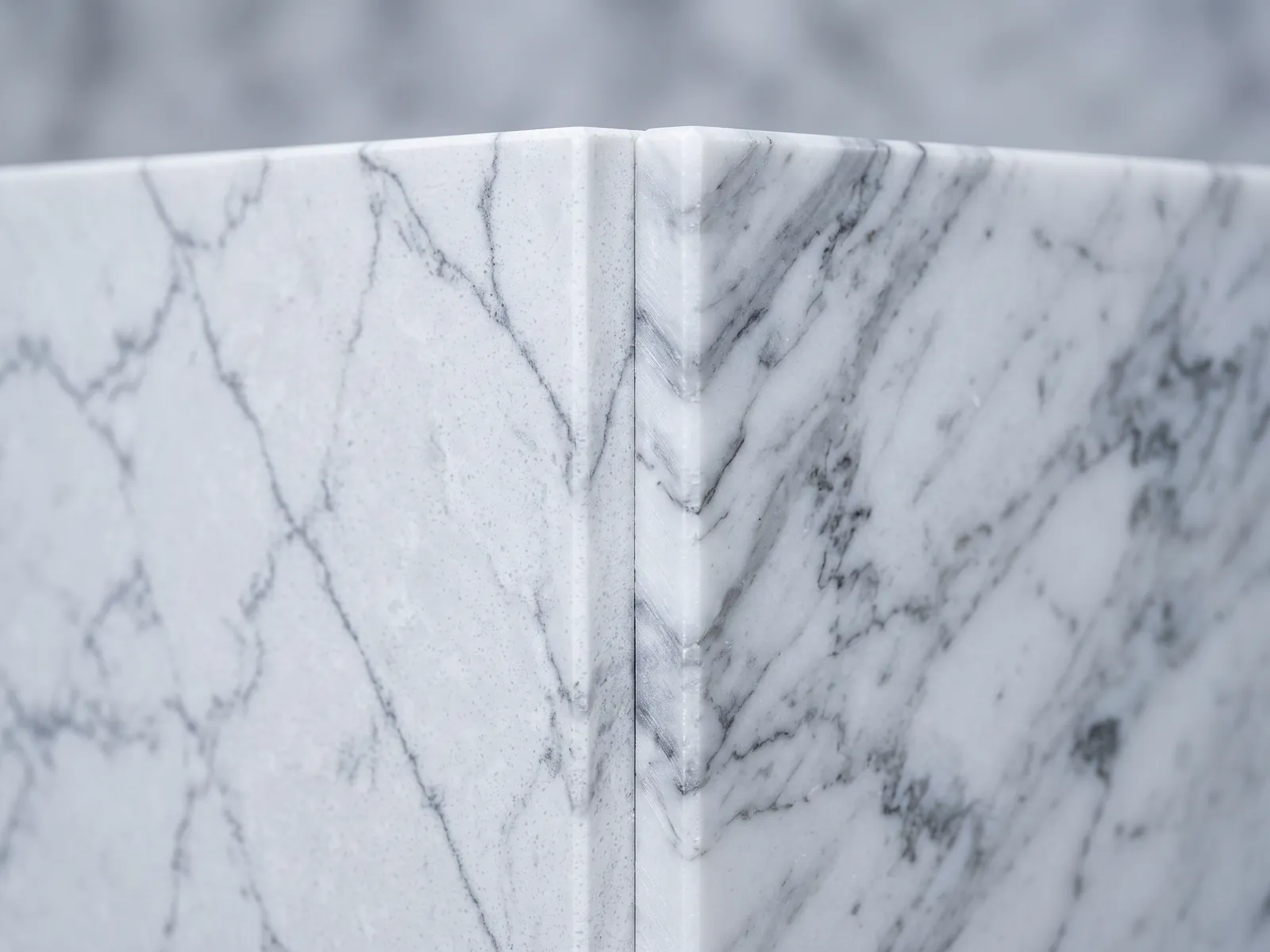
Engineered marble is made by crushing natural marble into calibrated aggregate, blending it with a small fraction of polyester resin and mineral pigments, then compacting the mix under vacuum and vibration before curing and calibrating it into slabs. The vacuum stage is the important part: it drives air out of the mix, which is why the finished material carries a water absorption figure under 0.1 percent while quarried marble can absorb several times that. Veining is introduced during blending, so pattern and tone repeat predictably from slab one to slab three hundred.
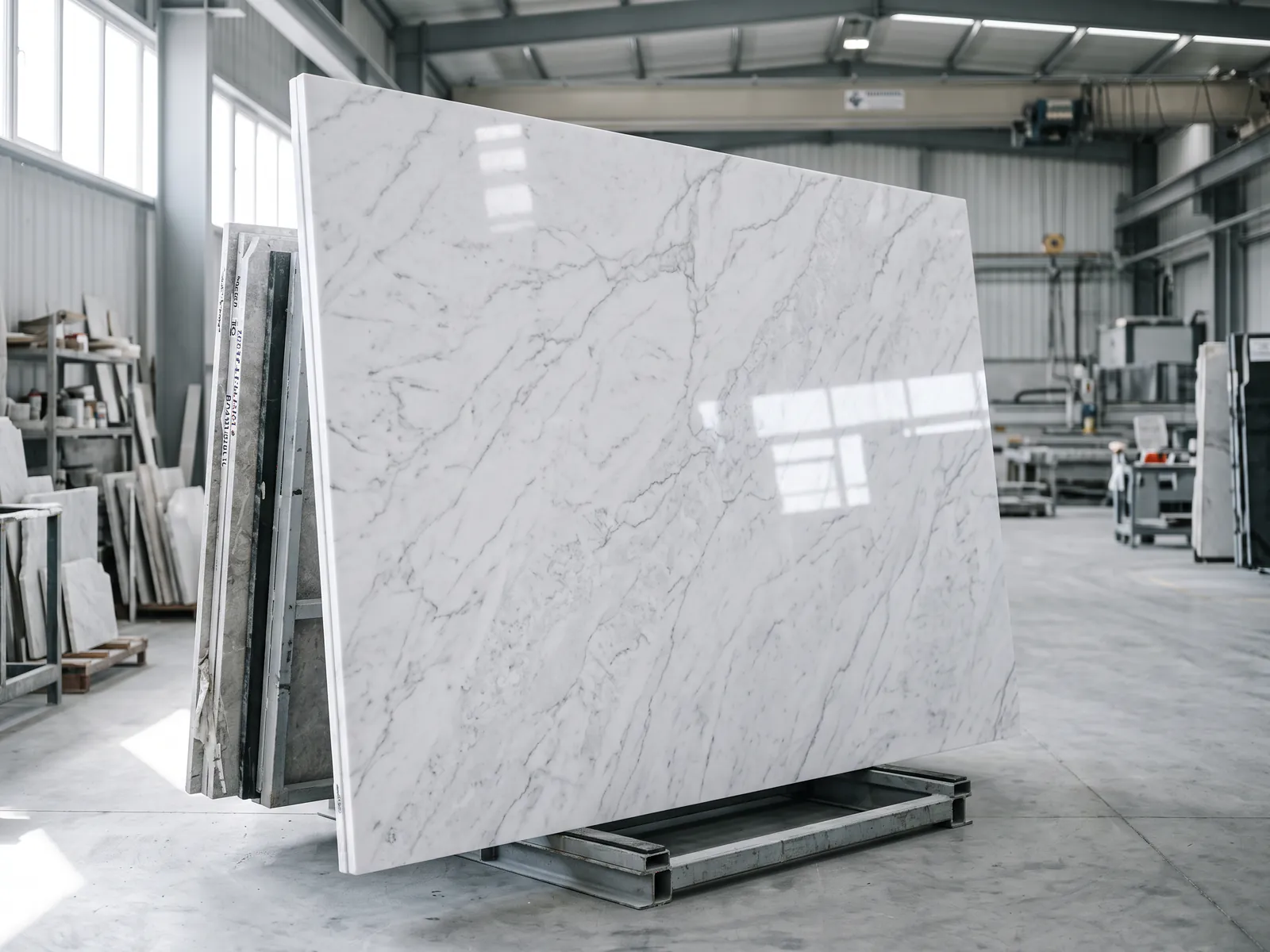
The slabs are then gauged to a uniform thickness and polished on automated lines, which is where engineered material quietly beats the quarry: every slab arrives flat, square and at the same calibration, so a fixer in a Sharjah villa is not compensating for a millimetre of drift across a floor. KalingaStone marble is produced this way on Italian SIMEC lines, polished past 85 percent gloss before it ever reaches the warehouse rack.
Engineered vs natural marble: what actually differs?
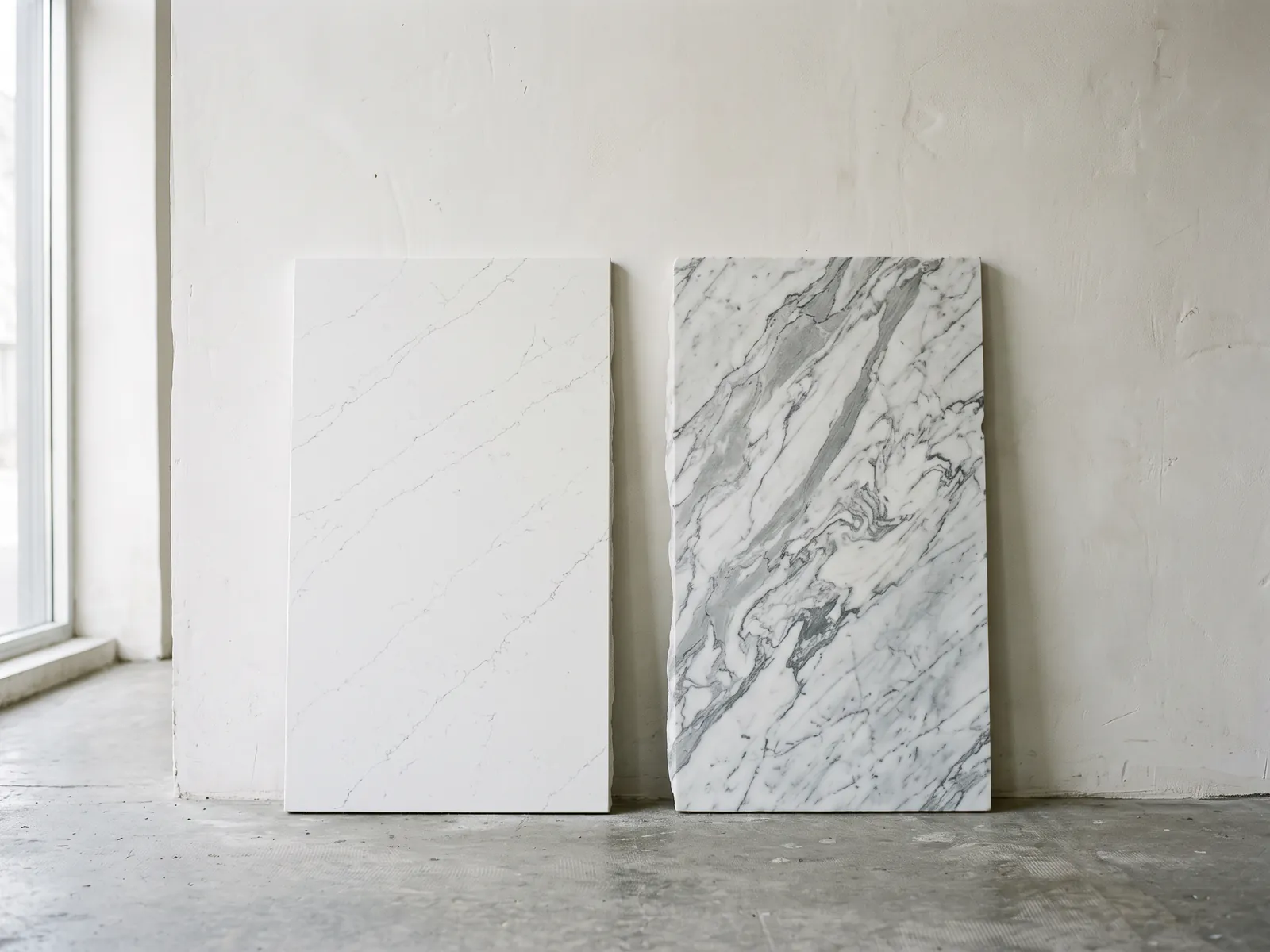
Four things differ in practice: porosity, consistency, price and prestige. Engineered marble absorbs almost nothing, so coffee, karak and cosmetics sit on the surface instead of soaking in; natural marble needs sealing to approach that behaviour. Engineered slabs match each other, which matters when a floor runs to four hundred square metres and every box must read as one material; natural stone varies block to block, which is either its charm or its risk depending on the project.
On price, engineered material generally lands below comparable mid-tier Italian stone. On prestige, natural marble keeps the crown: each quarried slab is one of one, and certain projects specify it for exactly that reason. The honest division of labour in UAE projects: engineered for large uniform fields and hard-working surfaces, natural for the statement wall where uniqueness is the point. The full comparison covers the decision in depth.
Is engineered marble durable in the UAE climate?
Yes, and the climate is precisely why it gets specified here. The UAE's three enemies of stone are heat, hard water and sand. Engineered marble's near-zero porosity means hard-water splashes on a vanity wipe off before minerals bond to the surface, and its resin matrix tolerates the indoor temperature swings that air conditioning cycles produce. Sand is the one enemy it shares with every polished floor: fine grit abrades gloss under foot traffic, so entrance matting matters as much as the material choice.
What engineered marble does not love is prolonged direct sun through glazing, where UV can slowly warm-shift resin tones over years, and standing acids, which dull the polish just as they etch natural stone. Neither is a UAE-specific failure; both are managed with shading and the same neutral-cleaner habit every stone floor deserves. Specified indoors, it is one of the most stable surfaces available in this market.
What does engineered marble cost in Dubai?
As of 2026, engineered marble in Dubai typically runs AED 250 to 500 per square metre supply-only, varying by series and slab format, with a slab covering about 4 to 5 square metres and fixing priced separately by the applicator. That places it level with slab-grade mid-tier Italian naturals on like-for-like looks, and well under statement stones. Series matters: entry shades in plain tones anchor the low end, while bold-veined and speciality series carry the top of the band.
Read quotes carefully: the number that matters is supply-and-fix with wastage stated, since cutting plans can consume 10 to 15 percent more material than the floor area suggests. Thickness, edge details on stairs and skirting, and floor preparation move the final figure more than the slab price does. For live AED pricing against actual stock, the marble range is quoted from slabs on racks in Al Sajaa, usually within one working day. Verify final numbers with your supplier; ranges shift with freight and resin costs.
Where should you use it, and where shouldn't you?
Use engineered marble where uniformity, hygiene and scale reward it: villa and apartment flooring, full-height wall cladding, bathroom vanities, hotel corridors, retail fit-outs, stair treads and reception desks. Its consistency across hundreds of square metres is something no quarry can promise, and its low absorption suits wet areas that punish porous stone.
Skip it in three places. Kitchen worktops that take daily hot pans and acidic cooking are better served by quartz, whose resin-quartz matrix is harder and more forgiving; engineered marble can live on an island or splashback, but the working run beside a hob deserves the tougher material. Exterior applications in full sun belong to porcelain or natural granite, since UV and engineered resins age poorly together. And any surface where food-safety certification is contractually required should be specified in quartz, which carries those certifications outright. Everything else indoors is fair territory.
How do you maintain it?
Maintenance is deliberately boring: dust mop floors regularly, clean with a pH-neutral stone cleaner, wipe spills as they happen, and keep acids and harsh alkalis away. Engineered marble rarely needs sealing, its absorption is too low for sealer to penetrate meaningfully, so the annual sealing ritual natural marble demands largely disappears. That is a real cost saving over a decade of ownership.
The two habits that matter in the UAE: mats at every external door, because sand is the abrasive that dulls polish long before wear does, and a daily wipe of vanity tops where hard water dries into mineral film. If gloss does dull after years of traffic, engineered marble repolishes the same way natural stone does, which is a genuine advantage over porcelain. The full routine, products and banned list live in the marble floor cleaning guide, and the wider discipline in the care and maintenance guide.
Questions, answered.
Mostly, yes: it is 90 to 95 percent crushed natural marble by content, bound with resin. It is manufactured rather than quarried, so it is real marble aggregate in an engineered slab, not a printed imitation.
Far less than natural marble. Absorption under 0.1 percent means most spills wipe off cleanly. Strong acids can still dull the polish, so treat lemon, vinegar and harsh cleaners as the exceptions.
Yes. Because the material is solid through its thickness, worn or dulled areas can be mechanically repolished in place, the same trade that restores natural marble floors.
On like-for-like looks it competes directly: roughly AED 250 to 500 per square metre supply-only in Dubai as of 2026, level with comparable mid-tier Italian naturals but with far less wastage risk from breakage and variation.
The common engineered marble format is around 304 by 125 centimetres at 18 to 20 millimetre thickness, with some series offering larger formats. Confirm per shade before design freezes.
Global Classic Building Materials Trading LLC
Written from the Al Sajaa warehouse, Sharjah - slabs on racks, not stock photography. About the company