A stain is something absorbed into marble, darker than the stone, fixed by drawing it out with a poultice. An etch is surface damage from acid, lighter and duller than the stone, often slightly rough, fixed only by repolishing. Ten-second test: darker means stain, lighter means etch. Sealers help against the first and do nothing against the second.
The ten-second diagnosis
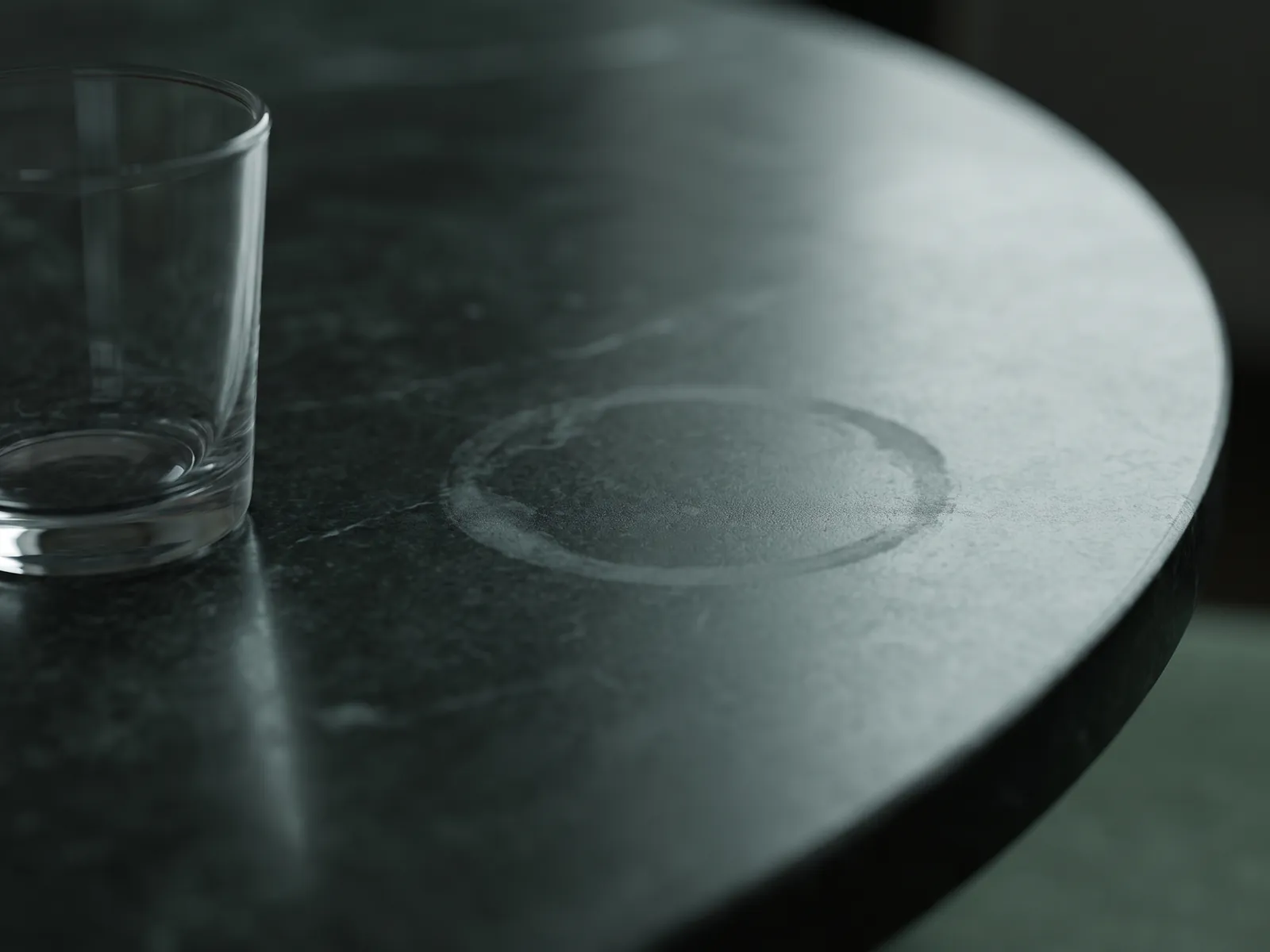
Stand over the mark in decent light and ask one question: is it darker or lighter than the stone around it? Darker means matter has entered the marble, coffee, oil, rust, a stain, and chemistry can draw it back out. Lighter, duller, sometimes faintly rough under a fingertip, means acid has dissolved the polished surface itself, an etch, and nothing can be pulled from stone that has nothing in it; the finish must be rebuilt.
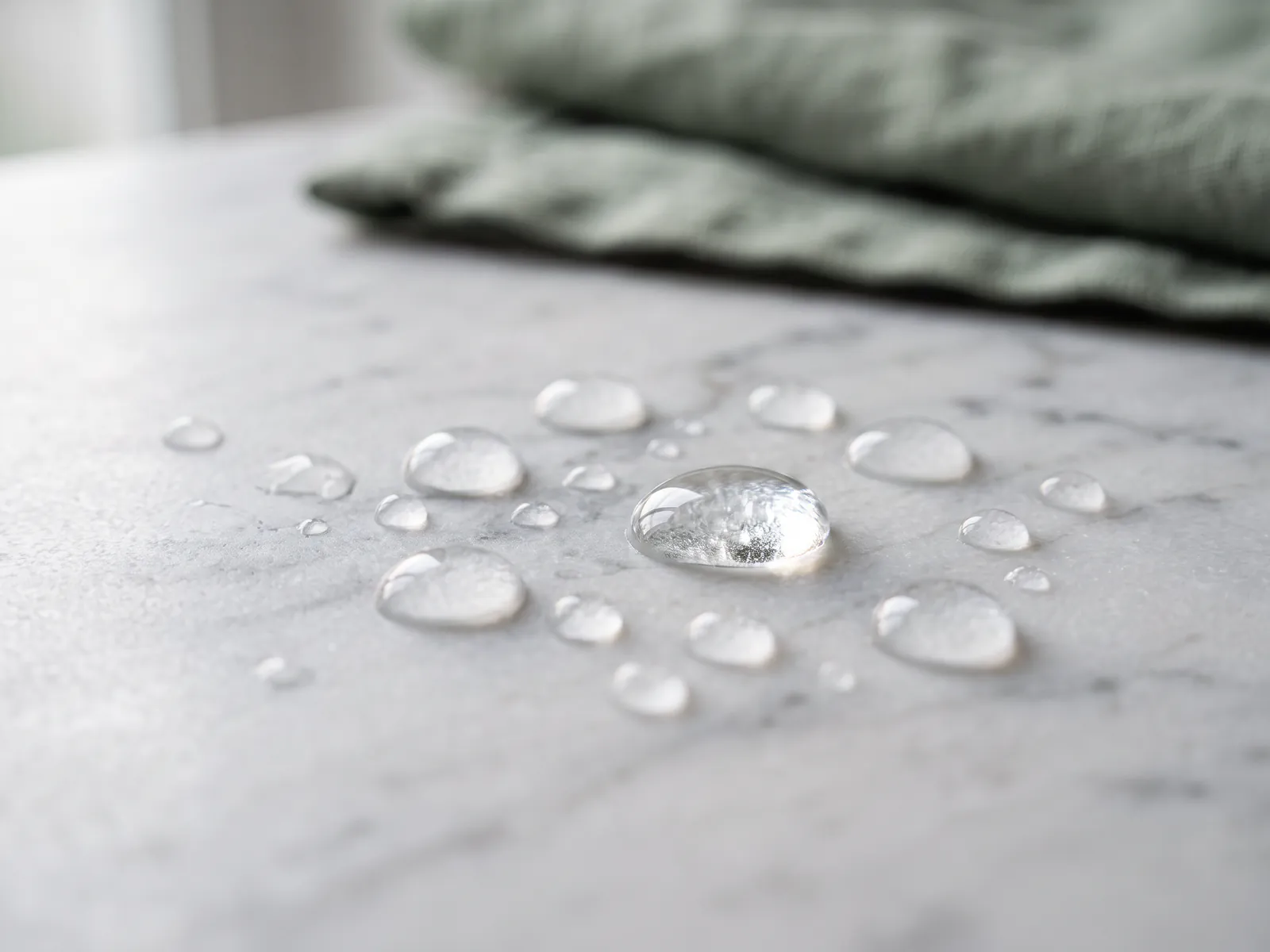
Two confirmations settle uncertain cases. Raking light: view the mark at a low angle, and an etch reveals itself as a matte interruption in the gloss, while a stain keeps the surface sheen. The water drop: wet the mark, and if it momentarily disappears while wet, the surface is damaged, an etch, because water is temporarily standing in for the lost polish. Diagnose before treating, always: the treatments are opposites, and the commonest marble mistake in UAE homes is scrubbing an etch with progressively harsher cleaners, deepening exactly what the cleaner cannot fix.
What causes each in UAE homes
Stains are absorption events, and the UAE roster is domestic: cooking oils flicked beside hobs, karak and coffee set down without a coaster, cosmetic oils and hair products on vanities, rust from metal cans and furniture feet meeting damp stone, and mineral-heavy hard water leaving iron-tinted film in showers. Porous natural marble drinks them; engineered marble, at near-zero absorption, mostly refuses.
Etches are chemistry events, and their causes hide in plain sight: lemon and vinegar in the kitchen, laban and soft drinks, and above all the cleaning aisle, limescale removers, bathroom descalers, disinfectant concentrates like Dettol, all acids by design, applied to marble by owners trying to care for it. Perfume and some toiletries etch vanity tops in perfect bottle-shaped rings. Both marble families etch, engineered included, since the calcite content is the target. Traffic-lane dullness is the impostor third category, sand abrasion, which is neither stain nor etch and is covered in the floor cleaning guide.
Fixing stains: poultice route
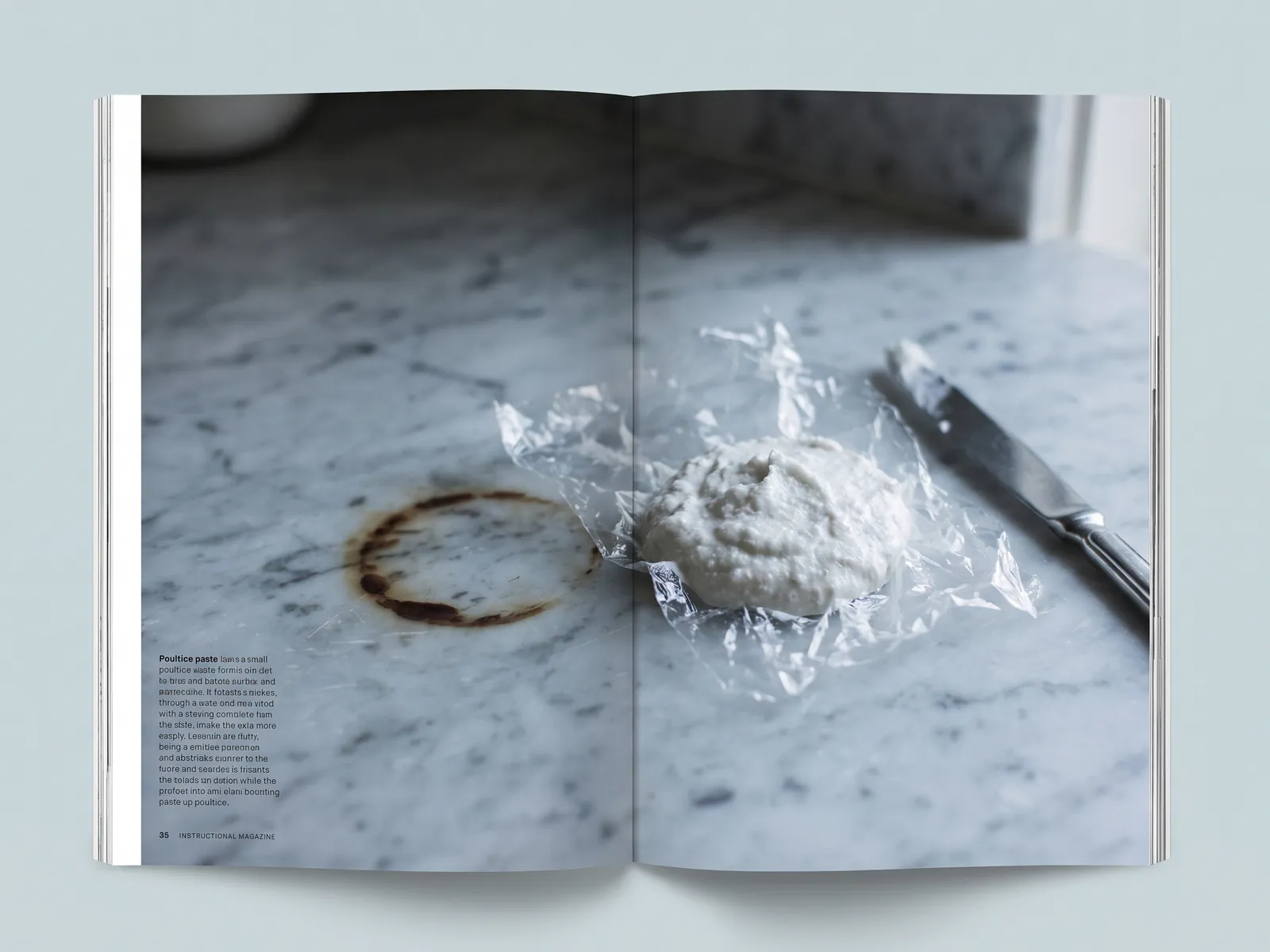
Stains reverse by capillarity: a poultice, absorbent powder mixed with the right drawing agent into a paste, sits on the stain under plastic film for 24 to 48 hours, dissolving the absorbed matter and wicking it up into itself as it dries. The agent matches the stain: acetone or ammonia for oils and grease, hydrogen peroxide for organic marks like tea and turmeric, a dedicated non-acid remover for rust, which is the one stain that punishes improvisation.
Lift the dried paste, rinse, dry, and repeat for stubborn or historical marks, two or three cycles is routine, then reseal the treated patch, since drawing pulls sealer out along with the stain. The step-by-step stain removal guide details mixes and timings by stain type, and ready-made professional poultices from the FILA problem-solver range remove the guesswork on stone worth protecting. Patience is the technique: poultices work by sitting, never by scrubbing.
Fixing etches: powder to professional
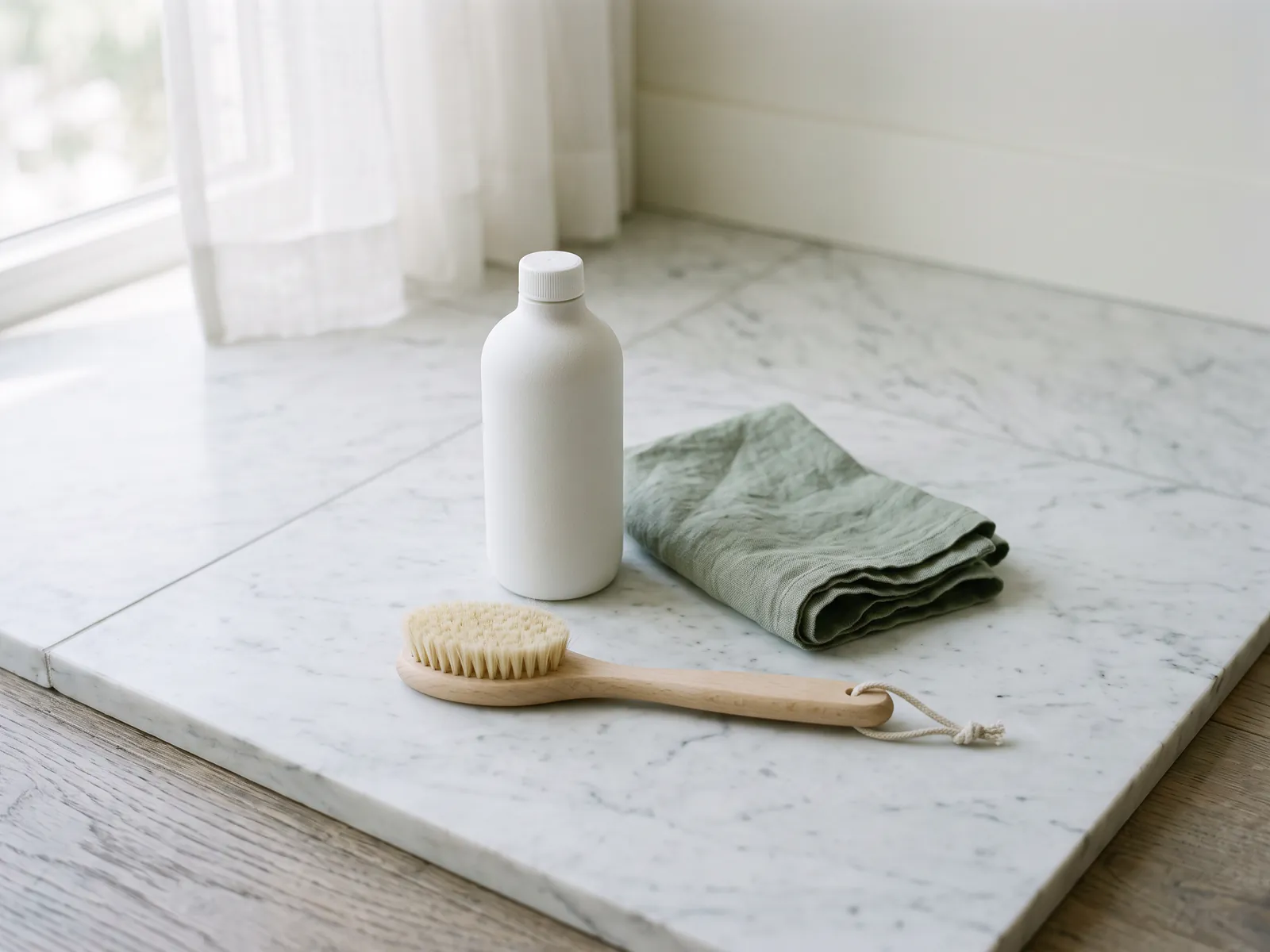
Etch repair is resurfacing, scaled to the damage. Faint water rings and light etch ghosts on polished marble yield to marble polishing powder, tin oxide worked over the mark with a damp cloth in light circles until the gloss blends; kits with graded pads make small repairs genuinely domestic. The limits arrive quickly: deep etches that shadow under raking light, clustered etching across a vanity, and any etch on honed or leathered finishes, where amateur polishing creates glossy patches more visible than the original mark, belong to a stone professional, whose diamond pads blend repairs invisibly at modest cost.
Widespread etching across floors is not spot work at all but a repolish visit, often overdue for other reasons and covered in the restoration section of the cleaning guide. One caution saves many surfaces: do not attack etches with cleaners, vinegar, or scouring pads on the theory that the mark is dirt; every such attempt converts a small repolish into a larger one.
Prevention that actually works
Prevention splits cleanly along the diagnosis line. Against stains: impregnating sealer on natural marble, renewed on the water-drop test's schedule, buys the reaction time that turns spills into wipes, and prompt cleaning spends that time well; trays under oils and cosmetics, coasters under glasses, and felt under metal objects close the classic entry routes. Engineered marble arrives with most of this immunity built in, which is why the engineered range owns the hardest-working surfaces.
Against etches, sealer is useless and habits are everything: a strict neutral-cleaner regime, acids banished from stone rooms entirely, perfume and toiletries on a tray, citrus prepped on boards, spills of anything sharp wiped on sight. The two lists overlap at exactly one point, immediate wiping, which is why it is the first habit the care guide teaches. Marble owners who internalise the darker-lighter distinction stop fearing the material: every mark becomes a known problem with a known fix, which is all durability ever is.
Questions, answered.
Condensation carried acid, from the drink, the fruit, the cleaning spray, onto the polish: those rings are etches. Polishing powder for the faint ones, a professional for clusters.
By habits, yes: neutral cleaners only, acids off the stone, coasters and trays, immediate wiping. No sealer prevents it; chemistry discipline does.
Yes: its content is still mostly calcite, so acids dull it too. It resists stains dramatically better, but the acid rules apply to every marble.
On small marks on polished stone, with marble polishing powder and patience, yes. On honed finishes, deep marks or visible areas, a professional blend is the safer money.
Global Classic Building Materials Trading LLC
Written from the Al Sajaa warehouse, Sharjah - slabs on racks, not stock photography. About the company