Marble care rests on three habits: clean with a pH-neutral stone cleaner, never acids; seal natural marble annually with an impregnating sealer; and wipe spills immediately because etching happens in minutes. In the UAE, add mats at entrances to trap abrasive sand and wipe hard-water splashes off vanities daily. Engineered marble needs the same neutral cleaning but rarely needs sealing.
Daily, weekly, yearly: a marble maintenance calendar
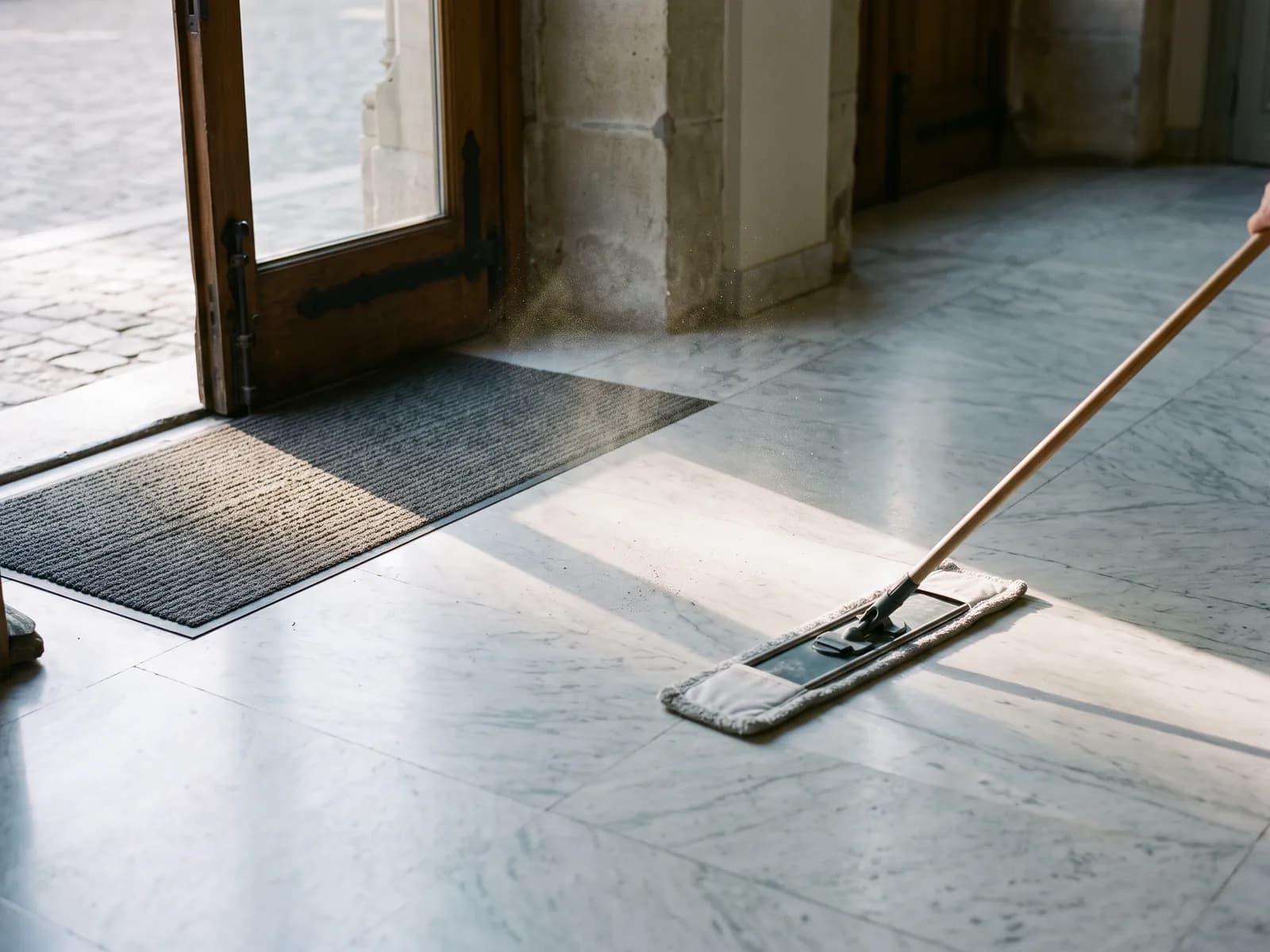
Daily takes two minutes: dust mop the traffic lanes and wipe vanity tops dry, because dried hard-water droplets become mineral film within days in UAE conditions. Weekly, damp mop with a pH-neutral stone cleaner diluted per its label, working in sections and drying as you go; this lifts the fine soil a dry mop leaves behind without stressing the polish. Monthly, inspect the floor in raking light, low sun through a window is perfect, to catch dull patches and etches while they are still small and cheap to correct.
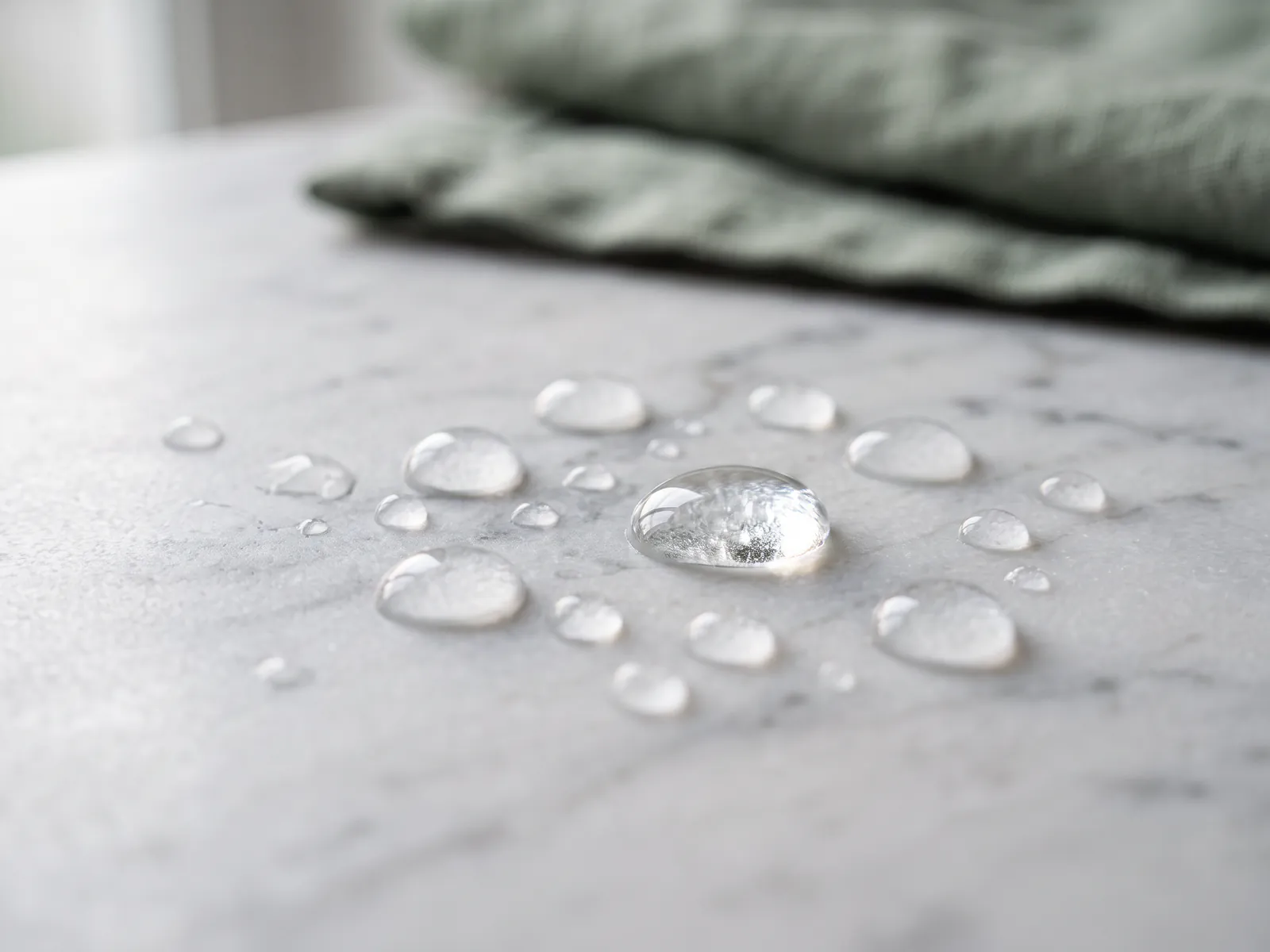
Yearly belongs to protection: test natural marble with the water-drop check and re-seal where water darkens the stone, typically every 12 months on floors and more often on kitchen surfaces. Engineered marble usually skips this step entirely. The calendar sounds demanding written down; lived, it is less work than carpet. What it buys is a floor that reads new at year ten instead of tired at year three.
What cleaners are safe on marble?
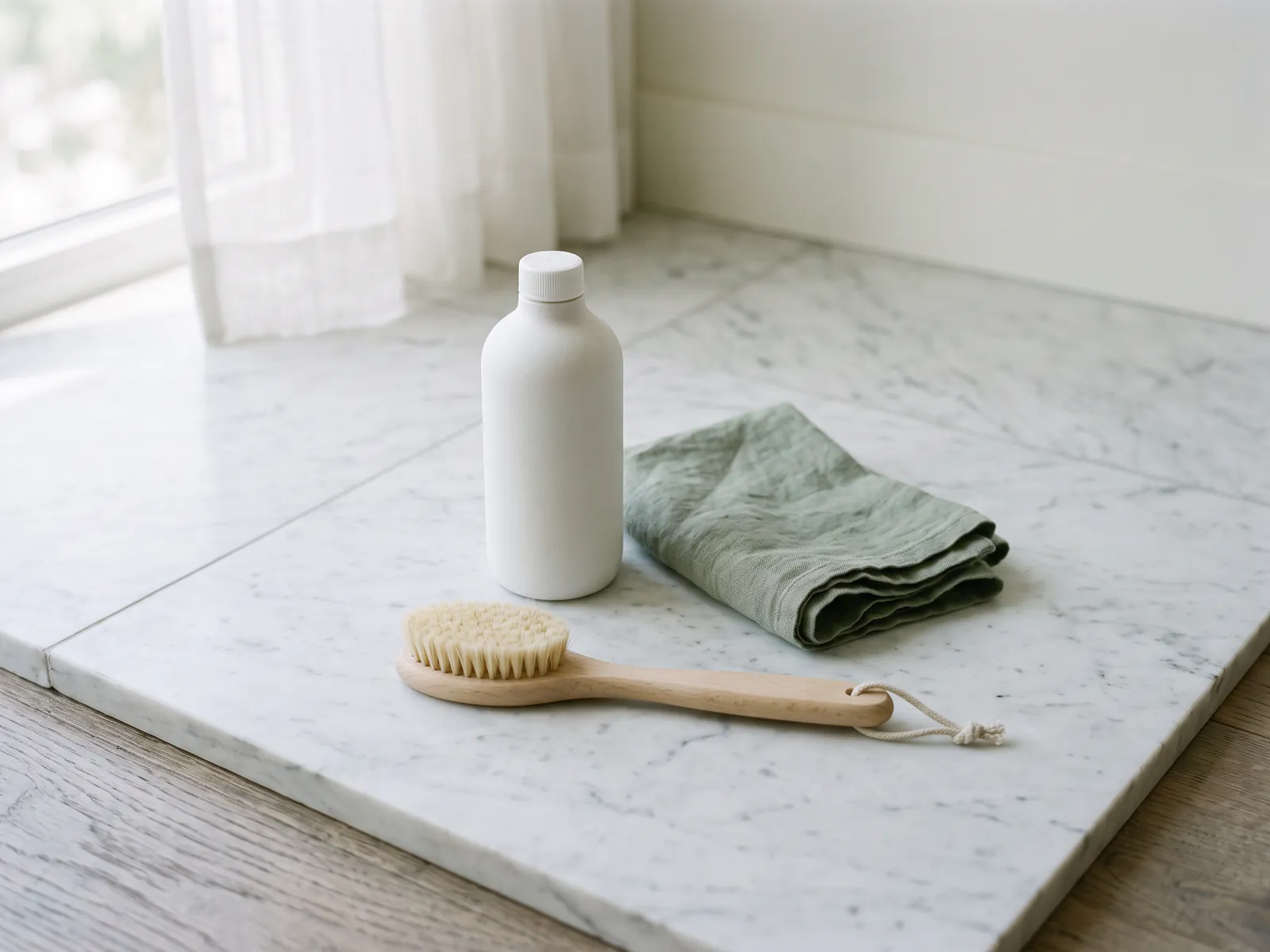
One category is safe: pH-neutral cleaners formulated for natural stone. Everything else on the household shelf fails in one of two directions. Acids, vinegar, lemon, limescale removers, most bathroom sprays, dissolve marble's calcium surface on contact, leaving dull etches that no amount of buffing with the same product will fix. Strong alkalis and degreasers strip sealers and slowly dull polish. Disinfectant concentrates like Dettol sit in the first camp and stain besides; bleach lives in the second.
The vinegar myth deserves its own sentence: vinegar is not a natural marble cleaner, it is a natural marble remover, and half the etched vanities in the Emirates trace back to it. Dedicated stone chemistry is the answer: FILA's neutral cleaners are built for exactly this job, concentrated for mopping and ready-to-use for counters, and cost a few fils per clean at dilution. When in doubt about any product, the label test is simple: if it promises to kill limescale, it will kill marble.
Sealing: what it does and doesn't do
An impregnating sealer soaks into natural marble's pores and lines them with a water- and oil-repellent barrier, buying you time: a sealed floor gives minutes instead of seconds to catch a coffee spill before it becomes a stain. That time is the entire product. Sealing does not make marble stain-proof, does not gloss the surface, and, critically, does not prevent etching, because acids attack the stone itself, not its pores.
Application is a wipe-on, dwell, wipe-off ritual covered in the sealing guide, and the water-drop test tells you when it is due: drip water on the stone, wait ten minutes, and if the spot darkens, the seal is spent. In UAE service, floors typically want annual resealing and kitchen marble more often. Engineered marble, with absorption under 0.1 percent, mostly cannot absorb sealer and mostly does not need it; test first rather than paying to seal a surface that refuses the product.
Etching vs staining: telling them apart
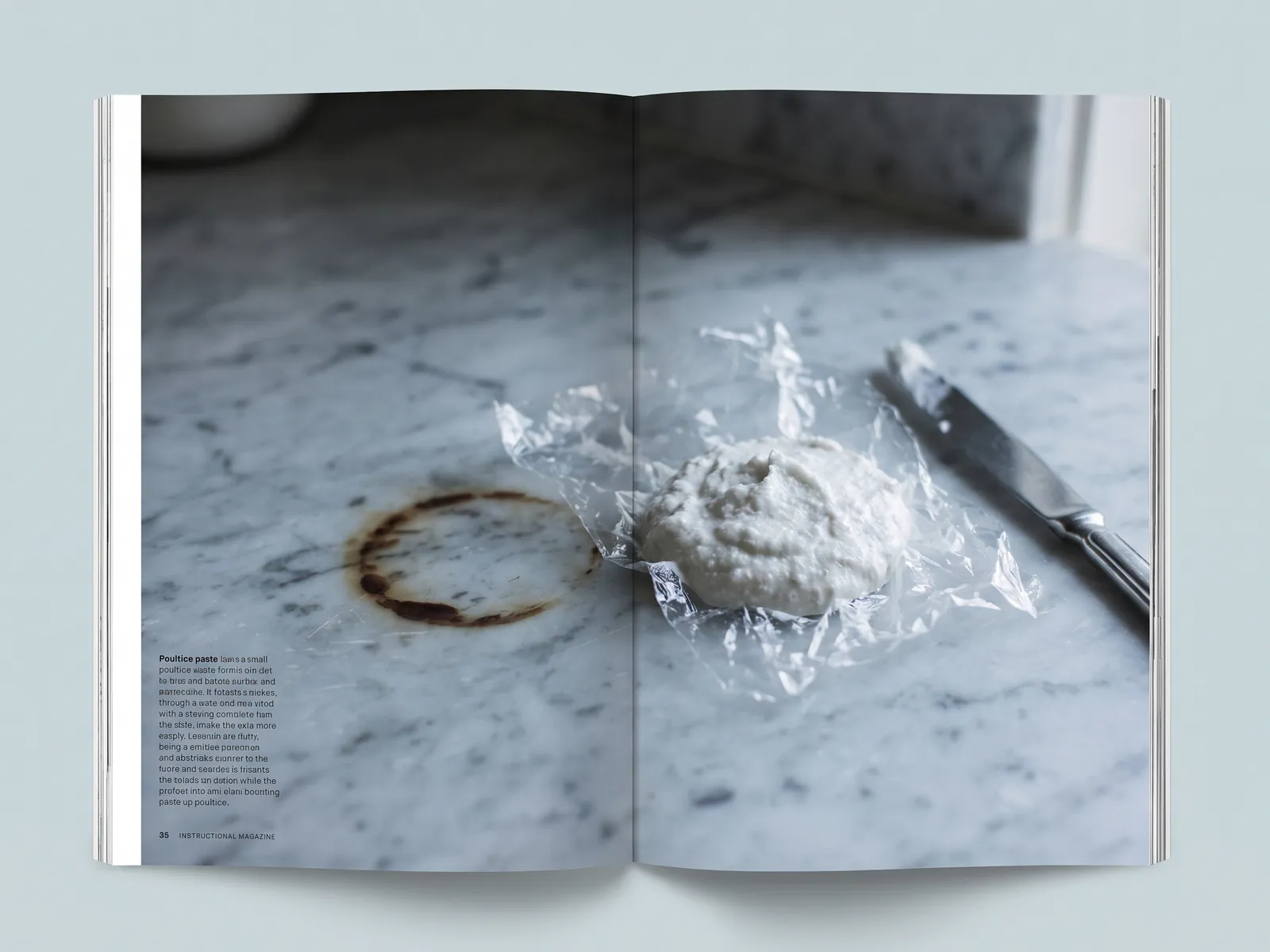
The distinction decides the entire repair, and it takes ten seconds. A stain is foreign material absorbed into the stone: it reads darker than the surrounding marble, keeps the surface gloss, and lifts out chemically with a poultice matched to the stain type. An etch is damage to the stone itself, acid has dissolved the polished surface: it reads lighter and duller than its surroundings, often feels faintly rough, and no cleaning chemistry on earth will remove it, because nothing is in the stone; the finish is simply gone. Etches are repolished, not cleaned.
Most real-world marks in UAE bathrooms are etches wearing a stain's costume: cosmetic bottles, lemon water and toothpaste all leave light rings that owners scrub at with ever-harsher cleaners, deepening the damage. Diagnose first, then act: darker means poultice, lighter means polish. The etching versus staining explainer covers the borderline cases where a mark is both at once.
UAE-specific enemies: sand, hard water, AC condensation
Three local forces age marble faster here than the material's reputation suggests. Sand is the quiet one: Gulf dust is fine, hard and everywhere, and underfoot it acts as lapping compound, micro-scratching polish along traffic lanes until they read grey. The defence is unglamorous and decisive: proper entrance matting at every external door and daily dry mopping, which together do more for a floor than any product.
Hard water is the visible one: desalinated supply carries minerals that print every dried droplet onto vanities and shower surrounds as white film, then bond to the stone if left. Wipe wet stone dry daily and the problem never starts; let it build and only careful chemistry removes it without harming the marble. AC condensation is the sneaky one: units and chilled lines that drip onto stone leave persistent damp patches that attract soiling and, over years, moisture staining. Check drip trays seasonally, especially before summer loads peak.
When to call a restoration professional
Call a professional when the problem is bigger than a hand can fix: widespread dullness across traffic lanes, etching too deep for polishing powder, lippage between tiles telegraphing through wear, cracks, hollow-sounding tiles, or a floor whose history of wrong cleaners has left it patchy beyond home remedy. Professional restoration is mechanical, not chemical: diamond grinding steps through successively finer grits, then honing powders or crystallisation bring the surface to the finish you specify, matte, satin or full gloss.
A competent crew restores a villa floor in days, and the result is genuinely new stone, because it is new stone, freshly exposed. Expect restoration pricing in Dubai to run per square metre in ranges that vary with condition and finish; get itemised quotes and ask specifically whether grinding or only crystallisation is included, as the words are not interchangeable. Between professional visits, the daily calendar above is what stretches the interval from years to a decade.
Questions, answered.
No. Disinfectant concentrates are acidic enough to etch and can stain besides. Use a pH-neutral stone cleaner; for genuine sanitising needs, use a stone-safe disinfectant made for the job.
Test rather than schedule: when a water drop darkens the stone within ten minutes, reseal. In UAE service that is typically yearly for natural marble floors; engineered marble rarely needs sealing at all.
Traffic-lane dullness is usually sand abrasion; isolated dull spots are usually acid etches. The first needs repolishing and better matting, the second polishing powder. Cleaners cannot restore lost gloss.
Rarely. Its absorption is so low that sealer mostly cannot penetrate. Run the water-drop test; if nothing darkens, save the product and keep to neutral cleaning.
Fresh film wipes off with a damp microfibre and neutral cleaner. Bonded scale needs a stone-safe descaler used exactly per label; ordinary limescale removers are acids and will etch the marble.
Global Classic Building Materials Trading LLC
Written from the Al Sajaa warehouse, Sharjah - slabs on racks, not stock photography. About the company