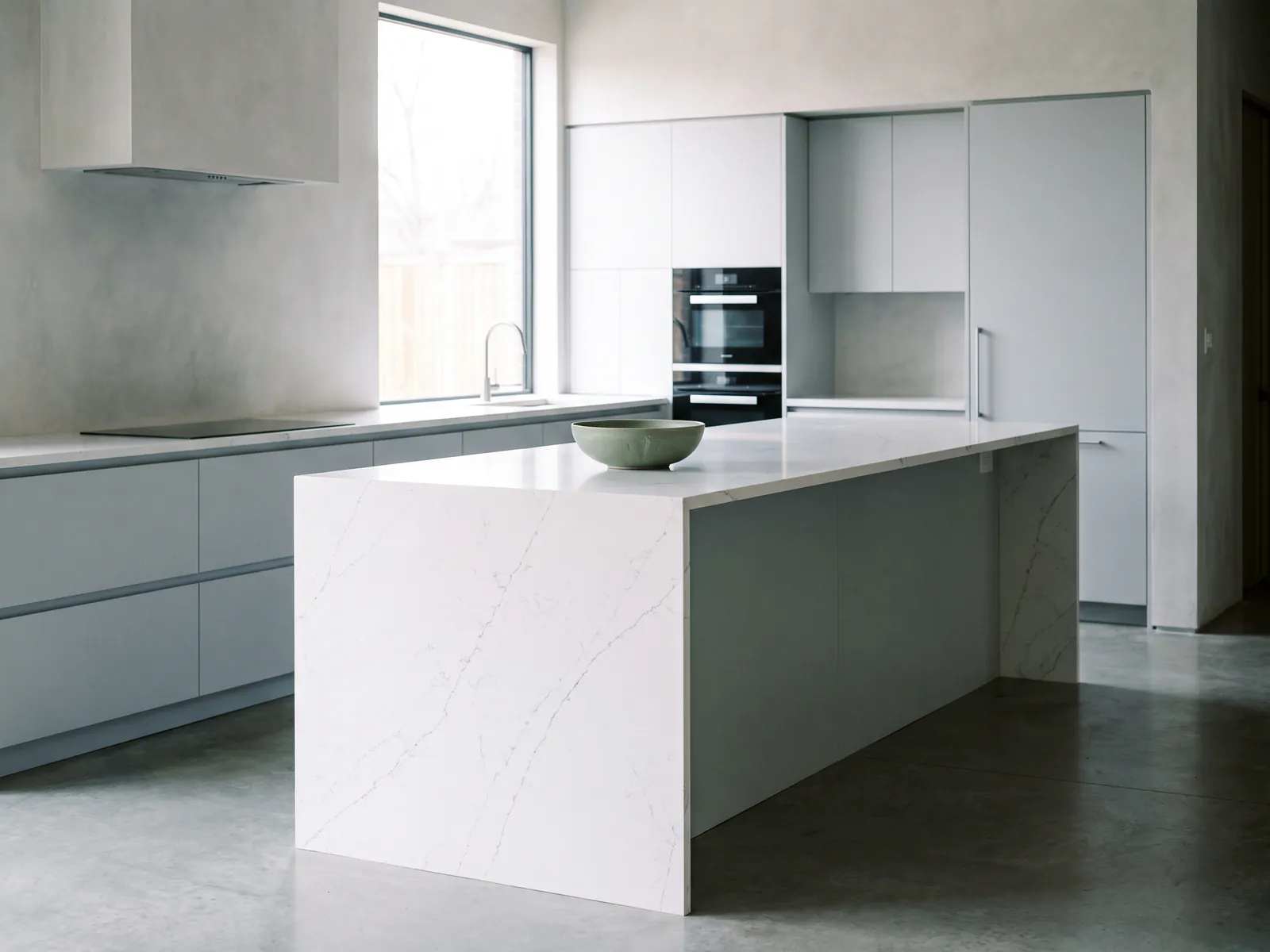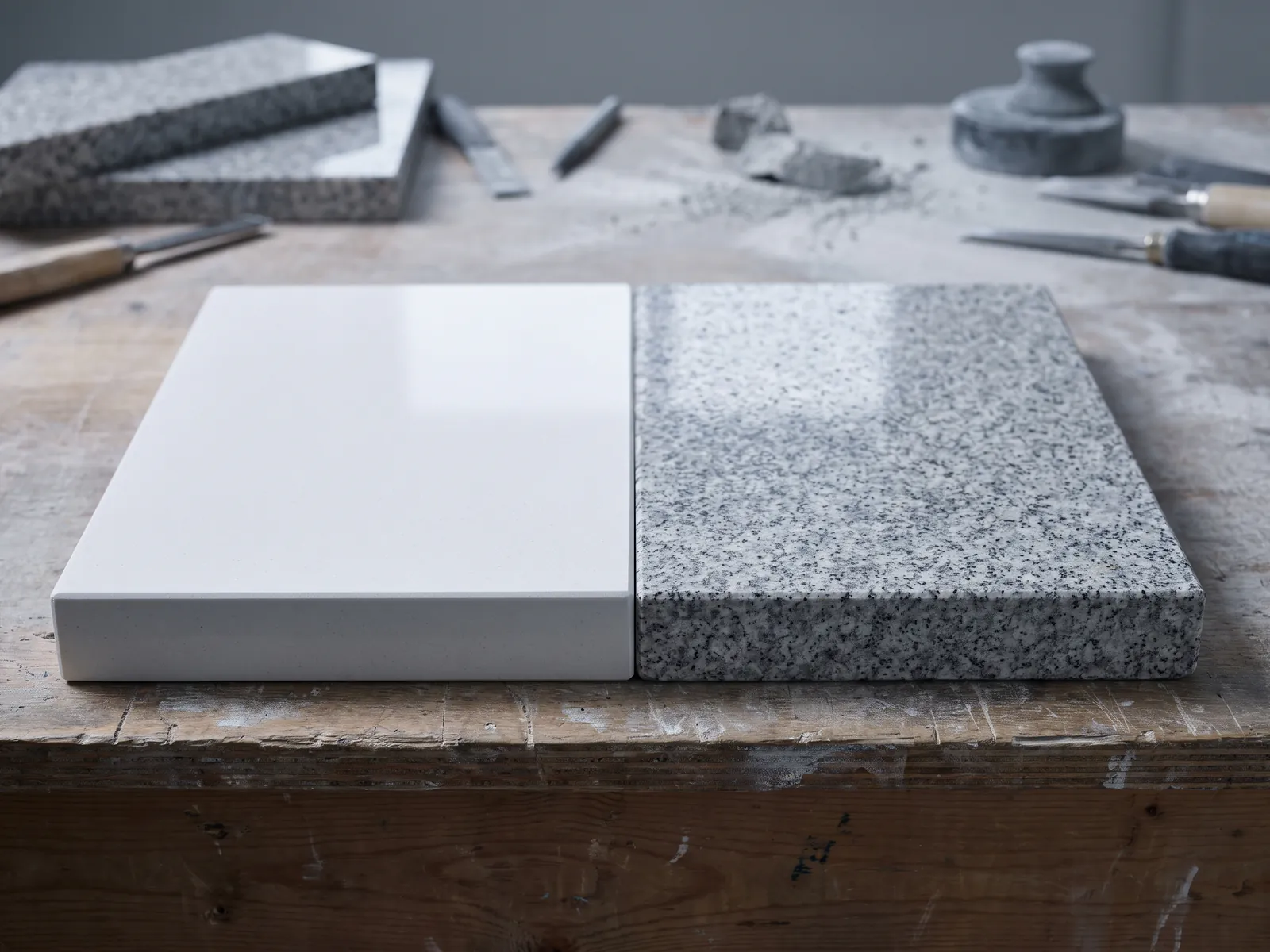
Granite tolerates heat better and costs slightly less; quartz never needs sealing, resists stains without effort, and offers consistent slabs in colours granite can't produce. For UAE kitchens where karak, coffee and oil are daily hazards and maintenance discipline is unrealistic, quartz is the pragmatic winner. Choose granite only if unprotected hot-pan contact is non-negotiable.
Hardness and scratching
Both surfaces are genuinely hard; the difference is texture of hardness. Granite is an interlocked crystal matrix, quartz among its minerals, and takes decades of knife accidents with grace, though its crystalline structure can chip at edges under impact. Engineered quartz is 90 percent quartz mineral in a resin matrix: uniform hardness across the slab, near-immune to scratching in kitchen service, and its resin fraction makes edges slightly more forgiving of the dropped pot.
In practice neither material asks you to worry about scratches from cooking life, and both still want cutting boards, for the knives' sake as much as the stone's. Where the difference surfaces is repair: a chipped granite edge fills visibly; a quartz chip repairs less noticeably but the material cannot be refinished across its face. Call hardness a draw with different accents, and let the next sections, sealing and stains, do the actual separating, as the complete quartz guide details.
Heat tolerance, honestly
Granite wins heat, cleanly. It is igneous rock, born of magma; a pan straight off the burner sits on it without ceremony, and outdoor granite shrugs at UAE summer sun. Quartz's resin fraction caps its tolerance around 150 degrees: direct hot metal can permanently whiten or mark the surface, and prolonged direct sun through glazing can slowly shift budget resins, which is why quartz stays indoors.
The honest framing: this is the single genuine advantage granite holds, and its value depends entirely on habits. Households that will always use trivets lose nothing with quartz; households with heavy wok cooking, or an aversion to rules, are buying an argument with their worktop. Outdoor kitchens decide themselves, granite or porcelain, never quartz. For everyone else the question becomes whether one habit is worth trading away sealing-free, stain-free service, which the rest of this comparison prices.
Sealing: the chore granite brings
Granite is porous, less so than marble, but enough that oil and wine find their way in through an unsealed surface. Ownership therefore includes the sealing cycle: test with a water drop, reseal when absorption returns, typically every one to three years by stone and use. Miss the cycle and the cooking zone slowly darkens with absorbed oil, a patina some forgive and most regret.
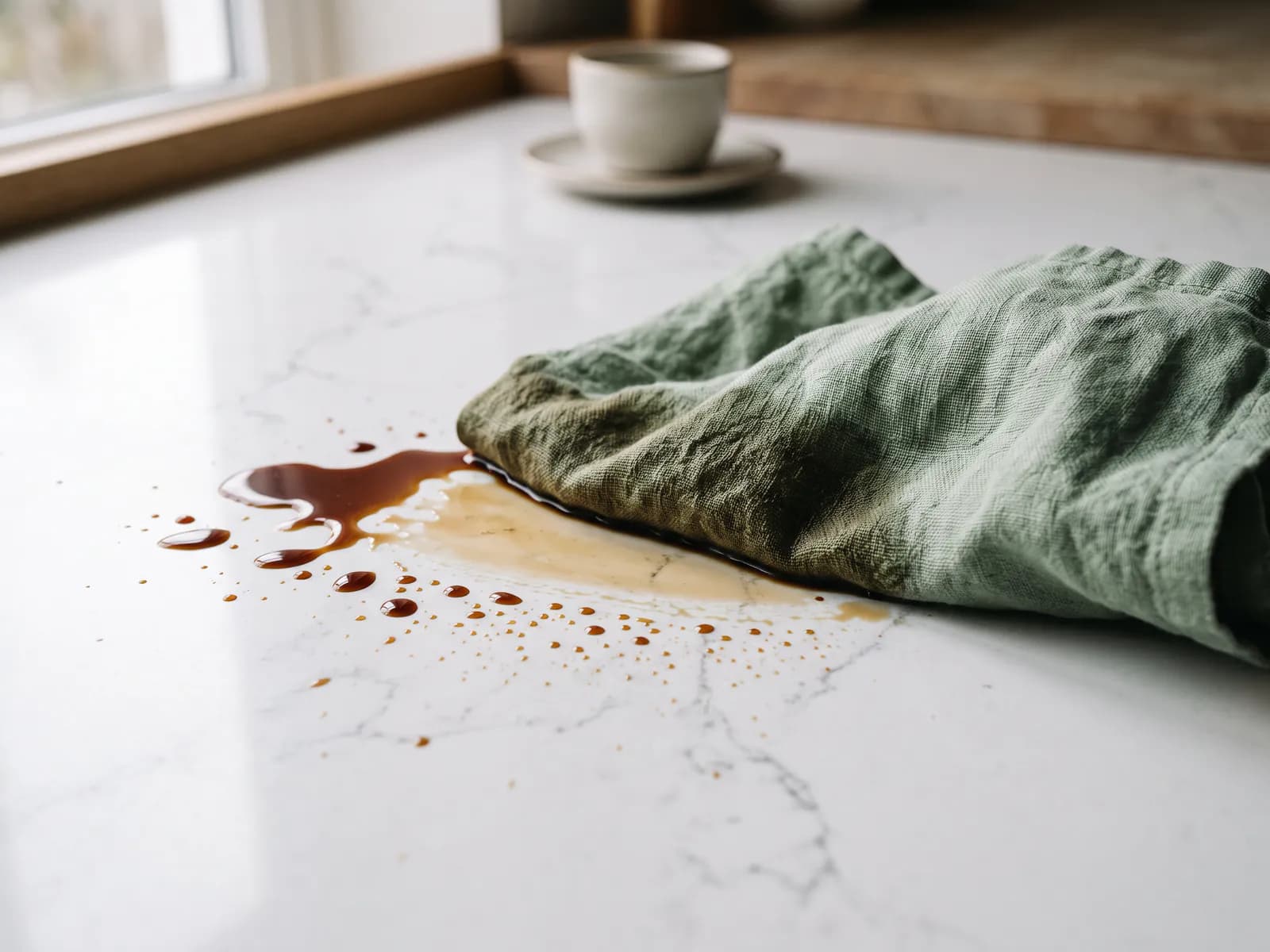
Quartz deletes the chore entirely: the resin-bound surface is non-porous, nothing penetrates, nothing needs topping up, and the maintenance program is a neutral cleaner and a cloth, full stop. In UAE terms this difference compounds: hard-water film and daily wiping are already the local tax on any worktop; adding an absorbency watch to granite is a second subscription. For owners who love their granite, sealing is ten minutes a year and worth it; for everyone else, the no-sealing argument is usually where this comparison quietly ends.
Colour and consistency
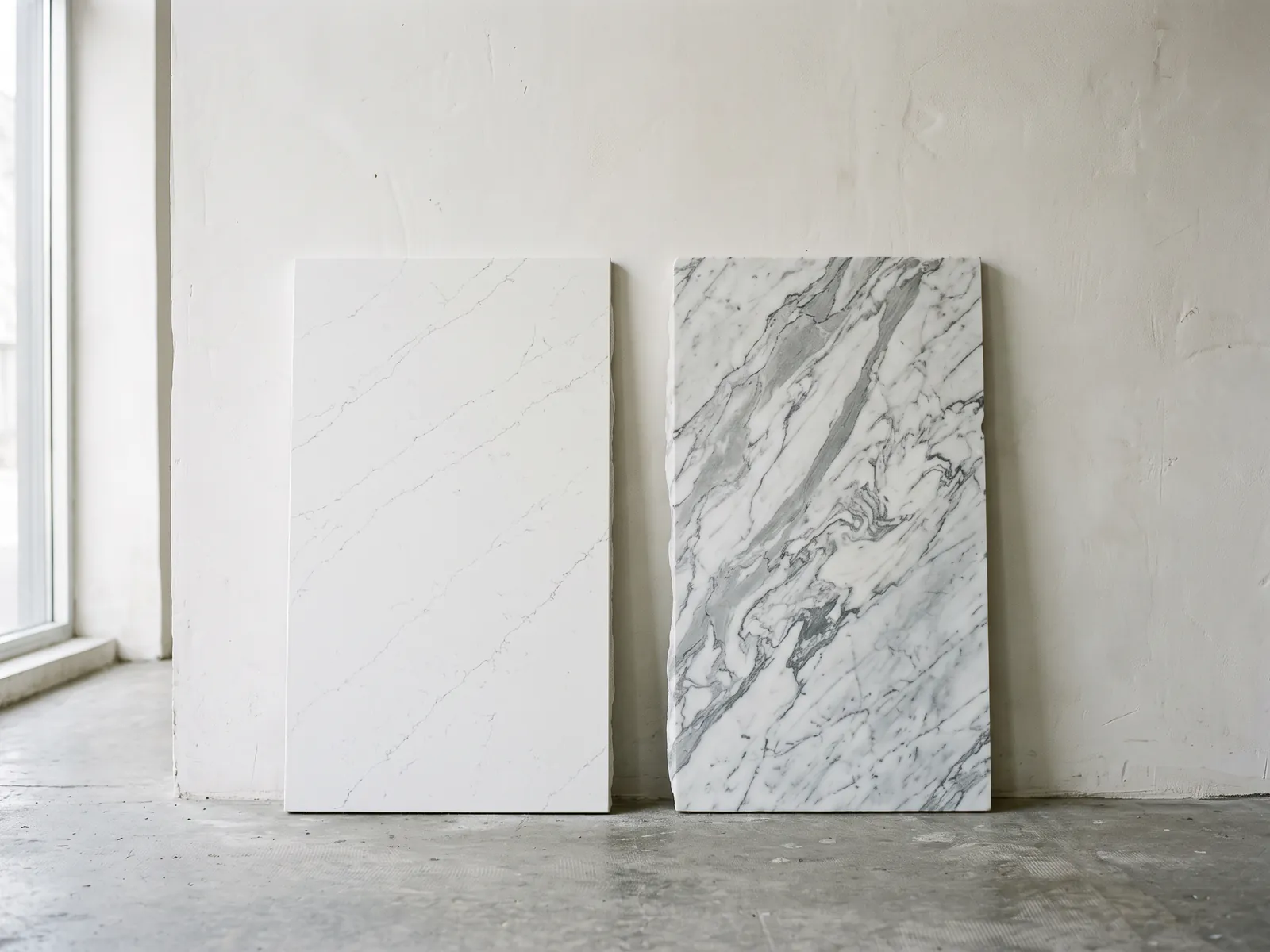
Granite's palette is geology's: speckled and flowing patterns in earth tones, greens, blacks and the occasional blue, each block unique, no two kitchens quite alike. What geology does not offer is the clean white and marble-veined territory that modern UAE kitchens overwhelmingly specify, and granite's slab-to-slab variation means the showroom sample and your delivered stone are cousins, not twins.
Quartz owns exactly that ground: pure whites, Carrara-look and Calacatta-look veining, concrete greys and consistent solids, manufactured identically batch after batch, so a three-slab kitchen matches across every joint and a replacement panel years later still matches. Design flexibility extends to format, with jumbo slabs crossing islands seamlessly. For traditional and rustic schemes granite's liveliness remains the point; for the white-and-light contemporary brief, the white quartz families are the reason this comparison exists at all.
UAE price comparison
As of 2026, the two materials overlap heavily in Dubai: entry granite undercuts entry quartz, mainstream granites supplying from roughly AED 200 per square metre against AED 250 to 500 for standard quartz slab ranges, while premium granites and designer quartz both climb well beyond either band; every figure is supply-only, varies by grade and format, and carries fabrication as a separate line. The sticker difference at the entry level rarely survives a full-scope quote once edges, cutouts and installation land.
The truer economics are operational. Granite carries the sealing cycle and a small risk premium in slab variation and matching; quartz carries neither, and its predictable slabs make design-to-slab planning, and therefore wastage, tighter. Over a decade the totals converge toward a verdict of taste and habits rather than money. Get both numbers itemised, as the quartz pricing guide recommends, and let behaviour, heat versus maintenance, cast the deciding vote.
Questions, answered.
They overlap: entry granite is usually cheaper than entry quartz, while premium versions of both reach similar heights. Installed scope, edges and cutouts often matter more than the slab rate.
Every one to three years for most granites in kitchen service; test with a water drop and reseal when it darkens the stone. Quartz never needs sealing.
Its content is about 90 percent natural quartz mineral; the slab itself is engineered with resin. Granite is wholly natural, quarried and cut.
Contemporary briefs read veined white quartz as the luxury standard; classical and rustic schemes wear granite's depth better. Luxury follows coherence with the design, not the material name.
Global Classic Building Materials Trading LLC
Written from the Al Sajaa warehouse, Sharjah - slabs on racks, not stock photography. About the company