Engineered marble beats natural on consistency, porosity and price: every slab matches, absorption is under 0.1 percent, and it costs less than comparable quarried stone. Natural marble wins on uniqueness and prestige, each slab is one of one. For large UAE floors where lippage-free uniformity matters, engineered is usually the correct specification.
How each is made
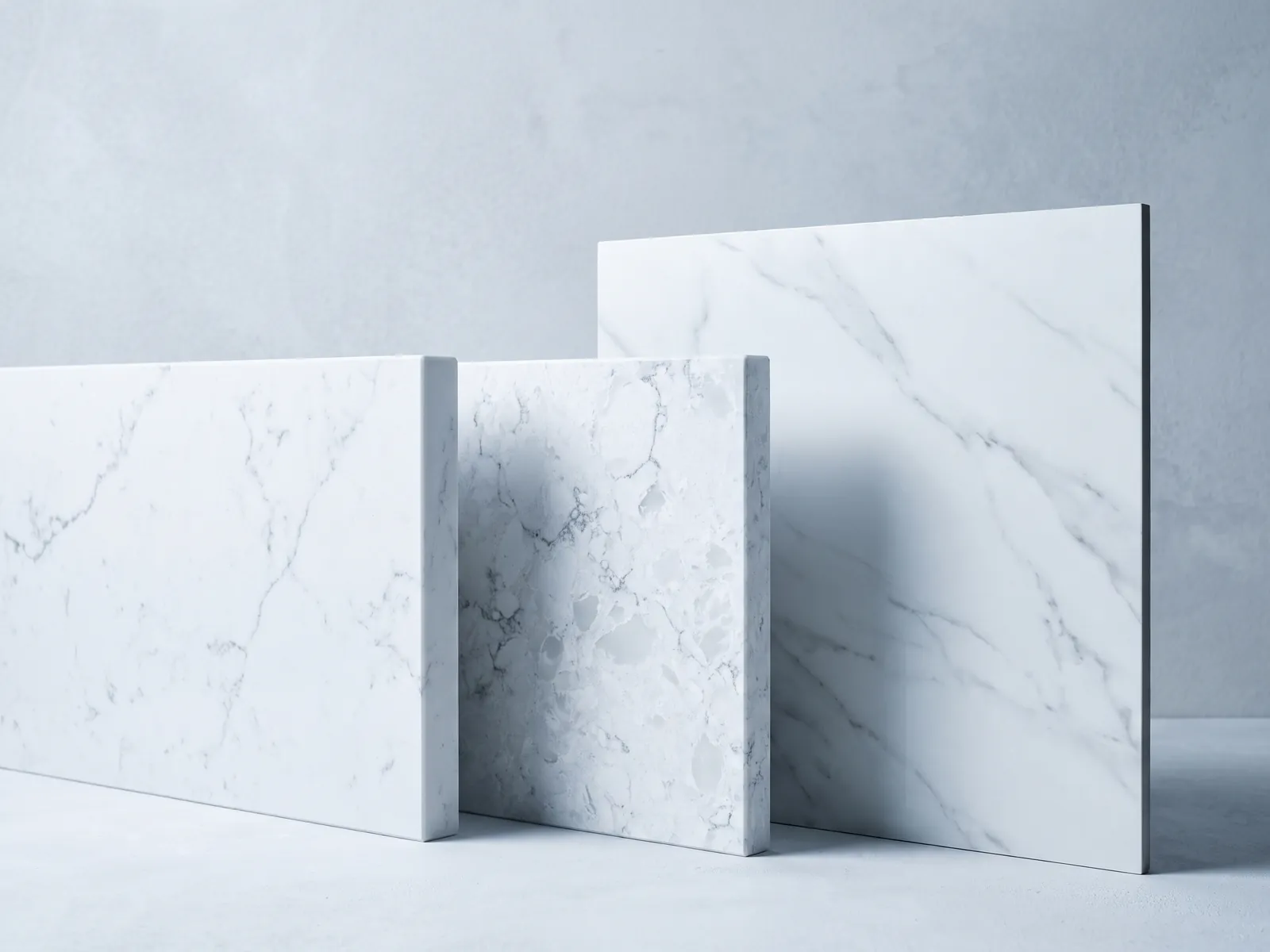
Natural marble is metamorphic geology: limestone recrystallised under heat and pressure over millions of years, quarried in blocks, sawn into slabs and polished. Its veining is mineral history, unrepeatable by definition. Engineered marble compresses that story into a factory: crushed natural marble, 90 to 95 percent of the mix, is bound with resin and pigment, vacuum-compacted to drive out air, cured, then sawn and polished exactly like quarried stone.
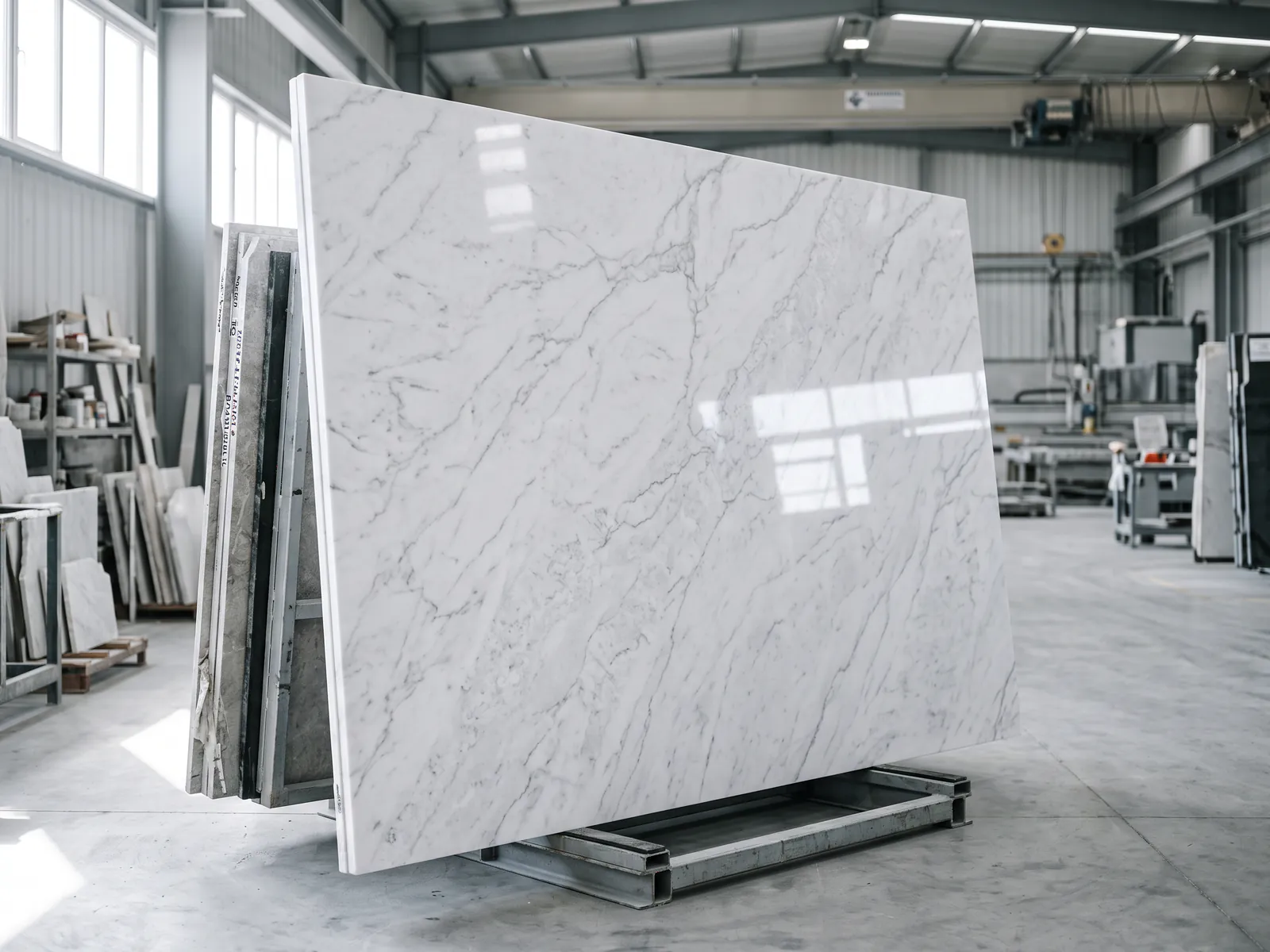
The processes explain the products. Quarried slabs vary block to block and carry natural fissures; the vacuum-pressed slab is uniform through its body, denser than most quarried marble, and free of the surprises that make natural stone both loved and litigated. Both end their journey on the same polishing lines and both arrive as slabs on racks; the engineered range is produced on Italian SIMEC lines and polished past 85 percent gloss before shipping.
Porosity and staining compared
Porosity is the widest gap between the two materials. Natural marble absorbs water at rates that vary by stone but are never trivial; unsealed, a coffee spill can mark it in minutes, which is why the sealing ritual exists at all. Engineered marble's vacuum-compressed body absorbs under 0.1 percent, low enough that most spills sit on the surface waiting for a cloth, and low enough that sealer usually cannot even penetrate.
In UAE service the difference compounds: hard-water splashes on natural stone vanities bond into mineral film and, over time, moisture marks; on engineered surfaces they wipe away dry. What porosity does not change is acid sensitivity: both materials are overwhelmingly calcite, and lemon, vinegar and harsh cleaners etch both. Engineered marble is the lower-maintenance surface, not a maintenance-free one; the care guide applies to both, minus most of the sealing chapter.
Visual difference: can you tell?
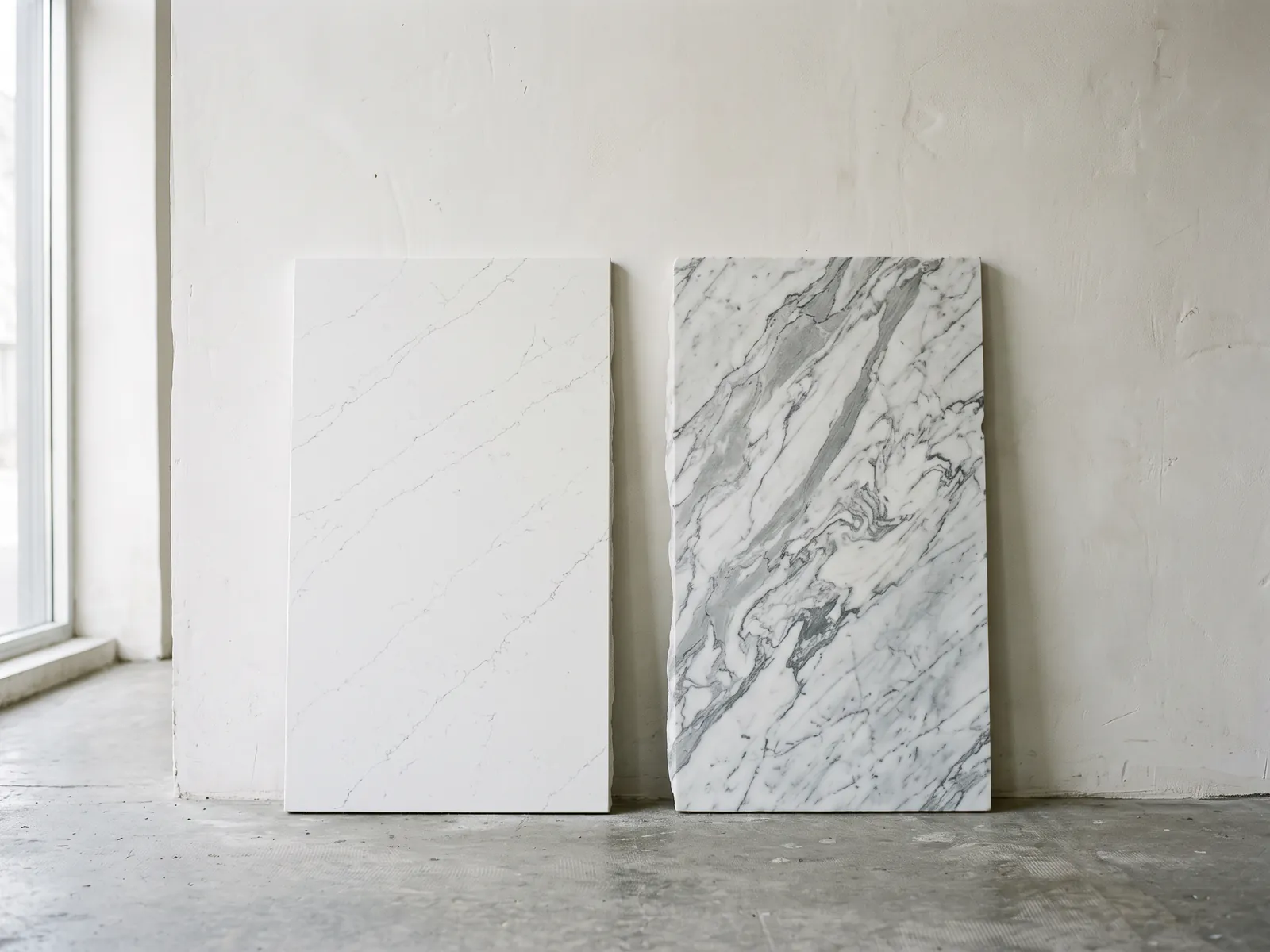
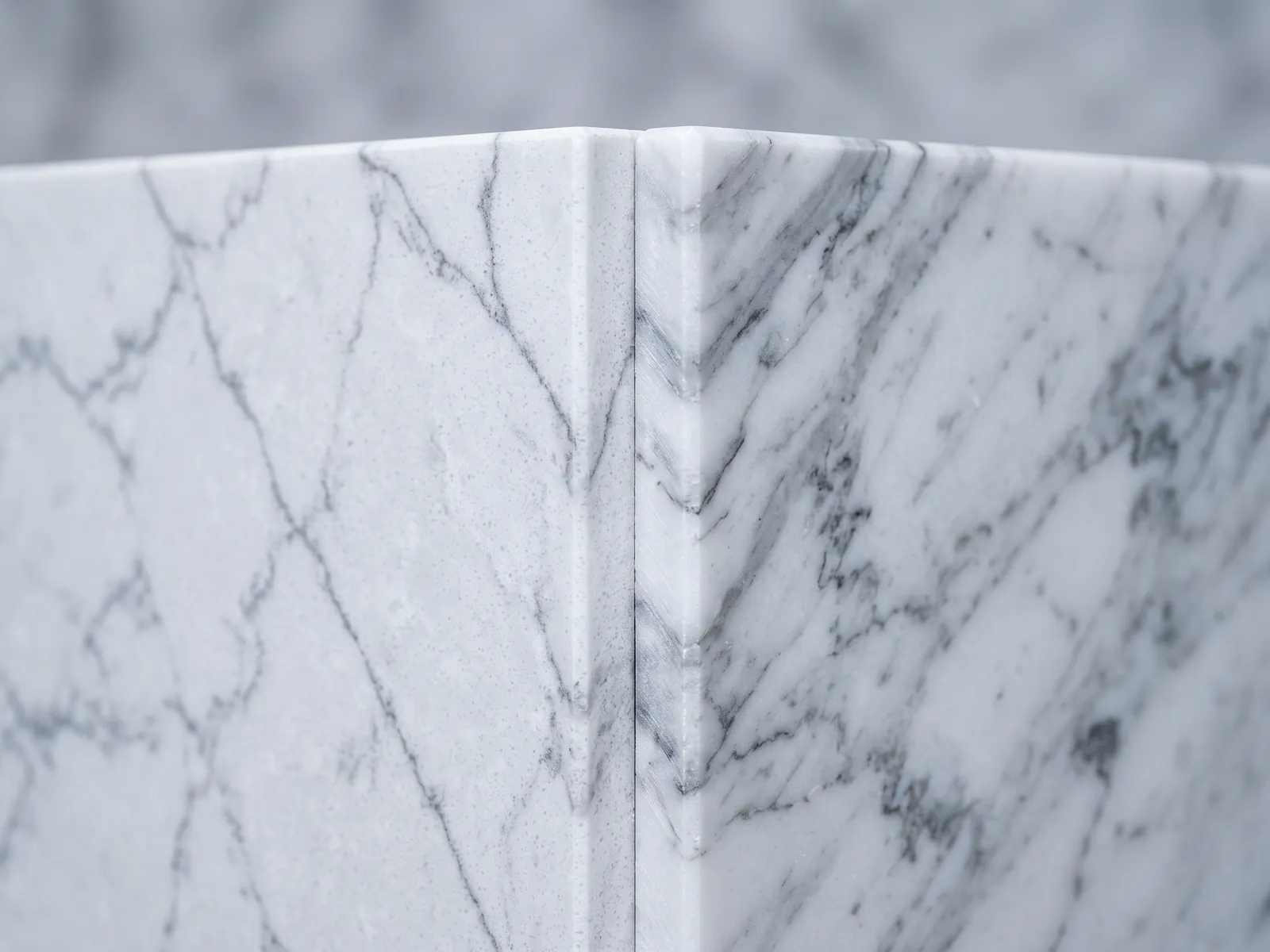
Up close and slab by slab, a trained eye can tell: natural marble's veining has irregular depth, crystal sparkle and occasional flaws that engineered patterning, however good, approaches rather than equals. At room scale the question inverts: across a large floor, natural marble announces itself through variation, tone shifting subtly from slab to slab, while engineered marble reads as one continuous intentional surface. Which reading is correct depends entirely on the design.
Contemporary UAE interiors often want the engineered answer: seamless fields of stone as a quiet ground for architecture. Classical and collector interiors want the quarry's fingerprints. The honest test is distance: at three metres, in a finished room, most guests cannot tell; at thirty centimetres, most designers can. Anyone deciding should stand in front of both, which is the entire argument for viewing slabs on racks rather than choosing from photographs.
Price per square metre in Dubai
As of 2026, engineered marble slabs in Dubai supply at roughly AED 250 to 500 per square metre, the same band slab-grade mid-tier Italian and Turkish naturals trade in, with statement material starting around AED 500 and climbing steeply; cheaper commercial-grade imports around the market are tile-format stock, not slab material. All ranges vary by grade, thickness and format, a slab covers about 4 to 5 square metres, and fixing is a separate applicator scope. On like-for-like visual quality, engineered matches the natural stone it resembles on price while removing its risks.
The hidden economics favour engineered further at scale: wastage on natural stone runs higher because slabs vary and fissures surprise, book-matching consumes material, and site rejection is a real line item. Engineered wastage is predictable cutting loss. For a villa floor of several hundred square metres, that gap is not marginal. The Dubai marble pricing guide breaks the full cost anatomy down, including the supply-versus-supply-and-fix distinction that confuses most first quotes.
Which for floors, which for statements
Floors, especially large ones, argue for engineered marble: uniform calibration lays flat with minimal lippage, consistent tone survives the transition from showroom sample to 400 delivered square metres, and repolishing keeps decade-old floors current. UAE villas, hotel corridors and retail fields are exactly this use case, which is why the specification has become the professional default for scale.
Statements argue for whichever stone tells the better story. A bookmatched natural slab with dramatic veining is irreplaceable theatre for a majlis wall or reception desk, and its one-of-one nature is the point. But engineered marble has entered statement territory too, with bold-veined series designed for exactly these walls, at friendlier numbers and with a matching second slab guaranteed. The working rule: fields engineered, features by taste and budget. Both paths run through the same warehouse, which makes comparing them in person straightforward.
Questions, answered.
No. It is 90 to 95 percent real crushed marble, reconstituted into slabs. Printed ceramic imitations are the fakes; engineered marble is the same mineral, manufactured into a more consistent form.
Engineered marble is denser and less porous, with more predictable flexural strength; natural marble varies by stone and can carry hidden fissures. For structural consistency, engineered wins.
It presents as marble because it substantially is, and buyers respond to coherent, well-kept stone surfaces. Condition and design coherence drive value more than the quarried-versus-engineered distinction.
Yes. Both are solid marble through their thickness, so both restore mechanically. This is a genuine advantage over porcelain imitations, which cannot be refinished once worn or chipped.
Global Classic Building Materials Trading LLC
Written from the Al Sajaa warehouse, Sharjah - slabs on racks, not stock photography. About the company