Quartz is harder, non-porous and nearly maintenance-free, which makes it the practical choice for kitchen worktops. Marble, natural or engineered, offers depth and veining quartz imitates but doesn't fully match, at the cost of more care. In the UAE the working rule: quartz for kitchens and heavy-use surfaces, marble for floors, walls, vanities and rooms meant to impress.
The material difference in one minute
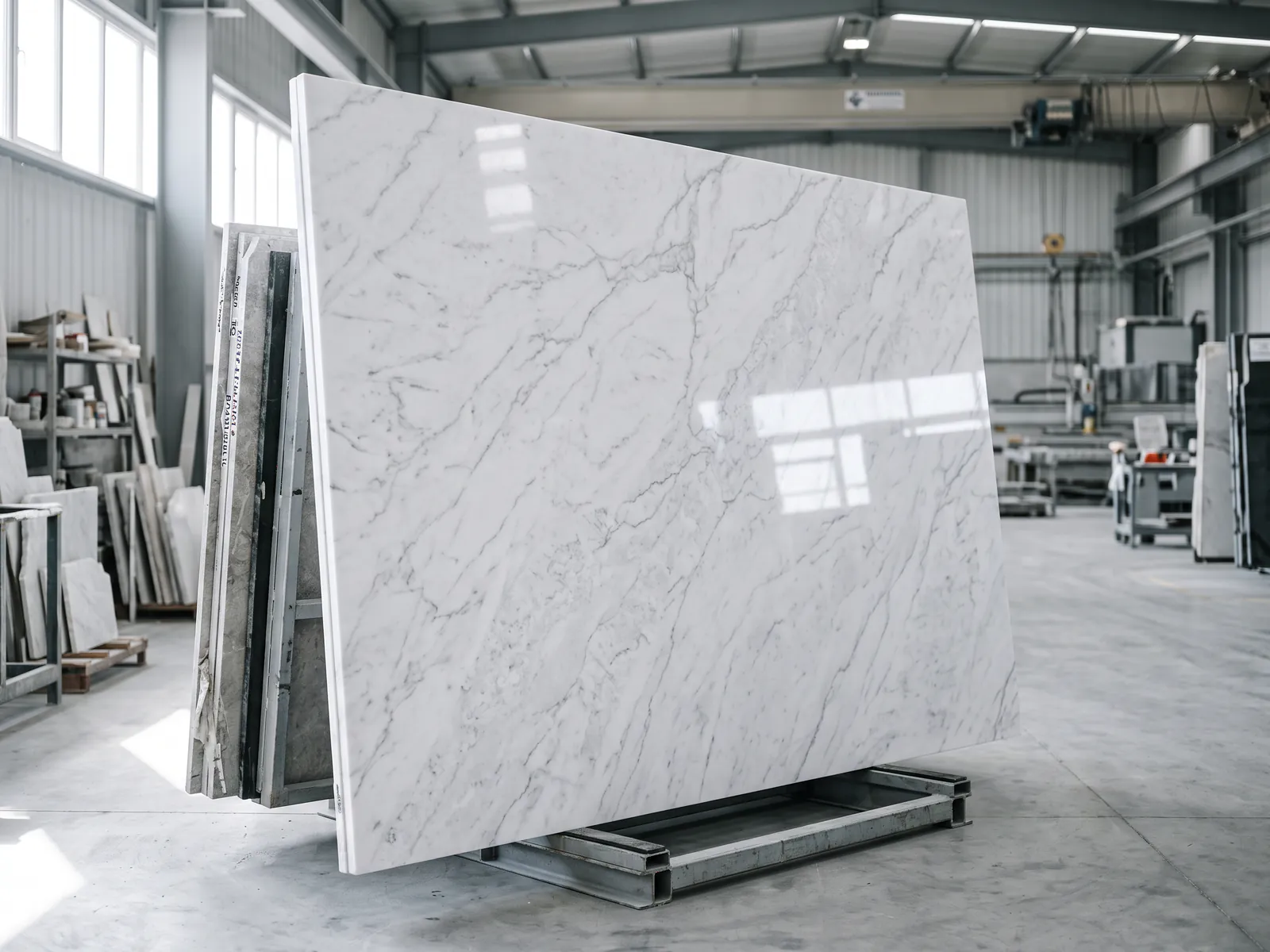
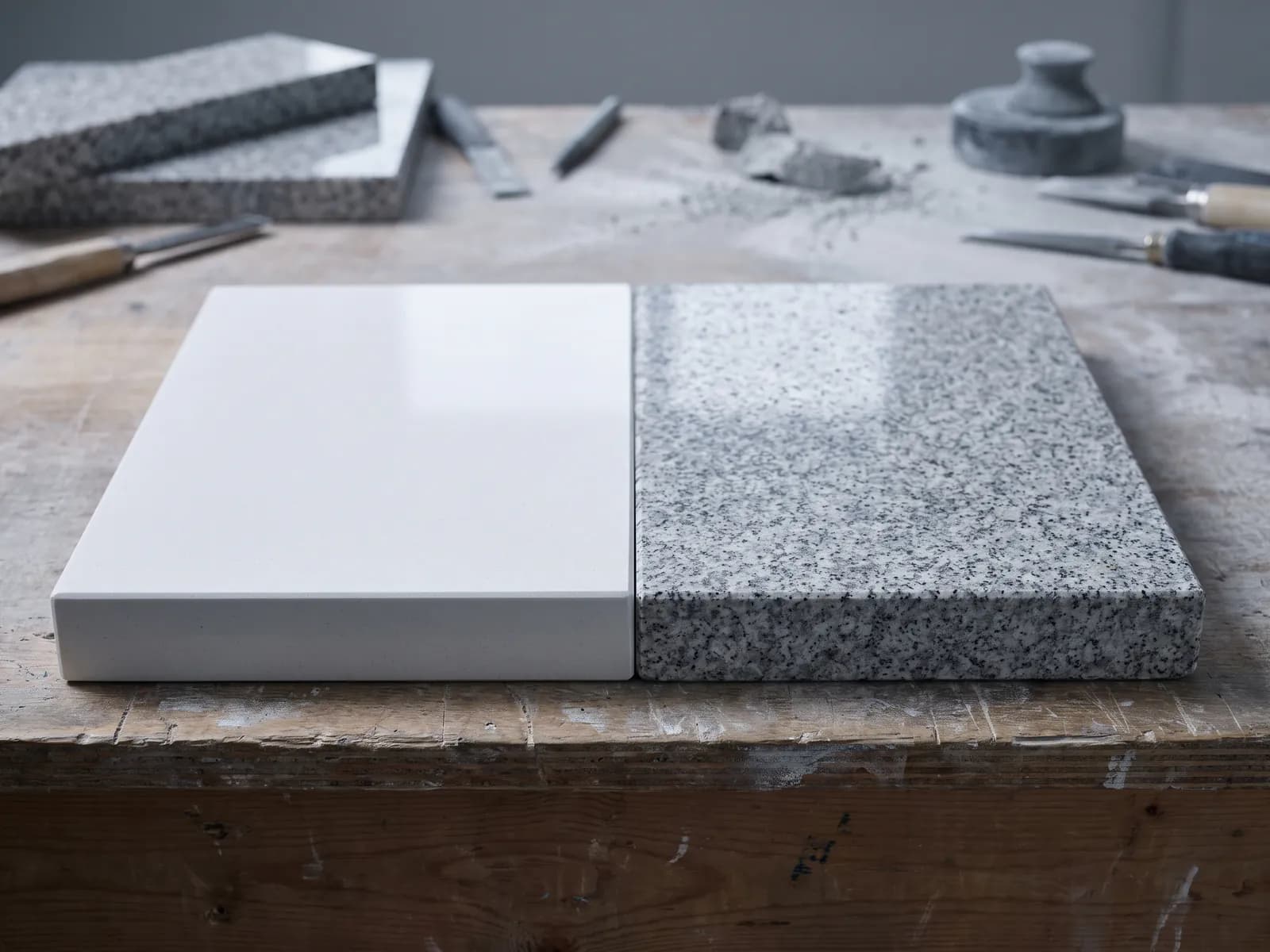
Quartz surfaces are about 90 percent crushed quartz mineral in resin; engineered marble is 90 to 95 percent crushed marble in resin; natural marble is quarried stone, cut and polished. Quartz the mineral is dramatically harder than calcite, the mineral marble is made of, and that single fact drives most of the practical differences: scratch resistance, acid behaviour and stain performance all trace back to it.
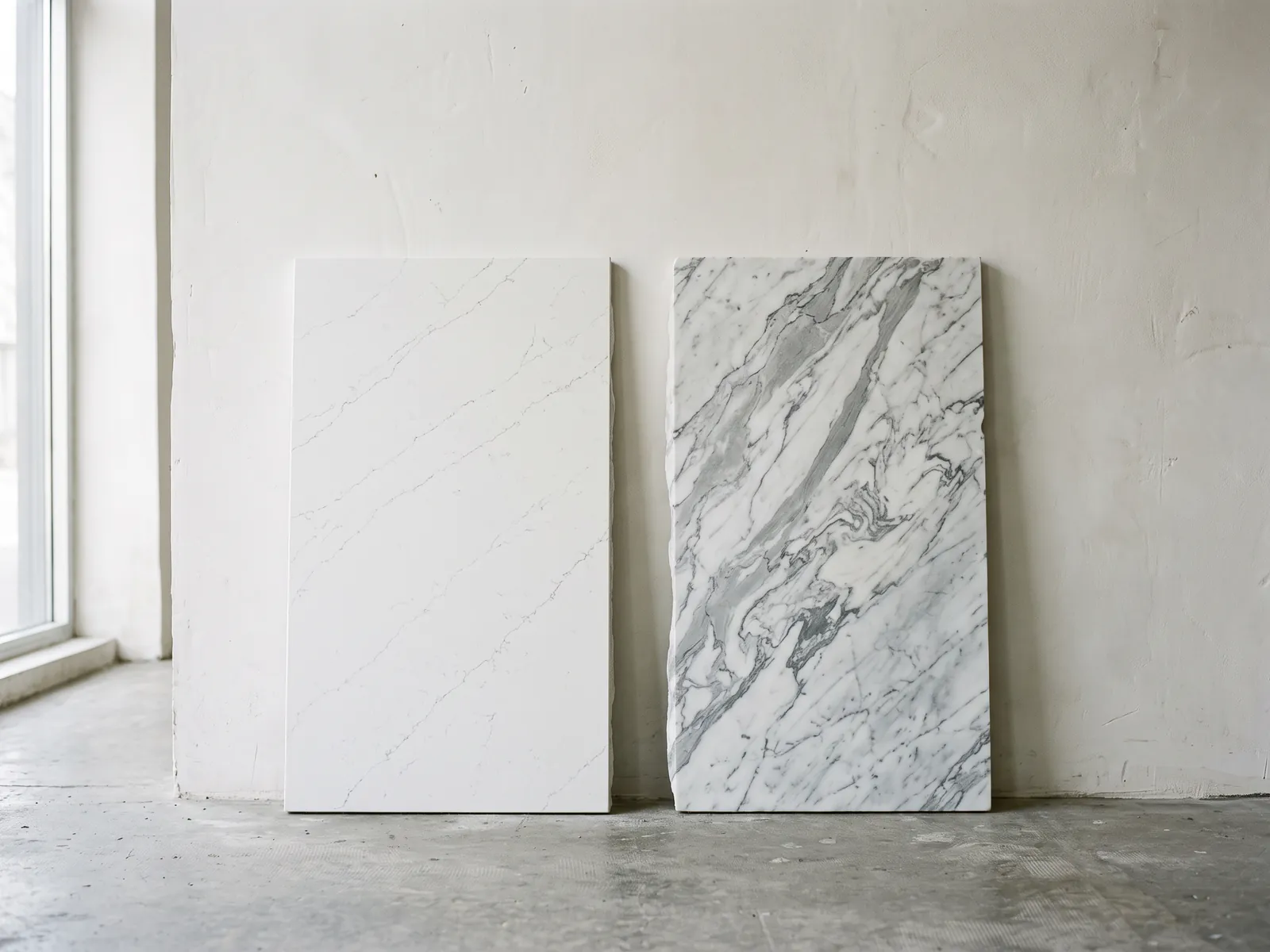
Visually the materials pull in opposite directions. Marble's veining runs through the stone with a depth that reads under light, which is why it has flattered architecture for two thousand years. Quartz patterns have closed the gap impressively at conversation distance, but the look is manufactured into the slab. Both engineered families share one advantage over the quarry: consistency, slab after slab. The complete quartz guide and engineered marble guide cover each material's full story.
Durability: scratching, staining, etching
Quartz wins all three tests. Scratching: quartz shrugs off knives and keys; marble, softer, picks up fine scratches from grit and utensils. Staining: quartz is non-porous and wipes clean of coffee, karak, oil and turmeric even after hours; natural marble absorbs, engineered marble resists far better but still prefers spills wiped. Etching is the decisive gap: acids, lemon, vinegar, soft drinks, dissolve marble's calcite surface on contact, leaving dull marks that only repolishing removes, while quartz simply does not react.
Marble's counterpunch is repairability: both natural and engineered marble repolish beautifully, so a decade of wear grinds away to fresh stone. Quartz cannot be refinished; what protects it forever also means damage, when it happens, is permanent. In UAE terms: beside the hob and sink, chemistry argues for quartz; in rooms where shoes and sand are the only enemies, marble's repairability keeps it honest.
Where each wins: room-by-room
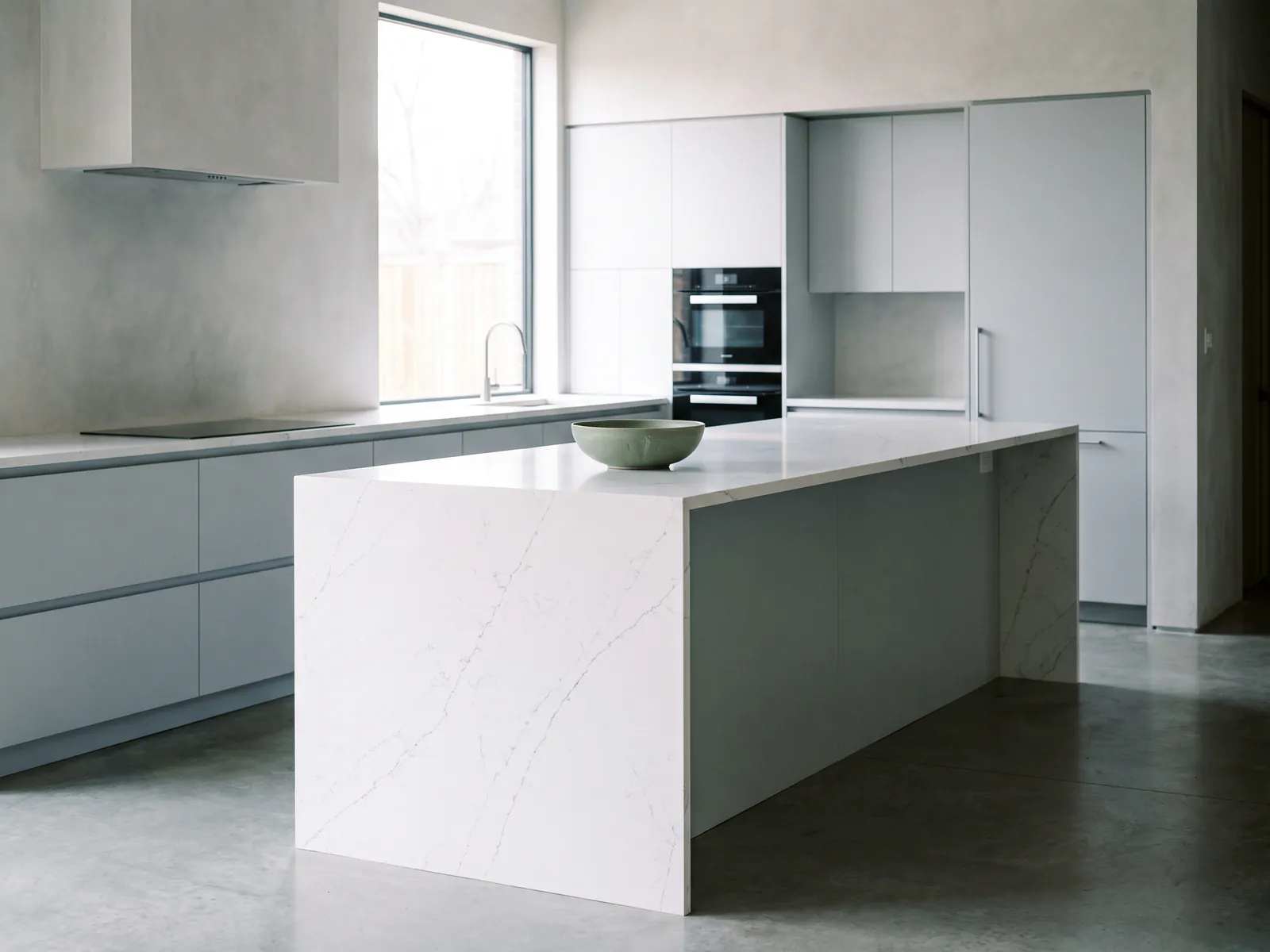
Kitchen worktops: quartz, without hesitation; daily acids and hot cookware punish marble here. Kitchen islands and splashbacks: either, since these surfaces see lighter chemistry and marble's looks earn their keep. Bathrooms: marble leads, engineered marble especially on vanities where cosmetics meet hard water, with the caveat that acid-based toiletries etch natural stone. Floors: marble, and at scale engineered marble, whose slab-to-slab consistency keeps a 400 square metre villa floor reading as one material; quartz is rarely specified underfoot.
Walls and features: marble again, bookmatched or fluted, because this is the theatre the material was born for. Utility and laundry: quartz, purely practical. The pattern is consistent: quartz where life is hardest, marble where the room is meant to be seen. Both ranges live side by side in the KalingaStone catalogue, which is convenient when one project needs both answers.
Cost comparison in the UAE market
As of 2026, the two materials overlap more than buyers expect. Quartz, engineered marble and slab-grade mid-tier natural marble all trade in a supply-only band of roughly AED 250 to 500 per square metre in Dubai, with designer quartz formats and statement natural stones pricing well above it; fabrication and fixing are quoted separately. All figures vary by grade, format and fabricator; treat them as framing, not quotation.
The structural difference is where the money goes. Quartz cost concentrates in fabrication, cutouts, edges and installation around a small area of worktop. Marble cost spreads across large floor and wall areas where wastage, thickness and finishing drive totals. Comparing the two on slab price alone misleads; compare finished, installed scope. For a real project, a BOQ priced against live stock settles it faster than any table, usually within one working day.
Can you mix them in one home?
Yes, and the best UAE homes usually do. The materials are teammates, not rivals: quartz takes the kitchen's working runs, engineered marble takes the floors, walls and vanities, and the palette is chosen so the two read as one family. The trick is tonal discipline: pick the hero first, usually the floor marble, then choose a quartz whose ground colour and vein temperature agree with it, warm whites with warm, grey-veined with grey.
Avoid the common miss of two competing bold patterns; one surface gets the drama, the other supports quietly. Finish levels should also agree: a honed floor beside a polished worktop reads as intentional contrast, two half-gloss surfaces read as a mismatch. Done well, the mix delivers each material where it performs best and the whole house benefits. Sampling both from one supplier makes the tonal matching trivial, which is precisely the point of a combined range.
Questions, answered.
Per installed worktop, quartz and mid-tier marble overlap; engineered marble often costs less per square metre than quartz. The comparison depends on application: worktop fabrication versus floor area.
Both outlast their owners when treated correctly. Quartz resists damage better; marble repairs better, since it can be repolished. A maintained marble floor and a respected quartz worktop are both decades-long surfaces.
Buyers respond to condition and coherence more than material. A pristine quartz kitchen and well-kept marble floors both photograph and show well; an etched, stained surface of either kind costs value.
More easily than quartz. Fine grit and dragged objects mark it over time, which is why entrance mats matter on marble floors. The consolation: scratches polish out; quartz damage does not.
Global Classic Building Materials Trading LLC
Written from the Al Sajaa warehouse, Sharjah - slabs on racks, not stock photography. About the company