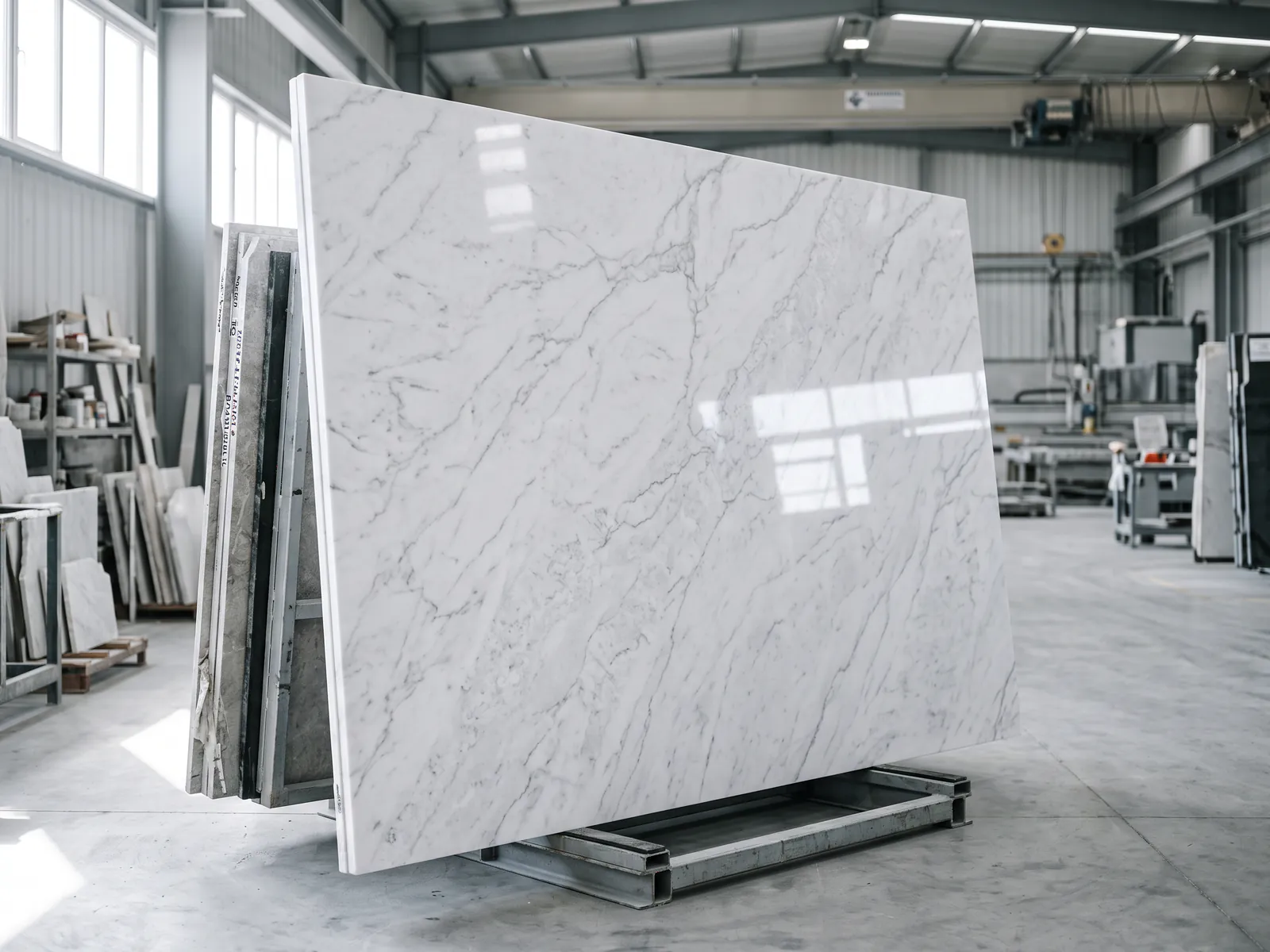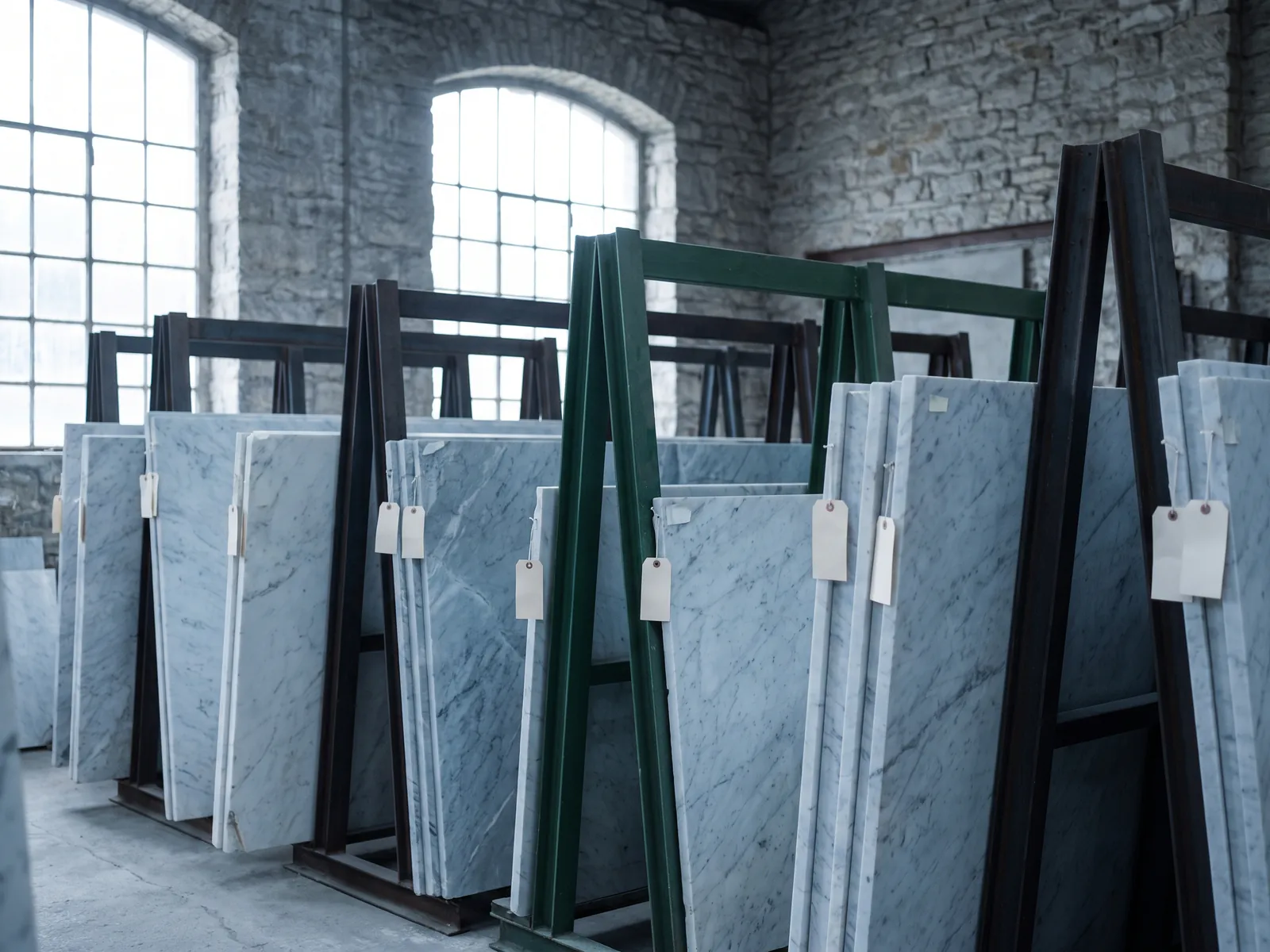
In Dubai, slab-grade marble runs roughly AED 250 to 500 per square metre supply-only as of 2026, whether mid-tier natural stone or engineered marble, and a full slab covers about 4 to 5 square metres. Statement stones like Calacatta climb well beyond that band, and cheaper tile-format commercial stock is a different product, not slab material. Installation is a separate scope priced by the applicator; thickness, book-matching, finish and wastage move the final number more than the sticker price.
Price ranges by marble type
As of 2026, the Dubai slab market frames roughly like this, per square metre supply-only and varying by grade and supplier. Slab-grade material, mid-tier Turkish and mainstream Italian naturals alongside engineered marble, trades in a band of roughly AED 250 to 500. Statement stones, Calacatta, Statuario, exotic greens and blacks, start around AED 500 and climb steeply with figure quality, past AED 1,000 for the serious book-matched lots. The commercial-grade Indian and Chinese beiges quoted far cheaper around the market are tile-format stock, a different product for a different job, not slab material. One number worth holding: a full slab covers about 4 to 5 square metres, so the per-slab arithmetic is the band multiplied through.
Within each band, four gradings move the number: block quality, vein figure, slab thickness at 18 versus 20 millimetres, and finish. The same stone name can honestly sell at double the price between a B-grade and premium lot, which is why a price quoted without a viewing means little. Ranges here frame negotiation; slabs on racks settle it. The engineered marble range is priced from live Al Sajaa stock in AED.
What's included: supply vs supply-and-fix
Supply-only buys slabs at the warehouse; supply-and-fix delivers a finished floor. The gap between the two numbers covers cutting, transport, screed or adhesive systems, laying, grouting and initial polish, and it is priced by the applicator against the specific scope - room sizes, layout complexity, substrate condition - so no honest blanket figure exists. Comparing one contractor's supply-and-fix quote against another's supply-only price is the classic apples-to-oranges error in stone buying.
Trade buyers and fabricators purchase supply-only and control fixing themselves; homeowners usually want the finished number. Either way, insist quotes state which basis they use, the fixing specification assumed, and who owns wastage. A clean quote reads like a bill of quantities: slabs at a rate, fixing at a rate, extras itemised. A single blended number is where the surprises hide. The supplier selection guide lists the documentation a serious supplier volunteers before being asked.
Hidden costs: wastage, edges, levelling
Three lines inflate marble budgets after the handshake. Wastage first: cutting plans consume 10 to 15 percent more stone than floor area, more with large-format layouts, book-matching or rooms full of angles; natural stone adds breakage and rejection risk on top. Order to the cutting plan, not the floor plan. Edges second: stairs, skirting, thresholds and any polished exposed edge are priced per linear metre and accumulate quietly; a villa staircase can carry a four-figure edge bill on its own.
Levelling third: marble telegraphs every substrate flaw, so slabs over uneven screed need correction, and the difference between a flat floor and lippage you feel underfoot is paid here, not in the stone. Smaller extras follow the same logic: protection during fit-out, initial polish, sealing for naturals. None of these are scandals; unpriced, all of them are. Demand they appear on the quote as numbers, not as assumptions.
Engineered marble pricing
Engineered marble simplifies the price question in three ways. The grade lottery disappears: every slab of a shade is the same slab, so a rate inside the AED 250 to 500 supply-only band, as of 2026, buys a known quantity rather than a hopeful sample, and with each slab covering 4 to 5 square metres the per-slab cost is arithmetic, not negotiation. Wastage drops toward pure cutting loss, since there are no fissures to dodge or bad blocks to reject. And large formats at consistent calibration cut fixing time, which shows up in the fix rate at scale.
Against mid-tier naturals it typically saves meaningful money on like-for-like looks; against commercial-grade imports it costs more and delivers more. Where it changes the arithmetic most is big floors: several hundred square metres of consistent engineered stone, priced from stock with predictable wastage, produces a BOQ without asterisks. The engineered versus natural comparison covers when the premium stones still earn their place.
How to compare quotes properly
Normalise before comparing. Put every quote on the same basis: supply-and-fix, stated wastage percentage, same thickness, same finish, edges and levelling itemised, sealing included or excluded explicitly. Any quote that resists itemisation is telling you where its margin lives. Then compare the stone itself: grade and lot for naturals, series for engineered, confirmed by viewing, since identical names span honest double-price ranges.
Three questions expose weak numbers fast: which exact slabs am I getting and can I tag them; what is the lead time from stock rather than from reorder; and what happens if slabs arrive damaged or short. Traders wobble on all three; stockists answer in sentences. Finally, weight timing: quoted prices track freight and currency, so a 2026 number holds weeks, not seasons. For BOQ-scale enquiries, slabs in stock are quoted in AED with tagging welcome, usually within one working day.
Questions, answered.
Tile-format commercial-grade imports sell cheapest, but they are not slab material. Slab-grade stone realistically starts around AED 250 per square metre supply-only as of 2026, and cheap lots carry costs: variable grades, higher wastage, softer polish.
Good Indian marble is genuinely good, and grades vary widely lot to lot. Judge the slabs in front of you, not the origin; viewing and tagging beat nationality every time.
Different bases: supply versus fixed, different grades under one stone name, wastage included or ignored, edges and levelling priced or assumed. Normalise the basis and most of the spread disappears.
Against comparable mid-tier naturals, usually yes, and wastage economics widen the gap at scale. Against bottom-band commercial imports, engineered costs more and removes the grade lottery.
Global Classic Building Materials Trading LLC
Written from the Al Sajaa warehouse, Sharjah - slabs on racks, not stock photography. About the company