Clean marble floors with a dry dust mop daily, then a damp mop with pH-neutral stone cleaner weekly, nothing else. In the UAE, sand is the main enemy: it abrades polish underfoot, so entrance mats and daily dry mopping matter more than any product. Never use vinegar, bleach, Dettol or general floor cleaners; acids etch, alkalis dull.
The daily two-minute routine
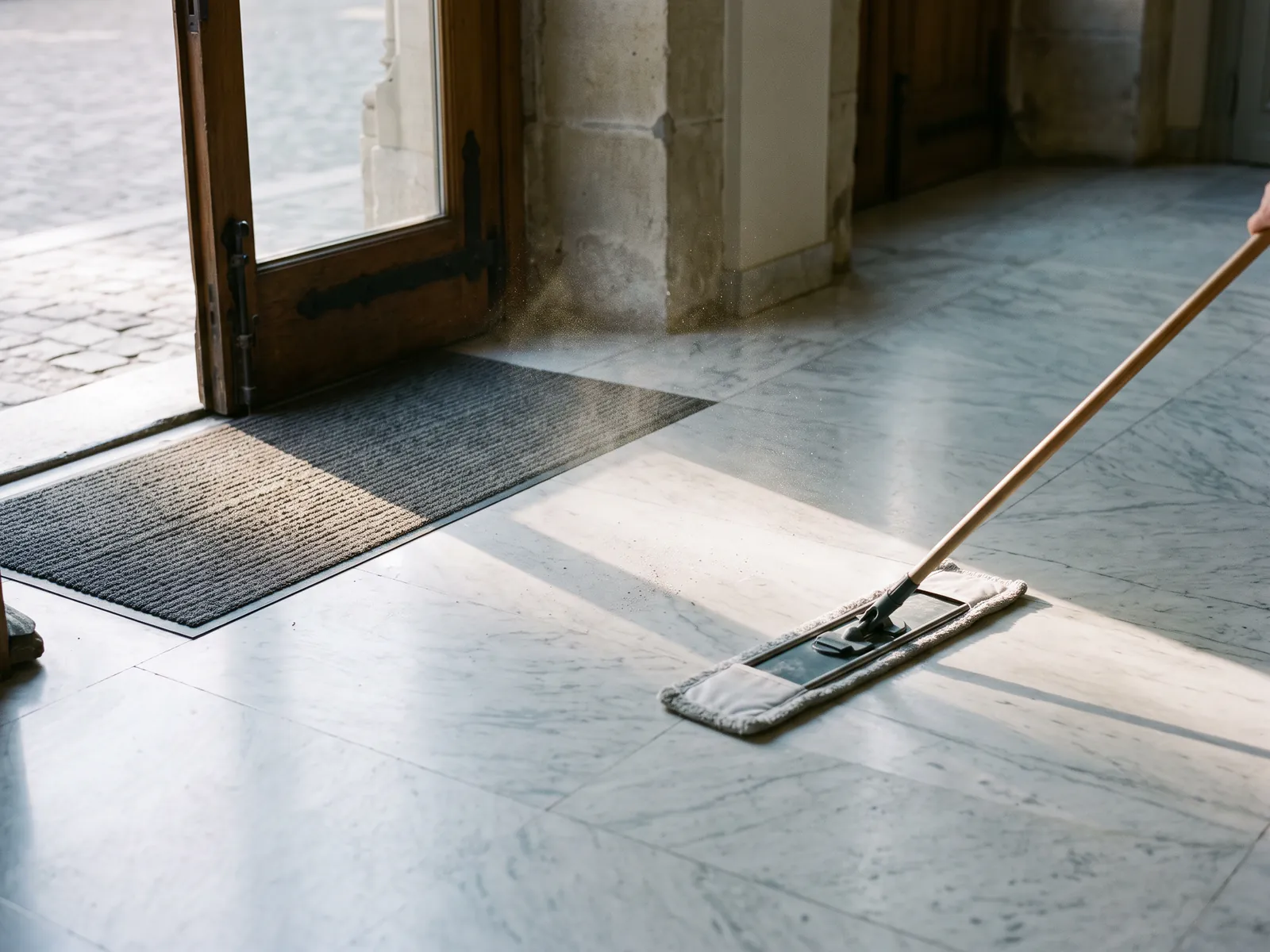
Daily marble care is one tool and two minutes: a flat microfibre dust mop run through the traffic lanes, entrance to kitchen, hallway to stairs, lifting the day's grit before feet grind it in. No spray, no bucket, no product; the dry pass is the entire job, and it is the single highest-value habit in UAE floor care because the local dust is fine, hard and constant.
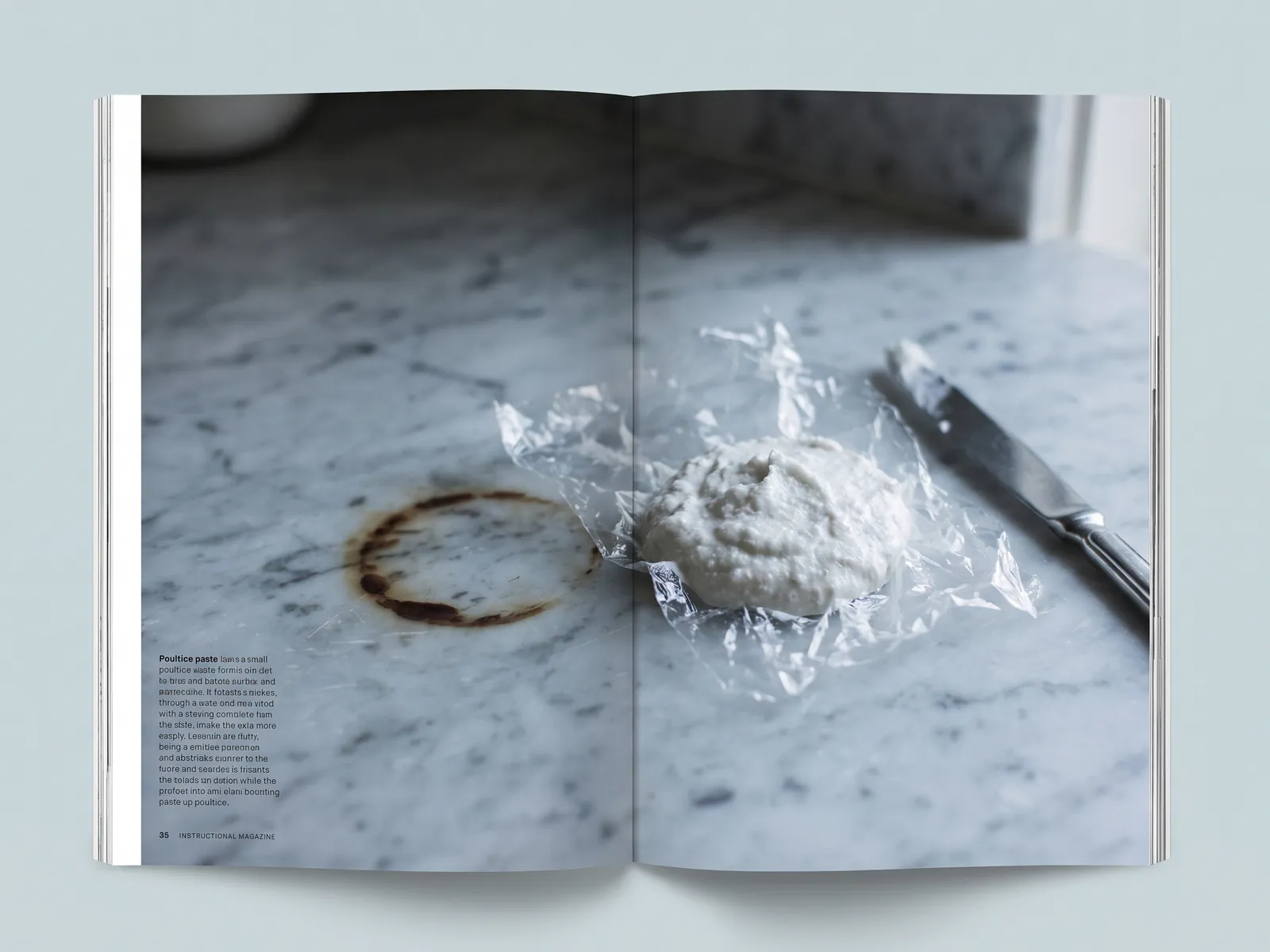
Add thirty seconds for spills as they happen: blot liquids immediately with a dry cloth, water is harmless but coffee, juice and anything acidic starts working on the surface in minutes, and a same-hour wipe is the difference between nothing and a mark. Vanity-adjacent floors and bathroom marble get a quick dry wipe where splashes land, denying hard water its film. That is the whole daily discipline; everything heavier belongs to the weekly slot, and products enter only there, per the full care guide.
Weekly damp mopping done right
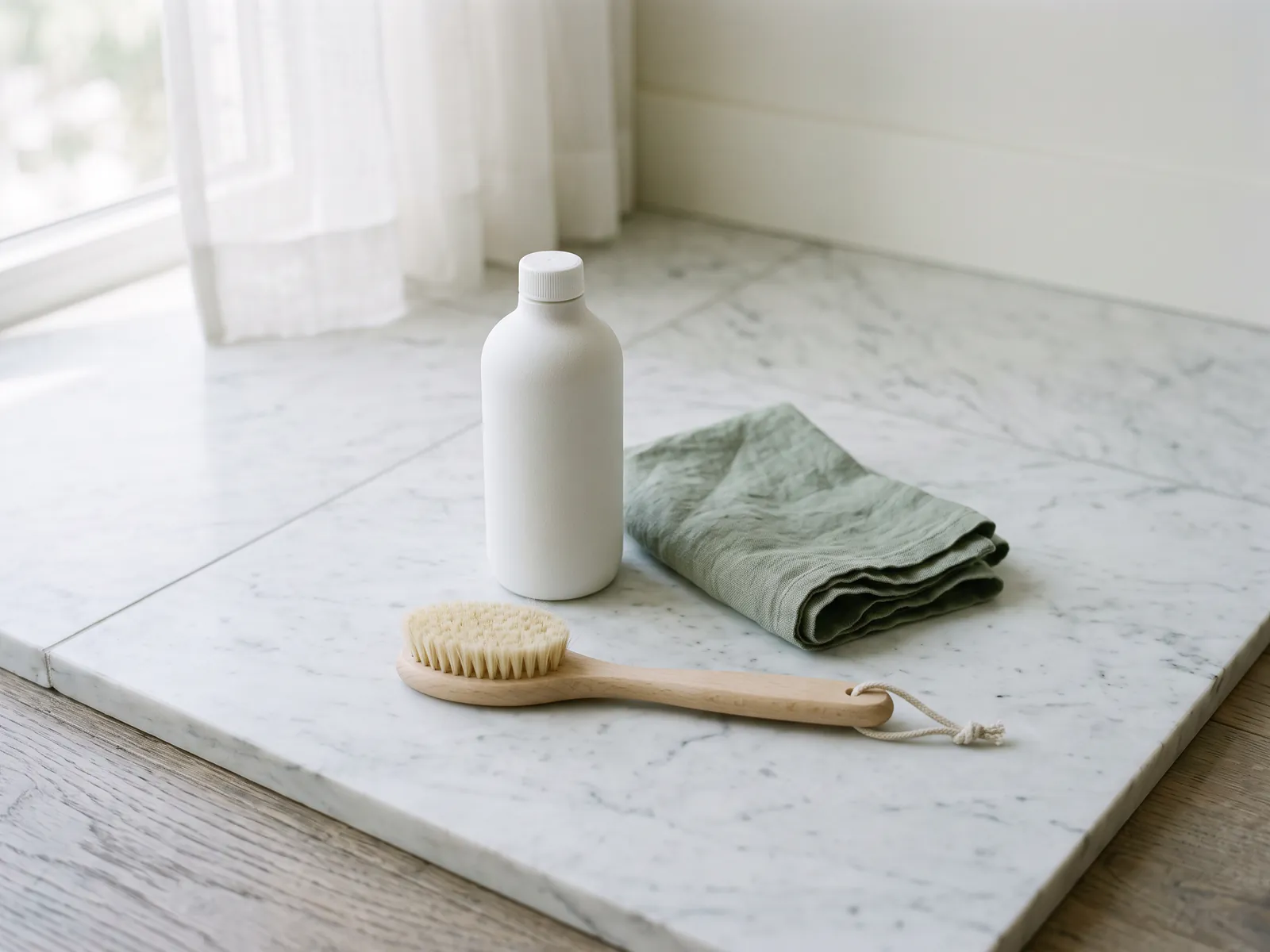
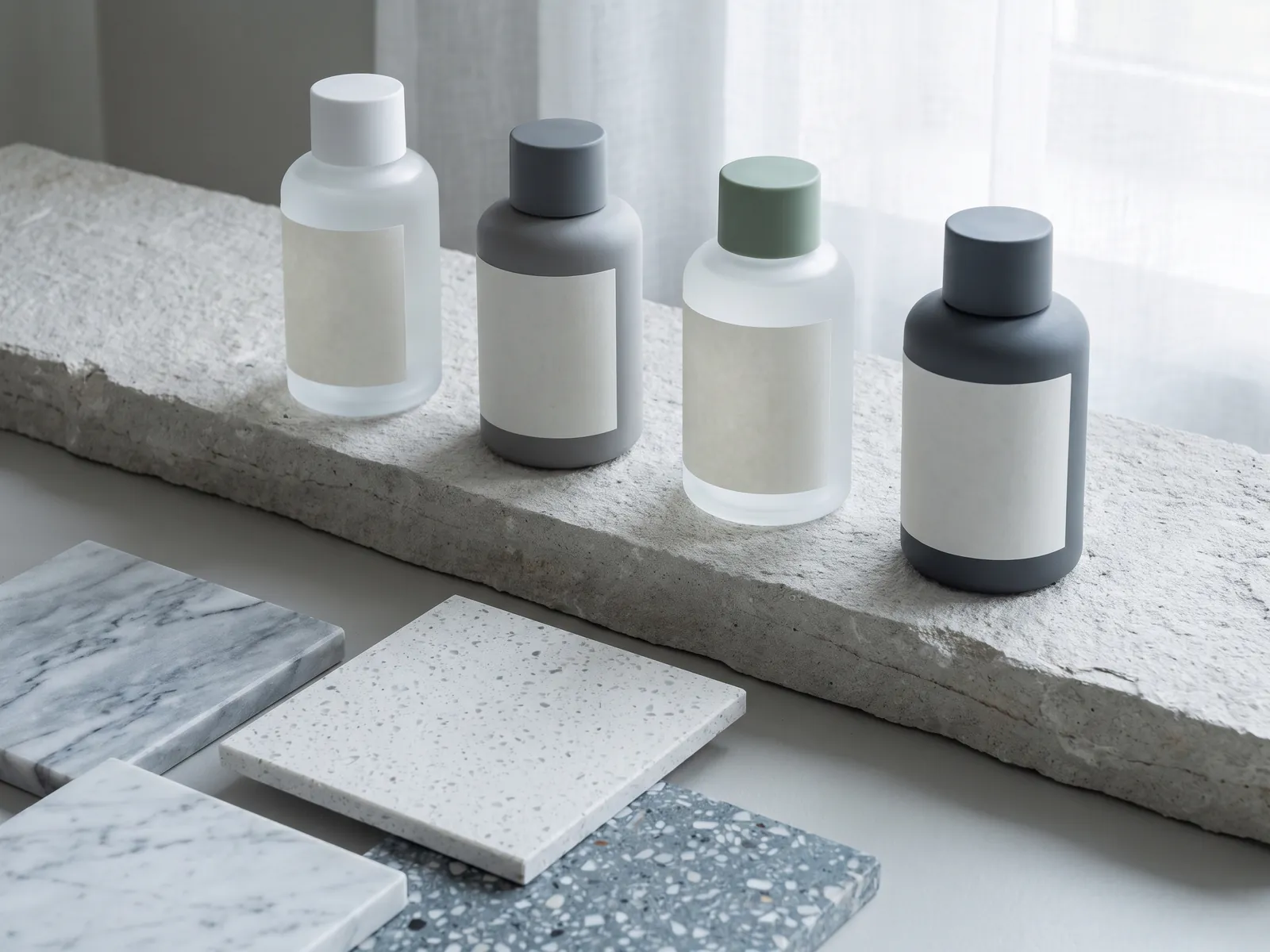
Weekly is the wet pass, and technique matters as much as chemistry. The chemistry: a pH-neutral cleaner formulated for stone, diluted exactly per its label into clean water, FILA's neutral line is built for precisely this duty, concentrated enough that a bottle lasts a season. The technique: dust mop first, always, since damp mopping over grit is sanding; mop damp rather than wet, wrung to leave a film that flashes off in a minute, standing water being no friend to any stone; work in sections with a rinse of the mop head as it loads.
Water quality earns a UAE note: hard tap water can leave its own faint film on dark polished floors, so a final pass with a barely damp, clean mop, or using demineralised water for the last rinse on statement floors, keeps gloss honest. Dry high-traffic lanes with a towel if the AC is off and evaporation slow. Done so, the weekly clean maintains rather than slowly dulls, which is the entire distinction.
Sand: the UAE abrasion problem
The Gulf's fine sand is harder than marble's calcite, and underfoot it behaves as lapping compound: every step over unswept grit micro-scratches polish, and traffic lanes dull months before the rest of the floor, reading grey against the shine either side. This, not spills or products, is how most UAE marble floors age, and the defence is mechanical, not chemical.
Three layers work in order of value. Entrance matting first: a proper dual-zone mat, coarse scraper outside, absorbent inside, at every external door strips the majority of grit before it walks in; barefoot-and-slippers household culture strips most of the rest. Daily dry mopping second, as above, catching what mats miss. Furniture protection third: felt pads under chairs and anything that slides, since a grit particle under a dragged chair leg scores deeper than a week of footsteps. Restoration exists when prevention arrives late, dulled lanes repolish, but a hundred dirhams of matting postpones that appointment for years.
The banned list and why
The banned list is short and absolute, and each entry earns its place chemically. Vinegar and lemon: acids that dissolve calcite on contact, etching dull patches into the very surface they were meant to brighten; half the ruined vanities in the Emirates are vinegar's work. Limescale and bathroom descalers: stronger acids, same crime, faster. Bleach and chlorine cleaners: aggressive alkalis that strip sealers and slowly chalk the polish. Dettol and disinfectant concentrates: acidic formulations that etch and can shadow-stain besides.
General floor cleaners and one-mop supermarket products: built for ceramic and vinyl, alkaline or film-forming, they dull marble cumulatively and leave residues that smear. Abrasive powders and green scouring pads: mechanical sanding, full stop. Steam mops: heat and pressure that stress stone and grout lines. If a label promises to kill limescale or cut grease, it is promising to attack your floor. One neutral stone cleaner replaces the entire cupboard, which is the quiet economy of doing this correctly.
Restoring shine: polish vs crystallise
When a floor has passed the point that cleaning helps, dull lanes, grey traffic paths, etch scatter, restoration is mechanical, and two words dominate quotes: polishing and crystallisation. Polishing, properly diamond honing, grinds the surface through successively finer abrasives to expose fresh stone at the gloss you choose; it removes scratches and etches genuinely and resets the floor's clock. Crystallisation is a chemical-mechanical buffing that reacts a hardened shine layer onto the existing surface: faster and cheaper, excellent as maintenance between hones, but it seals over deep scratches rather than removing them.
The honest sequencing: diamond polish to restore, crystallise to maintain, never crystallise as a cheap answer to damage that needs grinding. Ask any contractor which they are quoting and at what grit sequence; the words are not interchangeable, and the maintenance calendar schedules both. Between professional visits, the daily and weekly routine above is what stretches restoration intervals from years toward a decade.
Questions, answered.
No. Heat and pressure stress the stone and its sealer, and force moisture into joints. A damp microfibre mop with neutral cleaner does the job safely.
Sand abrasion: grit walks in and grinds traffic lanes matte. Better entrance matting and daily dry mopping stop the progression; repolishing restores what is lost.
Any true pH-neutral stone cleaner used per label; FILA's neutral cleaners are the specialist standard. The best cleaner is also the mat that keeps sand outside.
If cleaning no longer restores it, the gloss is worn, not dirty: diamond repolishing brings it back, with crystallisation as the maintenance buff between hones.
Global Classic Building Materials Trading LLC
Written from the Al Sajaa warehouse, Sharjah - slabs on racks, not stock photography. About the company