Commercial floors are specified on three numbers: abrasion resistance for traffic, slip rating wet and dry, and maintainability at scale. Terrazzo leads for heavy-traffic retail and lobbies, engineered marble suits hospitality where consistency across large areas matters, and honed finishes beat polished wherever entrances meet outdoor dust. Lifecycle cost, not install cost, decides.
The three specification numbers
Strip the brochures away and a commercial floor is three numbers. Abrasion resistance: how the surface survives footfall counted in millions, tested as hardness and wear classes; the difference between a lobby that reads new at year eight and one showing grey lanes at year two. Slip resistance: the wet and dry ratings, R-values in the common European system, that safety officers and insurers actually check, set by finish as much as material. Maintainability: the honest cost of keeping thousands of square metres presentable nightly, where seamless surfaces, neutral-chemistry cleaning and refinishability beat any material that needs specialist ritual.
Every material conversation should route through those three before any moodboard. UAE service adds its multipliers: sand walked in from the street is a permanent abrasive load, and entrance zones fail first everywhere. BOQ-stage specification against these numbers, with data sheets per material, is exactly the documentation a serious supplier volunteers.
Terrazzo for traffic: why airports use it
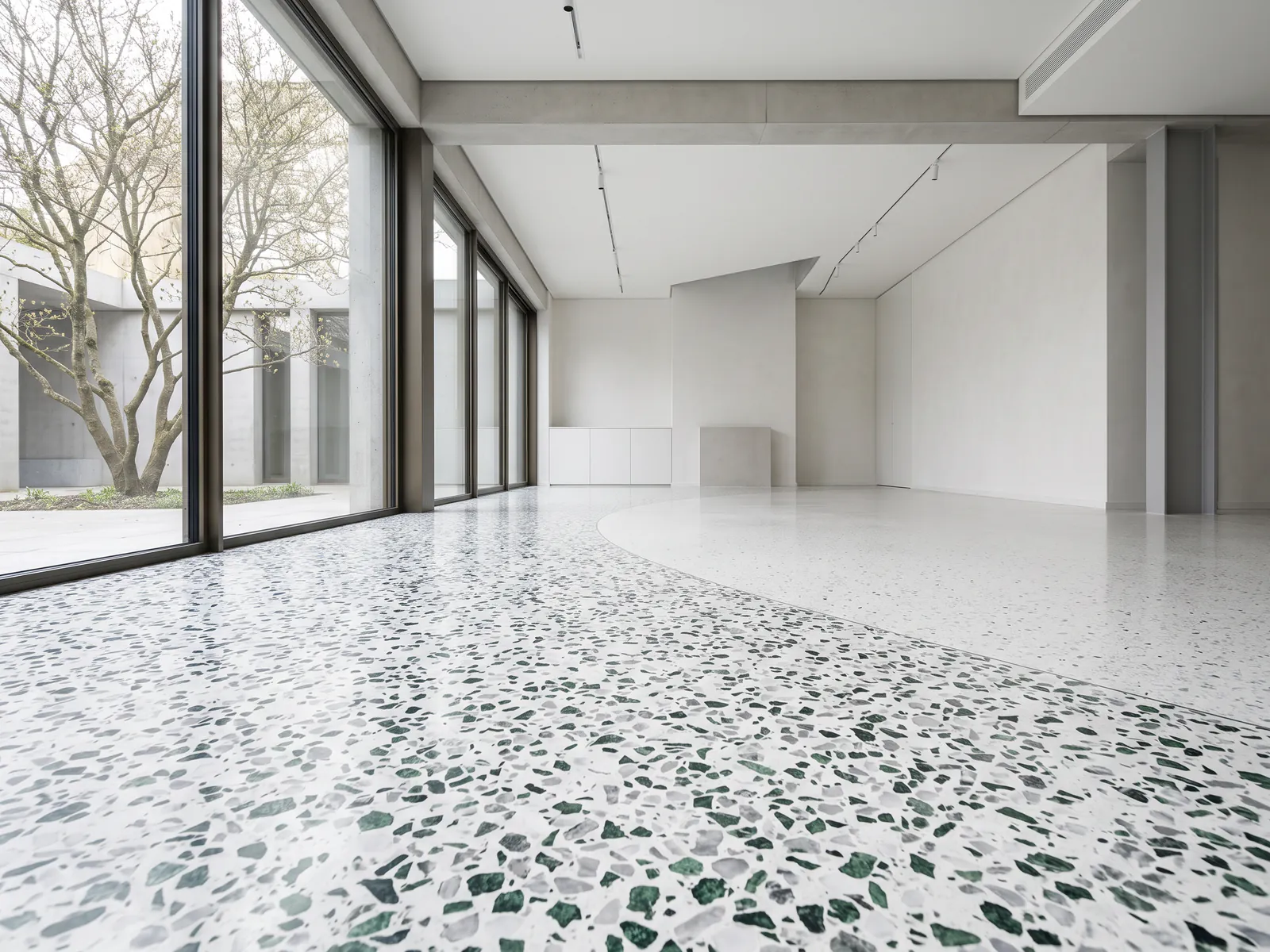
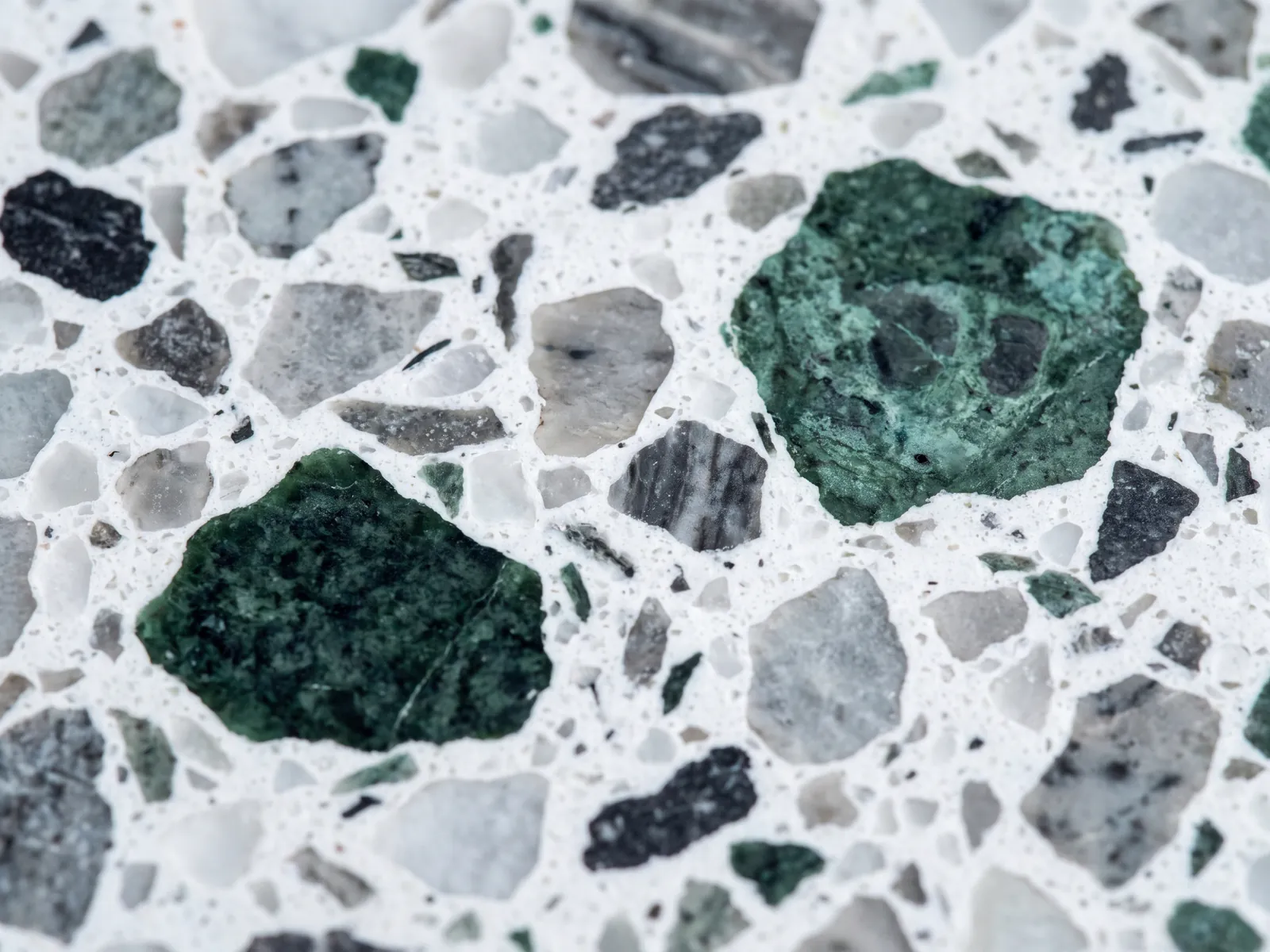
Airports are the world's most honest flooring test, hundreds of millions of footsteps, wheeled loads, zero tolerance for closure, and they choose terrazzo generation after generation because the material's answer to traffic is structural: hard mineral chips in a dense matrix wear at the pace of stone itself, and when decades finally dull the surface, it regrinds to new rather than being replaced. Block terrazzo brings that logic to UAE retail, lobbies and galleries with factory consistency: calibrated slabs and tiles, matched batches across thousands of square metres, honed or river-wash finishes to hit slip targets.
Repairability seals the case at scale: chips and stains are local grinds, not tile hunts through discontinued lines. Its considerations are the familiar ones, upfront cost above porcelain and hardness underfoot, both covered honestly in the terrazzo pros and cons. For the heaviest-traffic zones of a project, the terrazzo collections are the specification the three numbers keep choosing.
Engineered marble in hospitality
Hospitality floors sell a feeling, and engineered marble's commercial case is that it delivers marble's feeling at operational scale: hundreds of square metres of lobby, corridor and ballroom in one consistent tone, slab after slab, with none of natural stone's lot-to-lot drift or fissure surprises. Absorption under 0.1 percent survives spilled espresso and banquet service; calibration lays flat under raking feature lighting, which is where lippage embarrasses budgets; and refinishing on housekeeping's schedule keeps year-six floors reading like opening night.
Specification notes for operators: honed finishes in entrance and bar zones for slip and glare, polished where drama earns it; light tones for the dust-forgiveness every UAE operator learns; and matched stair treads, skirting and lift thresholds from the same series, the coherence guests read as quality without naming it. Procurement at this scale runs on BOQs priced from real stock with stated lead times, the exact model the engineered marble range serves from Al Sajaa.
Slip ratings: R-values in practice
Slip specification is finish engineering, and the R-scale makes it concrete: R9 suits dry interior circulation, R10 covers general commercial including entrance-adjacent zones, R11 and above belong to wet-service areas, external steps and pool surrounds. The same stone spans the ladder by finish alone, polished sitting at the slippery bottom, honed in the useful middle, river-wash and textured finishes reaching the wet-rated top, which is why a single terrazzo or marble palette can zone an entire property safely.
Practice adds three notes. Entrances are transition hazards: exterior dust plus polished interior stone is the classic incident, solved by matting runs and honed entrance fields. Maintenance changes ratings: worn anti-slip textures and polish-building maintenance products both drift floors off their specified number, so the cleaning regime, neutral chemistry, per the products guide, is part of the safety file. And documentation matters: specify finishes against tested ratings from data sheets, not adjectives, because that is the number an incident lawyer will ask for.
Lifecycle cost vs install cost
Commercial flooring decisions made on install price alone are usually wrong within a decade, because the install is a minority of the money. The lifecycle ledger runs: install cost, plus nightly cleaning labour and chemistry across years, plus periodic restoration, plus the capital and, harsher, the closure cost of replacement when a surface cannot be renewed. Refinishable solid materials, terrazzo and engineered marble, front-load spend and then amortise beautifully: regrinds at a fraction of replacement cost reset the clock indefinitely, and cleaning stays neutral-chemistry simple.
Cheaper replaceable surfaces invert the curve, porcelain's chips and discontinued lines, vinyl's refresh cycles, each replacement carrying closure days that hospitality and retail measure in lost revenue. As of 2026, typical Dubai comparisons put block terrazzo and engineered marble above porcelain at install and below it by year ten of honest accounting; run the numbers per project rather than by habit. Procurement teams pricing full lifecycles against stocked ranges are the buyers this journal's BOQ pathway exists for.
Questions, answered.
Honed block terrazzo or engineered marble in light tones: traffic-proof, slip-sensible, nightly-cleanable and refinishable through fit-out cycles. Entrance matting is part of the specification.
Terrazzo: hard chips in a dense matrix wear at stone's pace and regrind to new. It is the airport answer for a reason.
Honed for entrances and circulation, polished reserved for feature zones away from dust transitions. Slip ratings and glare both argue the same way.
Nightly neutral-chemistry cleaning, entrance-zone discipline, periodic burnishing or crystallisation, and scheduled regrinds years apart. Solid stone's advantage is that all of it is renewable.
Global Classic Building Materials Trading LLC
Written from the Al Sajaa warehouse, Sharjah - slabs on racks, not stock photography. About the company