Terrazzo's advantages are exceptional durability, seamless large-area coverage, endless design range and easy cleaning. Its drawbacks: higher upfront cost than porcelain, hard underfoot, cold without underfloor heating, and polished finishes get slippery when wet. It rewards owners planning to stay; it rarely pays back in a two-year flip.
Where terrazzo genuinely excels
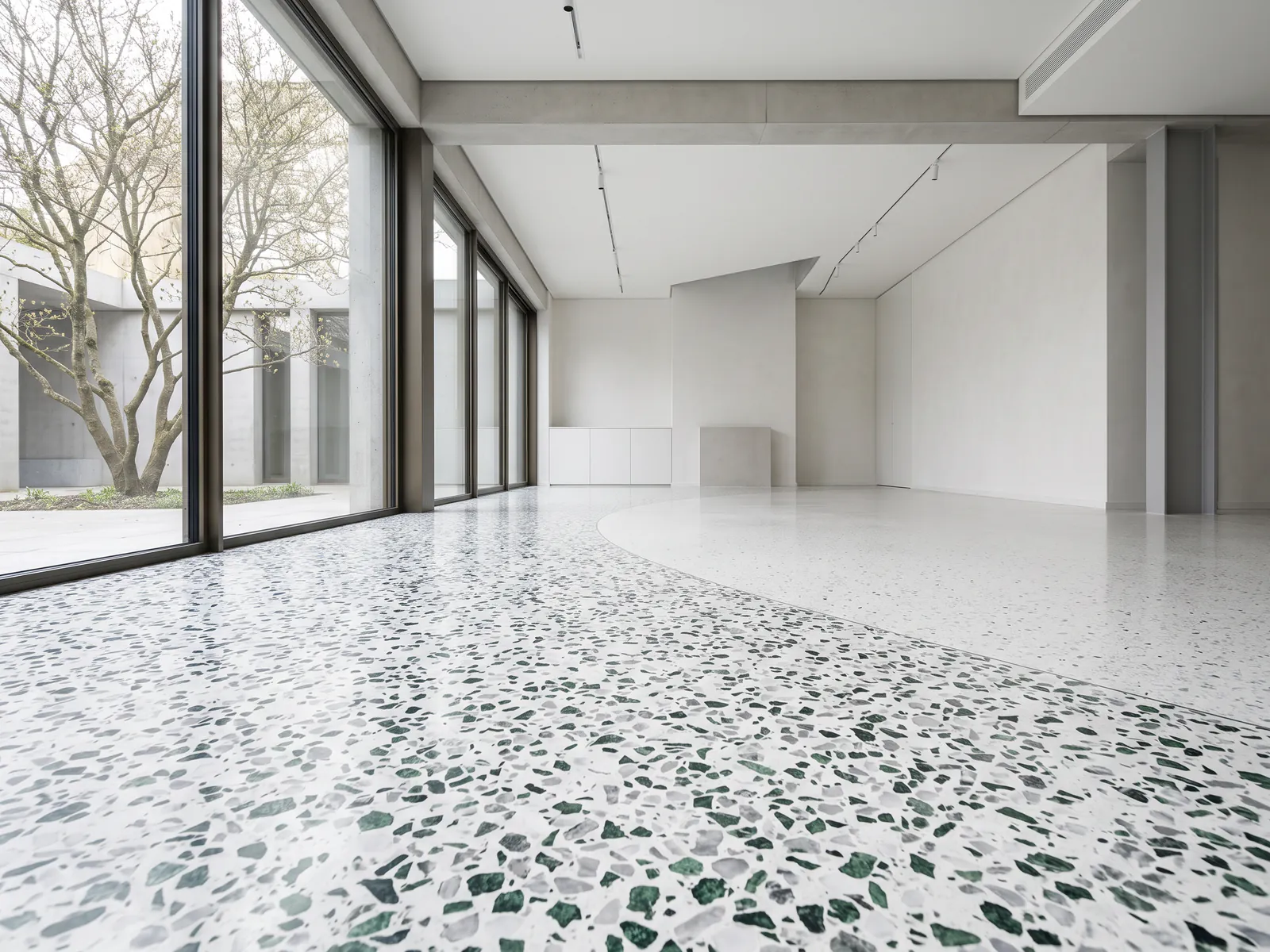
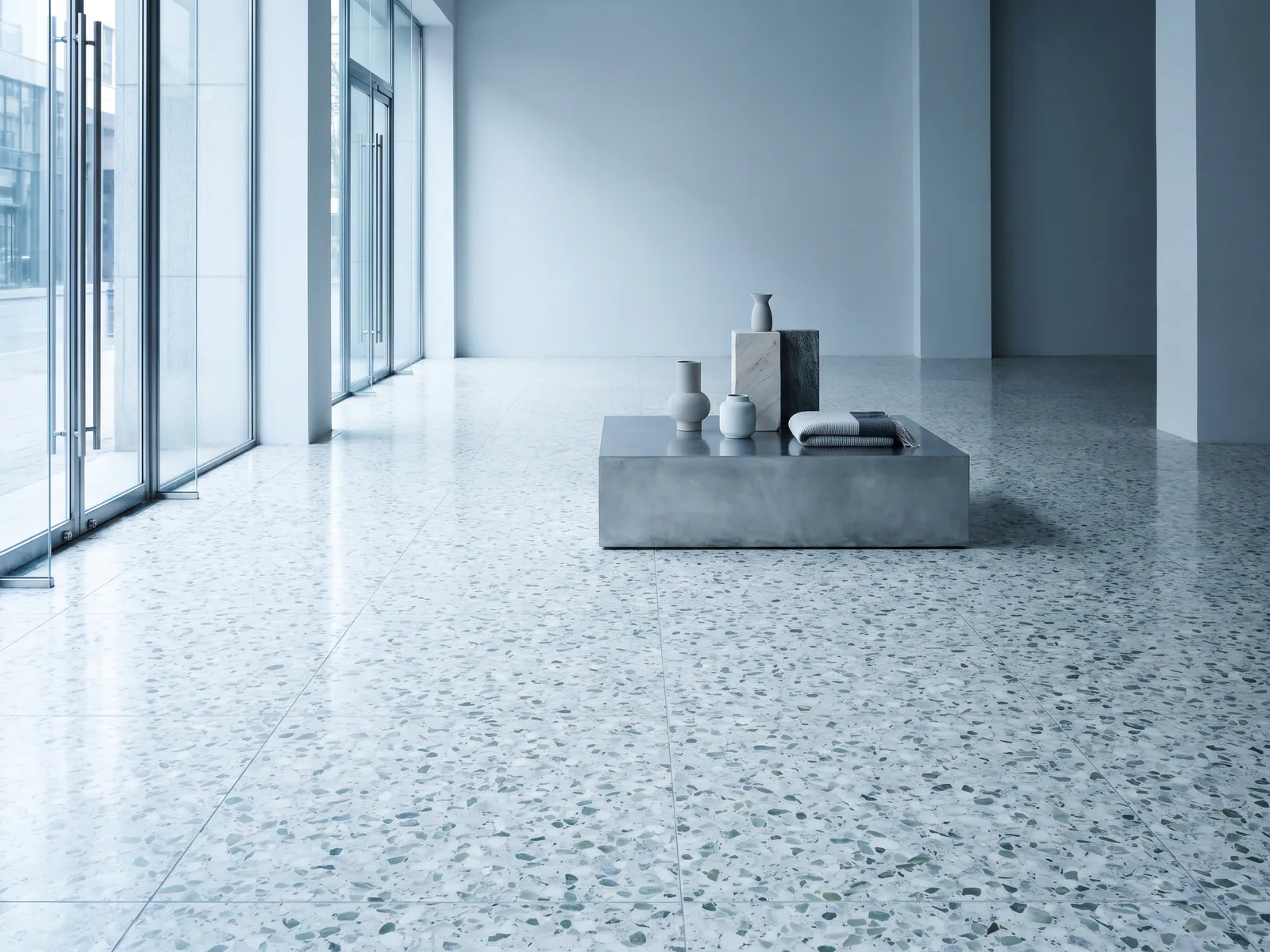
Terrazzo excels wherever a floor must be walked hard and read calm. Durability is its founding virtue: airports and metro stations choose it because mineral chips in a dense matrix take decades of footfall, and the same physics protects a villa hallway from sand abrasion, the local polish-killer. Seamlessness is the second gift: large-format slabs cover open plans with minimal joints, and matching stairs, skirting and walls extend one material through a whole architecture.
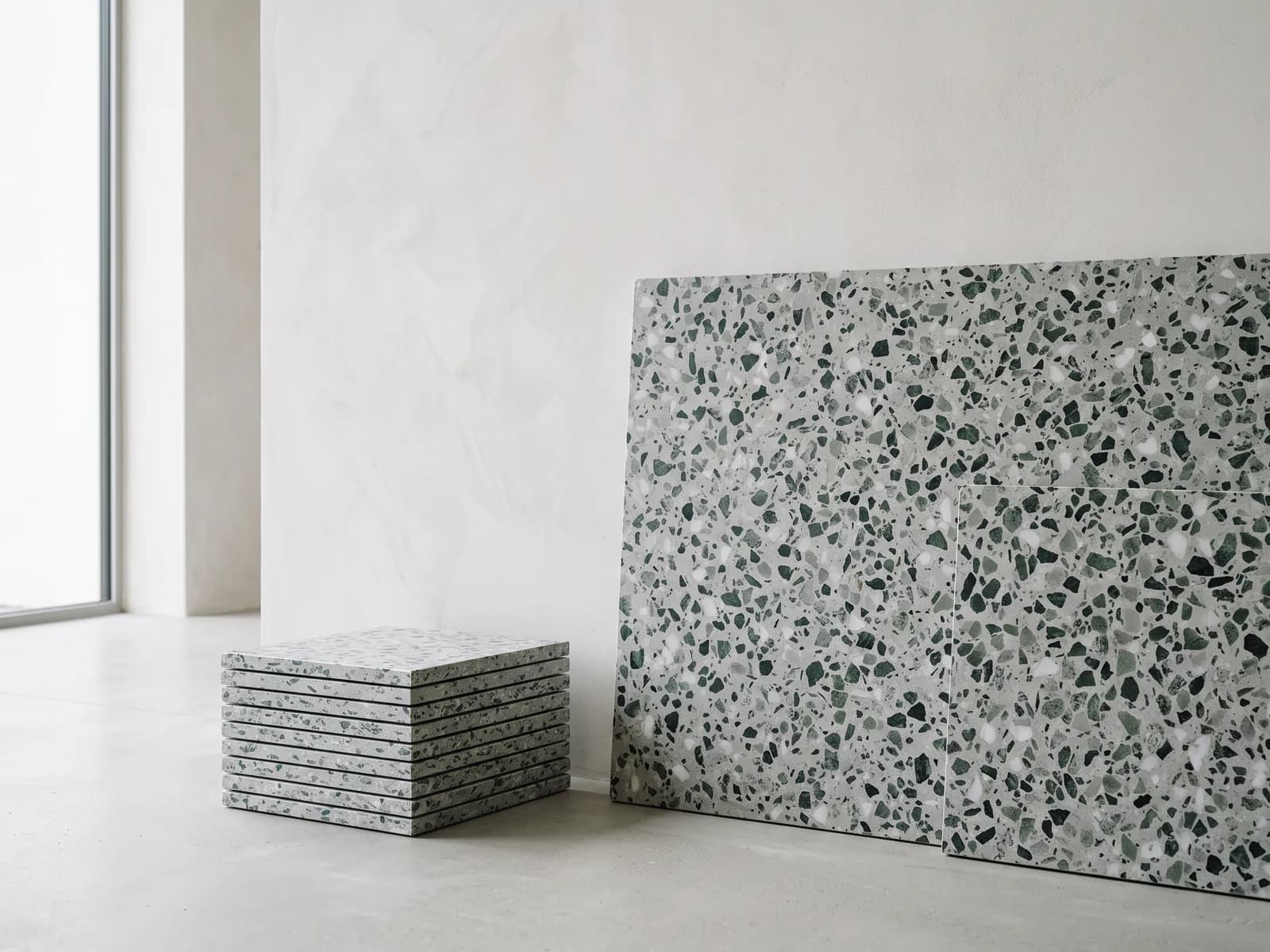
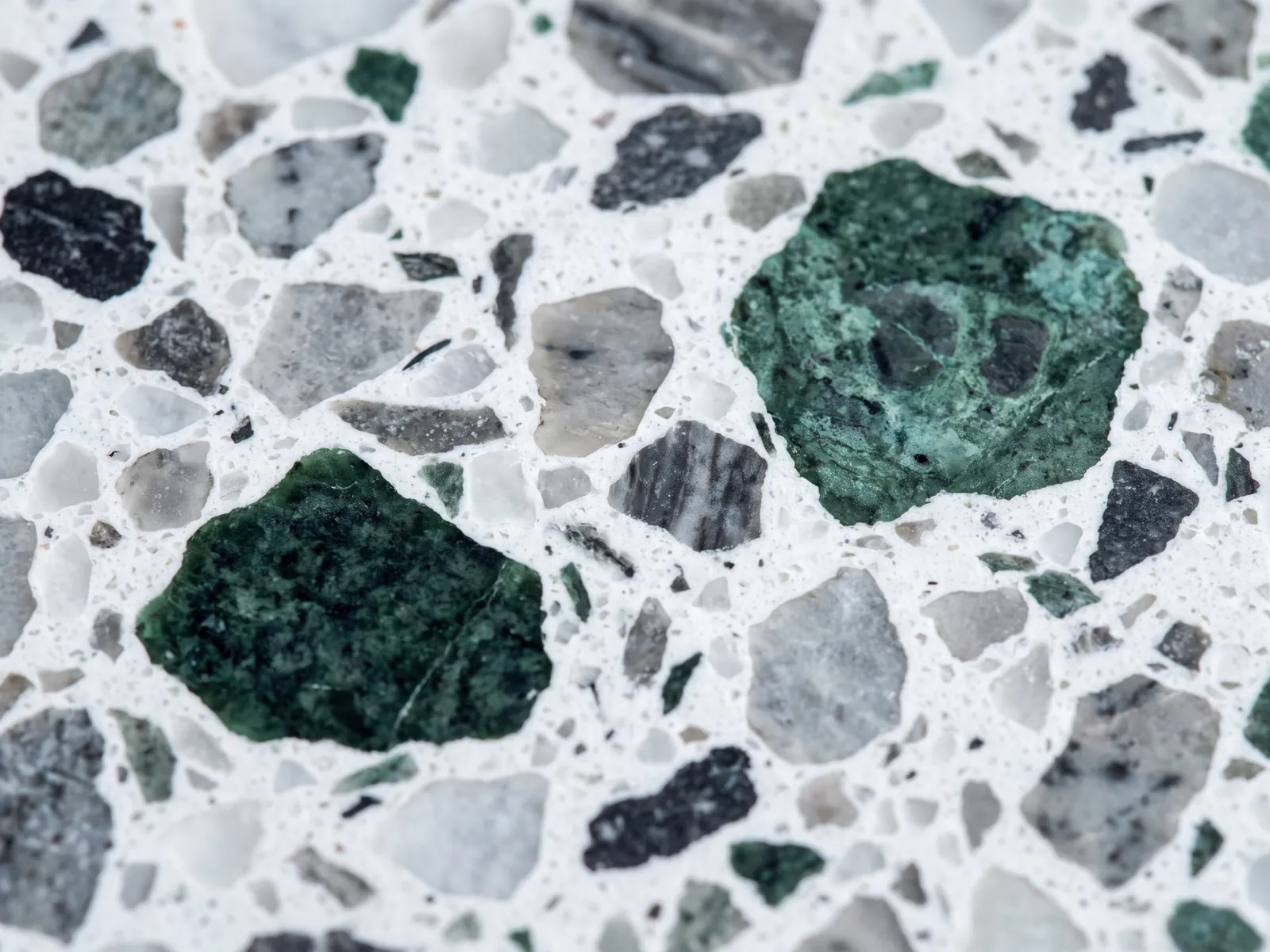
Design range is the third: from near-monochrome micro-chip surfaces to statement palladiana, no natural stone offers terrazzo's palette control, since chips, binder and scale are all chosen. Cleaning closes the case: a dust mop and neutral cleaner are the entire regime, with no grout grid to scrub and, in block terrazzo, almost no absorption to fear. Repairability underwrites everything, chips and dulling grind out invisibly, which is why the full terrazzo guide frames it as a floor measured in decades.
The honest drawbacks
Four drawbacks are real and worth stating plainly. Cost: quality block terrazzo lands above porcelain at purchase, roughly AED 250 to 500 per square metre supply-only in Dubai as of 2026 with fixing priced separately, and pretending otherwise leads to the resentment cheap imitations were born from. Hardness: the same density that survives airports is unforgiving underfoot for long standing and unforgiving of whatever glassware meets it; kitchens and playrooms want mats where people linger.
Temperature: mineral mass holds the temperature it is given, delicious under UAE air conditioning, noticeably cool in the brief winter without rugs or underfloor heating. And slip: polished terrazzo, wet, is as slippery as any polished stone, which is a finish-selection problem, honed and river-wash exist for exactly this, but a genuine hazard where the wrong finish meets a pool deck. Acoustics deserve a half-point: hard floors reflect sound, and open plans in terrazzo want soft furnishing to balance the brightness.
Cost vs lifespan arithmetic
The purchase ledger flatters porcelain; the ownership ledger flips it. Take a 200 square metre villa floor as of 2026, with all figures as ranges that vary by project: porcelain installed at roughly AED 90 to 180 per square metre against block terrazzo slabs supplying at AED 250 to 500 plus a separately priced laying scope. Porcelain's service story is replacement, when chips accumulate, when a tile line discontinues mid-repair, when fashion moves, realistically once per decade or two, each time at full material-plus-labour cost, plus the disruption of living through it.
Terrazzo's service story is a repolish, a fraction of replacement cost, returning a genuinely new surface from the same material, indefinitely. Across twenty years the totals typically converge, and across thirty terrazzo is usually the cheaper floor, before counting the value of never redoing a home you live in. The arithmetic collapses only for short holds: a two-year flip never collects the dividend, which is exactly the honest boundary the direct answer draws.
Comfort: hardness, temperature, acoustics
Comfort is where terrazzo asks for design help rather than apology. Hardness first: standing at a kitchen counter on dense mineral floor for an hour tells your knees the truth, and the fix is targeted softness, runner mats at work zones, rugs where feet rest, not a softer floor. Dropped-object reality follows the same physics: glassware rarely survives, which households with small children factor into room-by-room choices.
Temperature is climate-dependent virtue: thermal mass keeps terrazzo deliciously cool through the ten hot months, one of its strongest UAE arguments, and cool through the two mild ones, where rugs or, in new builds, underfloor heating zones restore balance. Acoustics complete the picture: hard surfaces reflect voices and footfall, so terrazzo's open plans want curtains, soft seating and ceiling treatment to keep liveliness from becoming echo. None of these are flaws to fix; they are the standard trade of every mineral floor, managed with textiles rather than regretted.
Who should skip terrazzo
Skip terrazzo if any of these describe the project. Short holds: flippers and two-year landlords never recoup the premium; porcelain photographs the same in a listing. Tight budgets where the extra spend would starve waterproofing, substrate preparation or fixing quality, a cheap terrazzo install betrays the material and the buyer. Barefoot-softness priorities: households that hate hard floors will not be argued out of it by durability tables, and engineered timber or vinyl serves them honestly.
Skip, too, if the heart wants natural stone's one-of-one variation, terrazzo is composed, not quarried, and its beauty is deliberate rather than geological; the marble route exists for that appetite. And skip site-poured terrazzo specifically unless programme and budget genuinely allow it; most projects tempted by pouring are better served by block formats. For everyone else, owners staying put, specifiers of lobbies and retail, families tired of grout, the material remains one of the strongest floors money buys.
Questions, answered.
Edges can chip under hard impact, like any stone. The difference: terrazzo chips repair and grind out invisibly, because the material is solid through its body.
The opposite. Dust mop, neutral cleaner, and a professional repolish once a decade or so. No grout grid, no sealing calendar for block material in normal service.
Porcelain is cheaper upfront and replaceable; terrazzo costs more, lasts decades and repolishes. Long holds favour terrazzo; short holds and tight budgets favour porcelain.
Generations, with periodic repolishing. Mid-century terrazzo floors still in daily service across the Gulf are the evidence; the material predates and outlives flooring fashions.
Global Classic Building Materials Trading LLC
Written from the Al Sajaa warehouse, Sharjah - slabs on racks, not stock photography. About the company