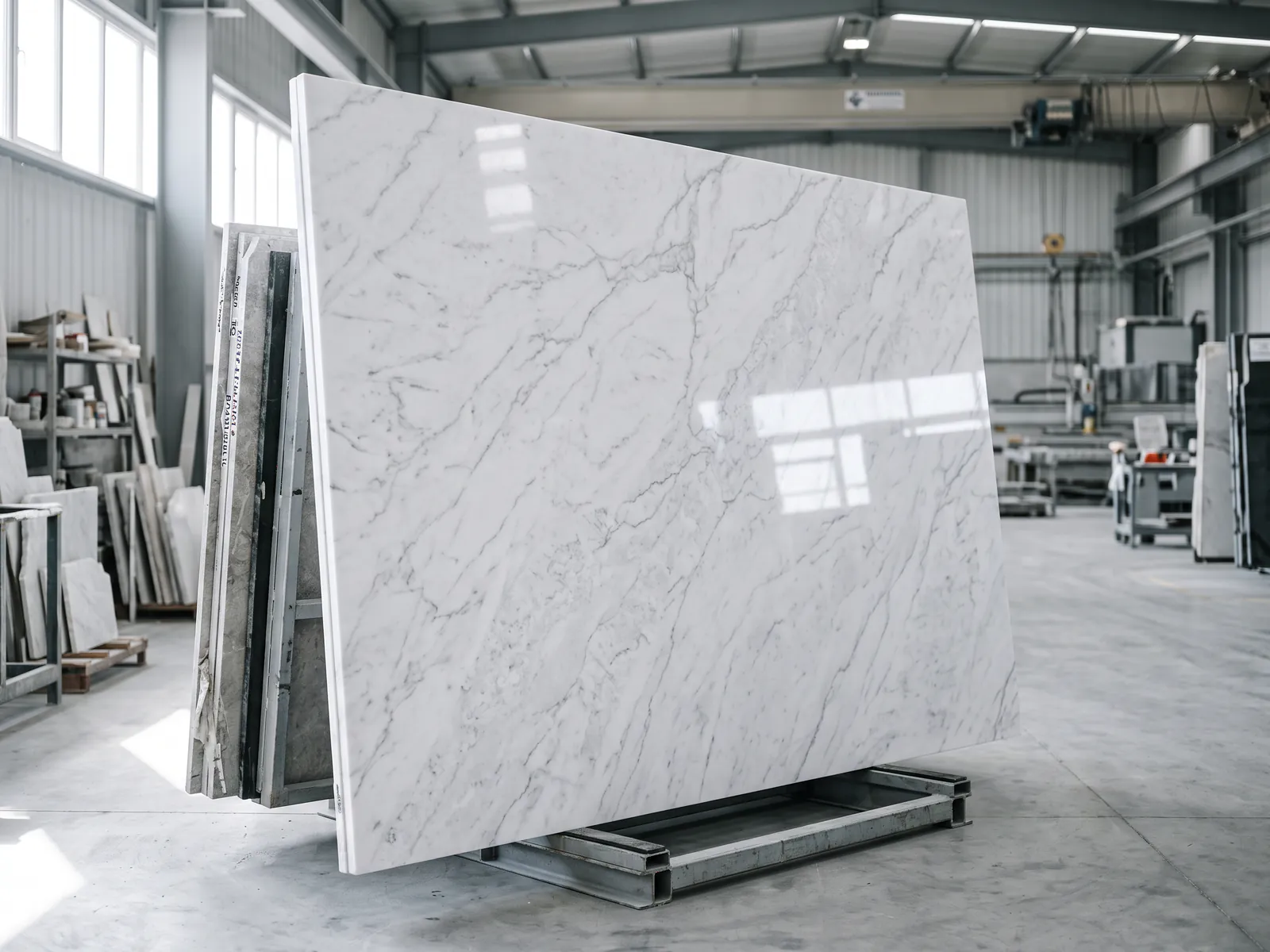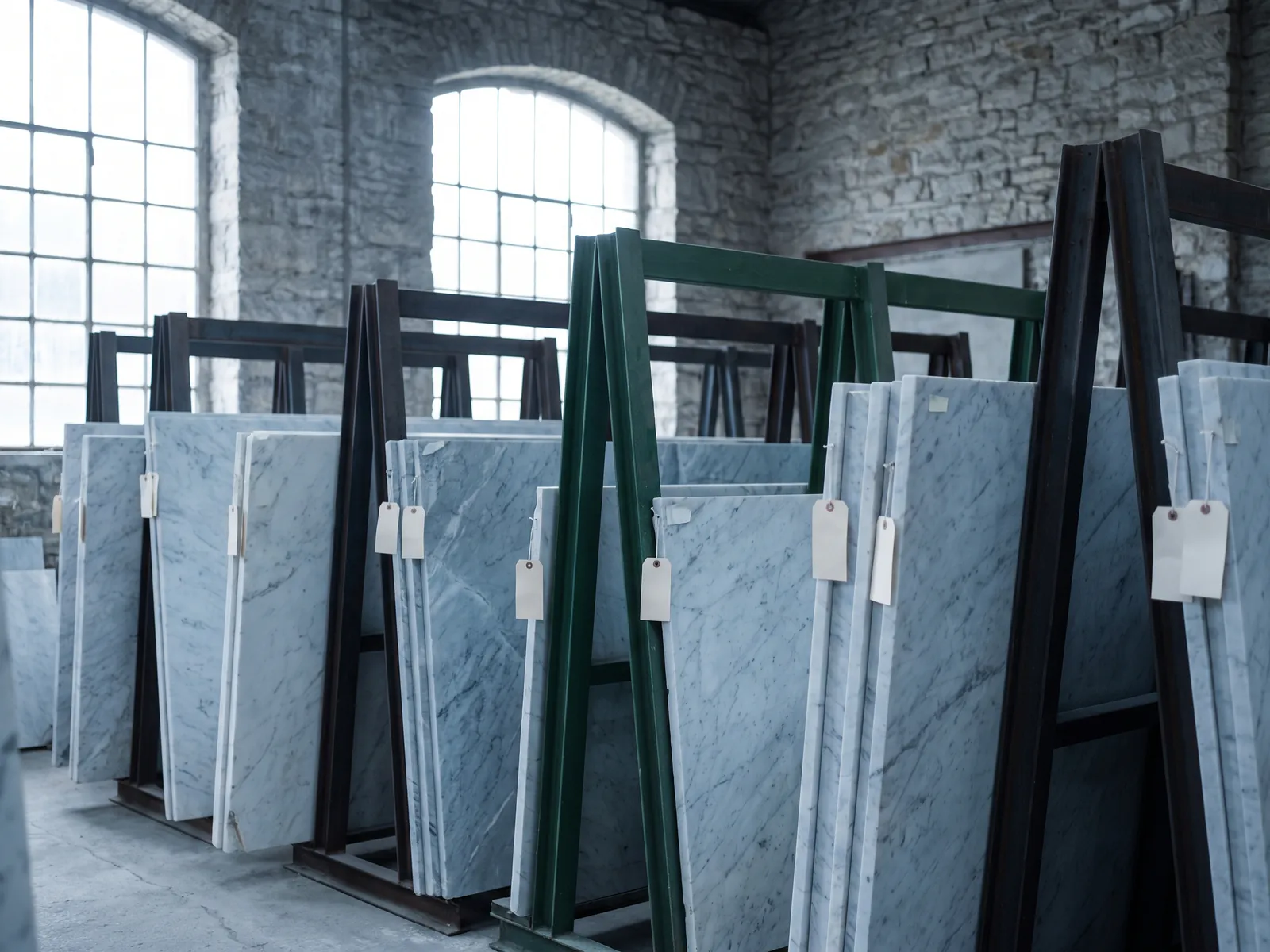
A serious UAE marble supplier lets you view and tag actual slabs, holds real stock rather than brokering, provides technical data sheets, and stands behind fabrication tolerances. Ask four things: can I see my exact slabs, what is the lead time from stock, who handles templating, and what happens if a slab arrives damaged. Traders go quiet on question four.
Stockist vs trader: why it matters
A stockist owns slabs on racks in a warehouse you can walk; a trader owns a phone and a margin, brokering between you and stock they have often never seen. The difference surfaces exactly when projects are most vulnerable: lead times, because a stockist's two days from Al Sajaa cannot be matched by a trader's reorder from origin; quality, because brokered material is inspected by nobody on your side; and recourse, because when something arrives wrong, the trader's supplier is not your supplier.
Nothing is wrong with trading as a business model; plenty is wrong with discovering mid-project that your supplier cannot influence the material they sold. The test is physical: ask to visit the warehouse. A stockist sends a location pin; a trader sends reasons. Global Classic holds its range as full slabs at Al Sajaa, Sharjah, which is the boring, checkable answer this question deserves.
The slab-viewing test
Viewing is where stone buying actually happens. Photographs compress veining, flatten tone and hide the differences between a premium lot and a B-grade one wearing the same name. Standing in front of the rack, you see the real figure, the real ground colour under daylight, and, critically for natural stone, the variation across the exact slabs your project would consume, not a showroom's best sample.
Tagging completes the ritual: the slabs you approve are marked with your name or project and photographed, and those specific slabs ship, not equivalent ones. For book-matched work, viewing is non-negotiable, since the match exists in specific consecutive slabs and nowhere else. For engineered marble the stakes soften because consistency is manufactured in, but the visit still verifies finish quality and calibration. A supplier who cannot accommodate viewing and tagging is describing stock they do not control; treat every following promise accordingly.
Questions that expose weak suppliers
Four questions sort the market efficiently. First: can I see and tag my exact slabs? This separates stockists from brokers in one sentence. Second: what is the lead time from stock, and what happens if my quantity exceeds it? Honest answers name days and a resupply plan; weak answers say soon. Third: who handles templating and cutting tolerances, and to what standard? Suppliers who work with fabricators daily answer in millimetres; box-movers change the subject.
Fourth, the one that ends conversations: what happens if a slab arrives cracked, stained or short? A serious supplier states a replacement or credit process before you finish asking, because they have one and it gets used. Traders improvise, and improvisation at question four becomes silence at delivery week. Bonus fifth for BOQ buyers: can you price against a bill of quantities within days? Volume suppliers say yes routinely; the pricing guide explains what that quote should contain.
Documentation you should receive
Paperwork predicts performance. Before contract, a serious supplier volunteers technical data sheets, water absorption, flexural strength, abrasion values for the specific material, not the category, plus finish and thickness specifications, and for branded engineered stone, evidence of authorization from the manufacturer, since grey-market slabs void factory backing. Certifications matter where the application does: food-contact ratings for worktops, slip classifications for wet and commercial floors, fire ratings for cladding.
With the quotation should come slab dimensions and expected yields, wastage assumptions, and the damage-and-shortfall process in writing. With delivery: packing lists matching your tagged slabs and lot references that make any future addition matchable. None of this is exotic; all of it is what distinguishes a materials partner from a middleman with a price list. If assembling this pile feels like pulling teeth before you have paid, imagine claims handling after. Authorized, documented stock makes the pile boring, which is the goal.
Red flags in quotations
Read quotes for what they omit. One blended number with no itemisation hides margin and makes comparison impossible; demand slabs, fixing and extras as separate lines. No wastage percentage means wastage becomes a variation order later, at a rate you did not negotiate. Vague material description, beige marble, first choice, without stone name, grade, lot and thickness, is a licence to substitute. Prices dramatically below the market band signal B-grade lots, thin calibration or a supplier planning to recover margin on extras.
Missing lead time, missing validity period and missing damage terms complete the set: each is an argument you will have later, unpriced now. Against this checklist, a good quotation is almost dull: itemised, specified, dated, with the exact slabs viewable and the process for problems stated. Dull is what a 400 square metre floor deserves. When a quote passes, the commercial specification guide covers the performance side of the same decision.
Questions, answered.
Trade buyers with their own fabricators buy slabs; homeowners usually want supply-and-fix from one accountable party. Either is fine; mixing quotes across the two bases is where comparisons go wrong.
Marking the specific slabs you approved at viewing so those exact pieces ship to your project. It is the only guarantee that what you saw is what arrives, essential for book-matched work.
Plan 10 to 15 percent over net area for cutting wastage, more for complex layouts or book-matching. Order it upfront from the same lot; matching later lots is never guaranteed.
Stockists typically supply and can recommend fixing contractors; some offer supply-and-fix through partners. Clarify the basis in writing either way, including who owns templating tolerances.
Global Classic Building Materials Trading LLC
Written from the Al Sajaa warehouse, Sharjah - slabs on racks, not stock photography. About the company