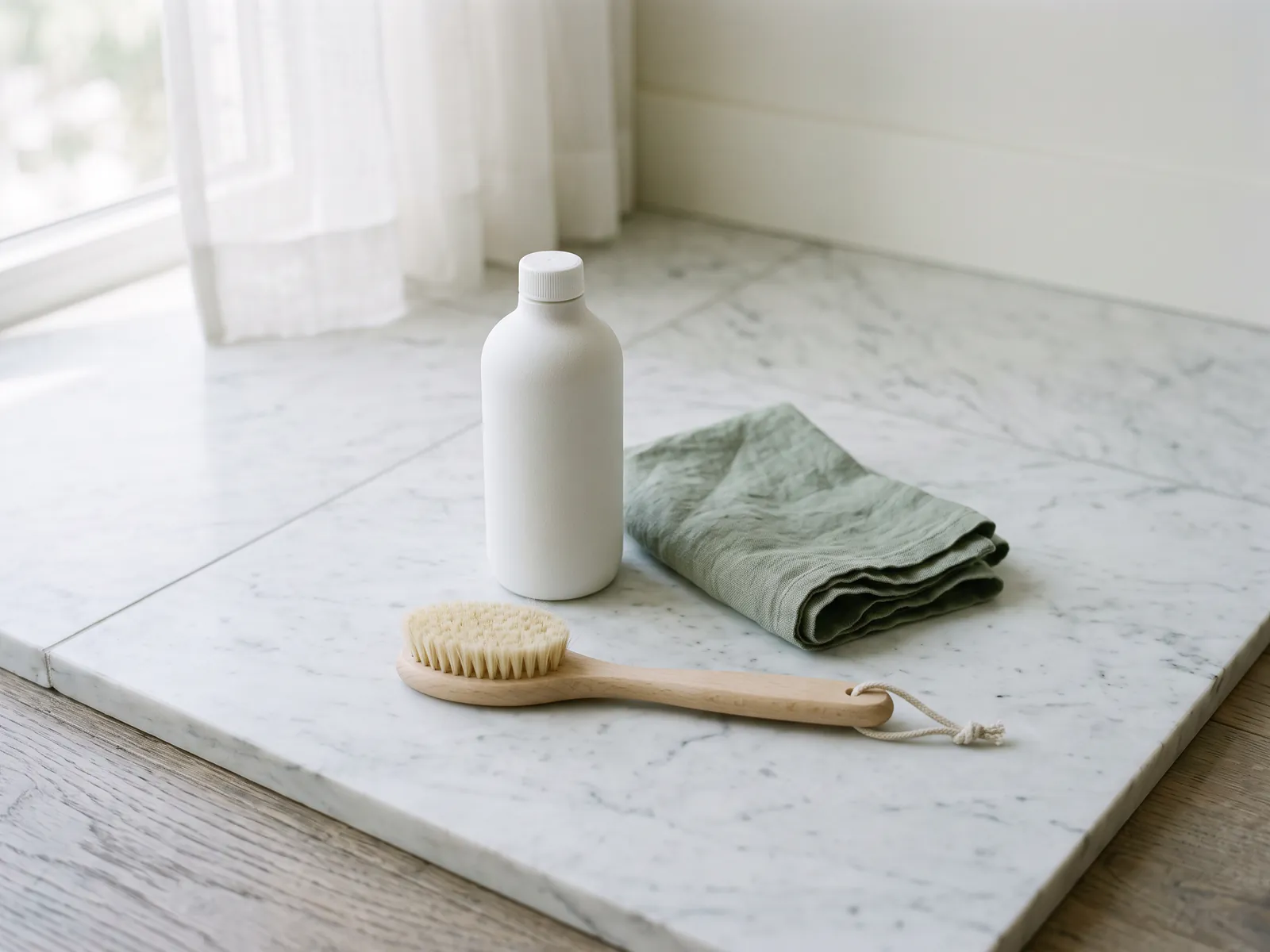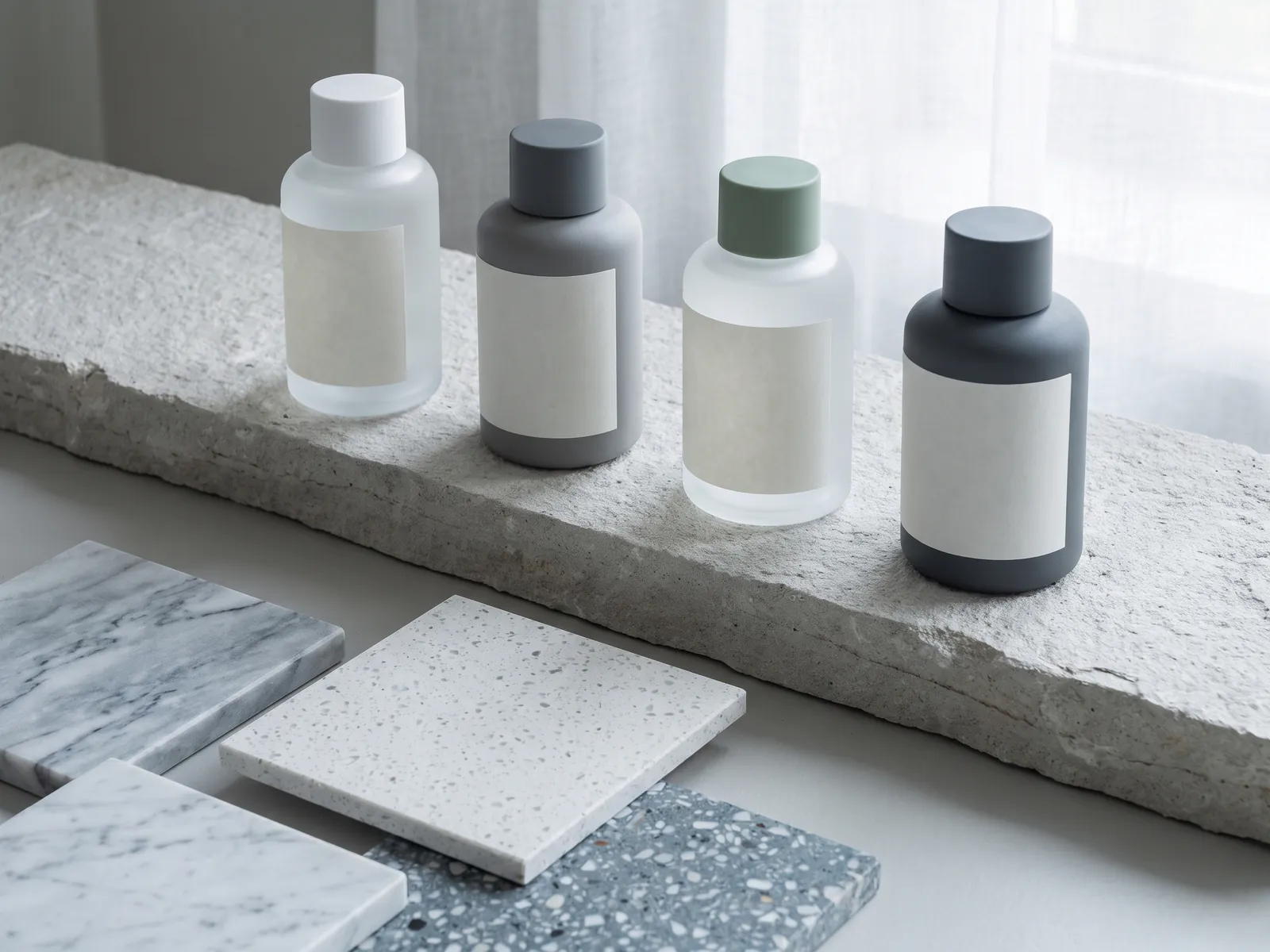
Four product types cover nearly all stone care: a pH-neutral daily cleaner for every surface, an alkaline degreaser for kitchens and first cleans, targeted removers for rust or epoxy residues, and impregnating protectors for porous stone. Matching product chemistry to both the stone and the soil type is the entire discipline; FILA's range maps to exactly these categories.
The four-product system
Stone care collapses into four chemistries once the marketing fog clears. The neutral cleaner is the daily workhorse, safe on every stone every day. The alkaline degreaser is the deep-clean specialist, cutting grease and construction soil on tolerant surfaces. The targeted removers are the problem clinic, one product per problem: rust, epoxy haze, wax build-up, organic stains. The impregnating protectors are the insurance layer, sealing porous stone against absorption.
The discipline is a two-axis match: product to stone, since acid-sensitive marble, terrazzo and limestone tolerate different chemistry than porcelain or granite, and product to soil, since grease, mineral scale and rust are different problems wearing similar disguises. Owning the four-product shelf ends the supermarket roulette that dulls half the stone floors in the Emirates. FILA's range is organised into precisely these categories, product by product with printed dilution tables, which is why the care guides across this journal reference it by job rather than by slogan.
Daily neutral cleaners
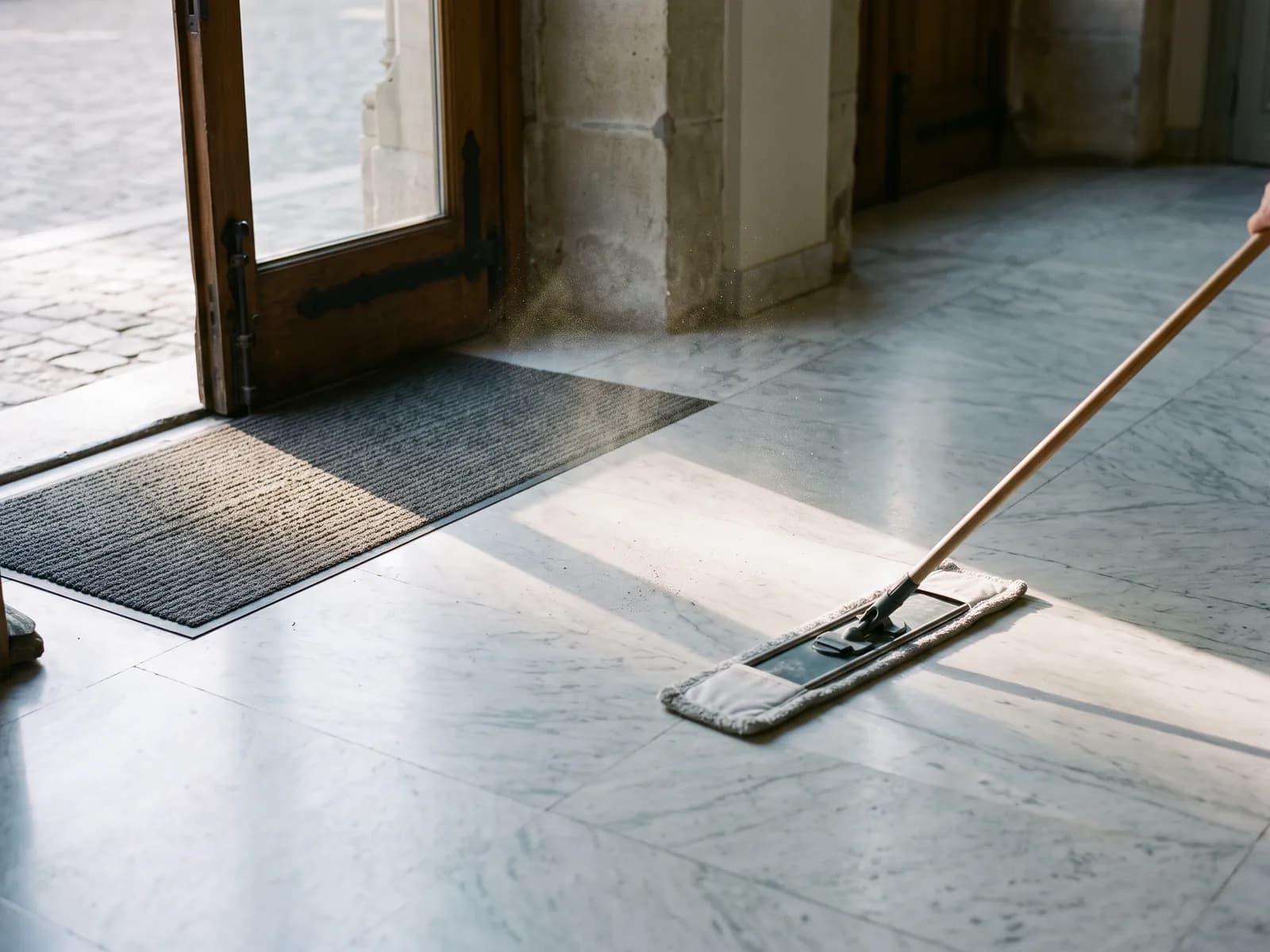
The neutral cleaner earns the largest bottle on the shelf: pH-balanced to clean without attacking, it is the only product that belongs in the daily and weekly routine of every stone in the house, marble, quartz, terrazzo, granite and the tiles between them. Concentrates dilute into mop water at a few millilitres per litre, making cost per clean trivial; ready-to-use sprays serve worktops and vanities. Used correctly, damp mop, sectioned work, no residue left to film, it maintains gloss instead of slowly stripping it, the quiet opposite of general floor cleaners.
What neutral means in practice: no acids to etch calcite surfaces, no harsh alkalis to strip sealers, no film-formers to smear. Its honest limit is heavy grease and bonded scale, which want the specialists below rather than a stronger scrub with the daily bottle. The marble floor routine builds entirely on this product; a no-rinse neutral concentrate is the single purchase that most improves a household's stone care.
Deep cleaning and degreasing
The alkaline degreaser is the periodic heavy-lifter: where the neutral cleaner maintains, the degreaser resets, cutting cooking grease around kitchens, lifting embedded soil from textured terrazzo and river-wash finishes, and performing the after-builders first clean that every new floor needs before its first sealer. Diluted per label and rinsed properly, it deep-cleans without the sins of the supermarket aisle; used neat or unrinsed, even good alkaline chemistry can dull polish and strip protectors, so it is a scheduled tool, quarterly, seasonal, or event-driven, never the daily bottle.
UAE service gives it two particular jobs: entrance zones where sand and city grime tread in and bond with cleaning residues, and outdoor terraces where dust films build between seasons. On acid-sensitive stone the degreaser is also the safe answer to problems people wrongly attack with acids, soap scum, general grime, cooking film. Deep clean, rinse, dry, then reassess protection, since a proper degrease often reopens the sealing question.
Problem solvers: rust, residue, wax
The specialist shelf is small and decisive, one product per named problem. Rust: orange-brown marks from cans, furniture feet and iron-rich water lift only with a dedicated non-acid stone rust remover; household acids would trade the stain for an etch. Epoxy and grout haze: the post-renovation veil on new floors dissolves with a residue remover matched to the grout chemistry, cement or epoxy, a first-clean essential. Wax and polish build-up: years of supermarket products strip with a dewaxer, frequently revealing decent stone underneath the yellowed film.
Mineral scale on stone: a stone-safe descaler, formulated to attack deposits without the calcite beneath, replaces the limescale sprays that must never touch marble. Old oil and organic stains escalate to poultice work, covered in the stain removal guide. Buying the specialist at the moment of need, rather than improvising with whatever is under the sink, is the entire skill; each improvisation risks converting one problem into two.
Protectors: which stones need them
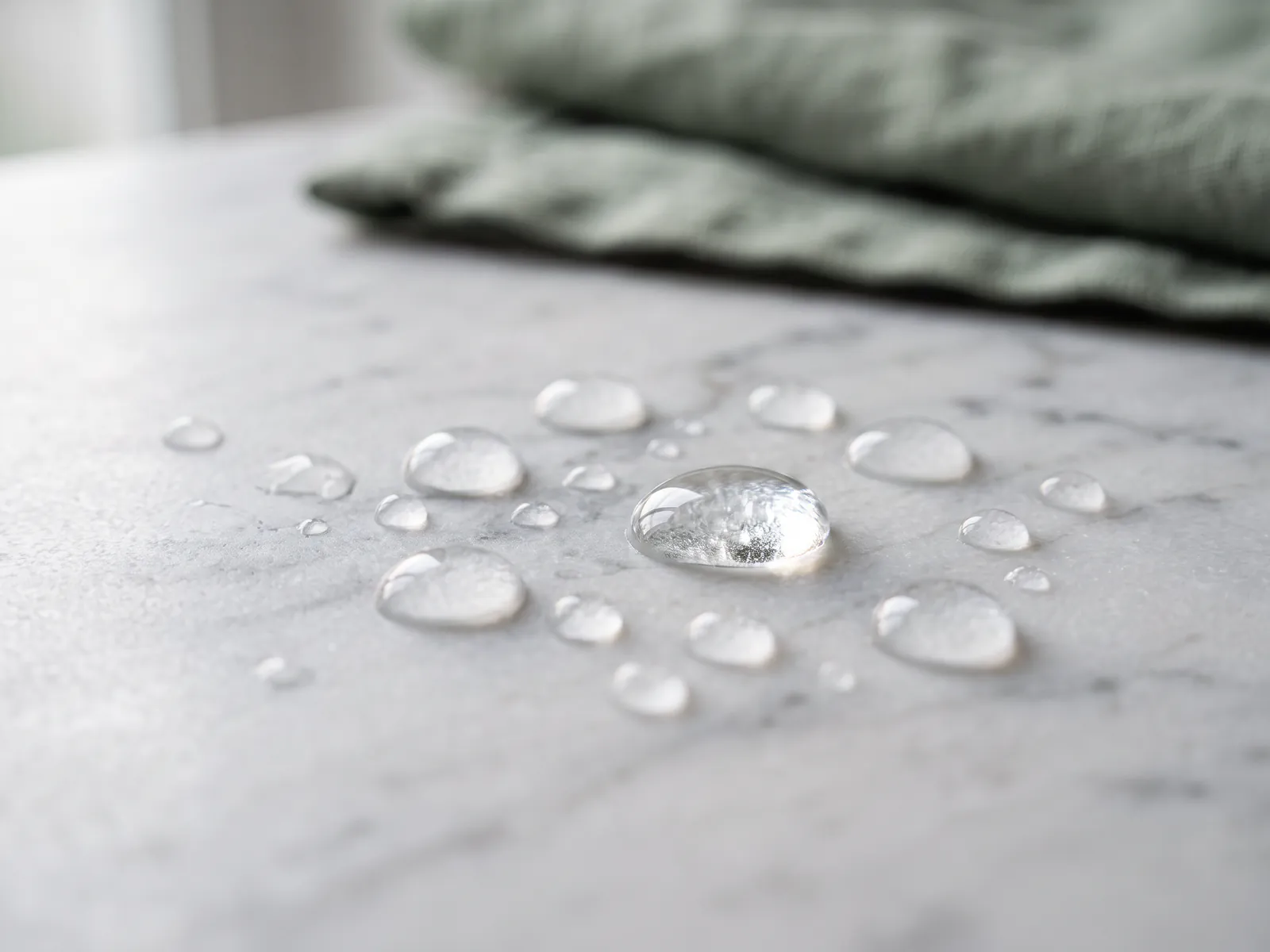
Protectors are impregnating sealers and enhancers, and their market is porous natural stone: quarried marble, limestone, travertine and cement-based surfaces drink liquids and repay sealing with stain resistance, on the water-drop-tested schedule the sealing guide sets out. Oil-repellent grades guard kitchens and dining floors; standard grades cover the rest; enhancers deepen the colour of honed and textured stone while protecting, a look decision as much as a chemical one.
The equally useful knowledge is which surfaces to leave alone: engineered quartz cannot absorb protector and never needs it; engineered marble and block terrazzo, at near-zero absorption, usually fail the water-drop test and thus opt out, one of the practical reasons the engineered ranges own hard-working UAE surfaces. Porcelain needs nothing. Applying protector where it cannot penetrate wastes product and can leave surface film, so the test, not enthusiasm, decides. Four products, two axes, one test: that is the whole discipline, and it fits on one shelf.
Questions, answered.
For daily cleaning, yes: a pH-neutral stone cleaner is safe on every surface. Deep cleaning, problems and protection each have their own product; daily care does not.
Mostly not for stone: acids etch marble and terrazzo, harsh alkalis strip sealers, film-formers dull everything cumulatively. The label promising to kill limescale is promising to attack calcite stone.
A residue remover matched to the grout: cement-film removers for cementitious haze, epoxy removers for epoxy. Applied per label as the first clean, before any sealing.
Degrease and de-haze first with the appropriate removers, rinse thoroughly, dry, then test and seal porous stone. Only then hand the floor to the daily neutral routine.
Global Classic Building Materials Trading LLC
Written from the Al Sajaa warehouse, Sharjah - slabs on racks, not stock photography. About the company