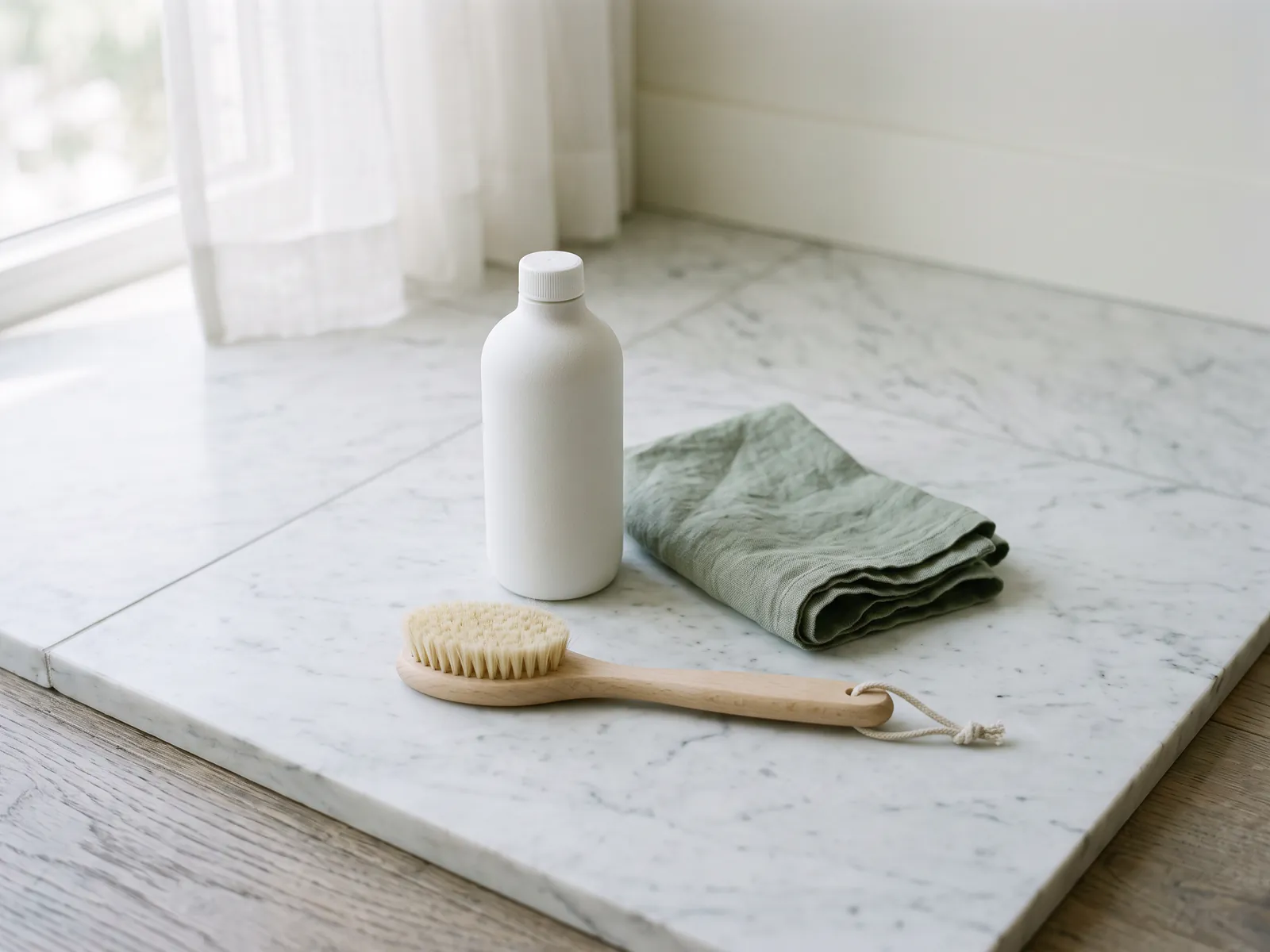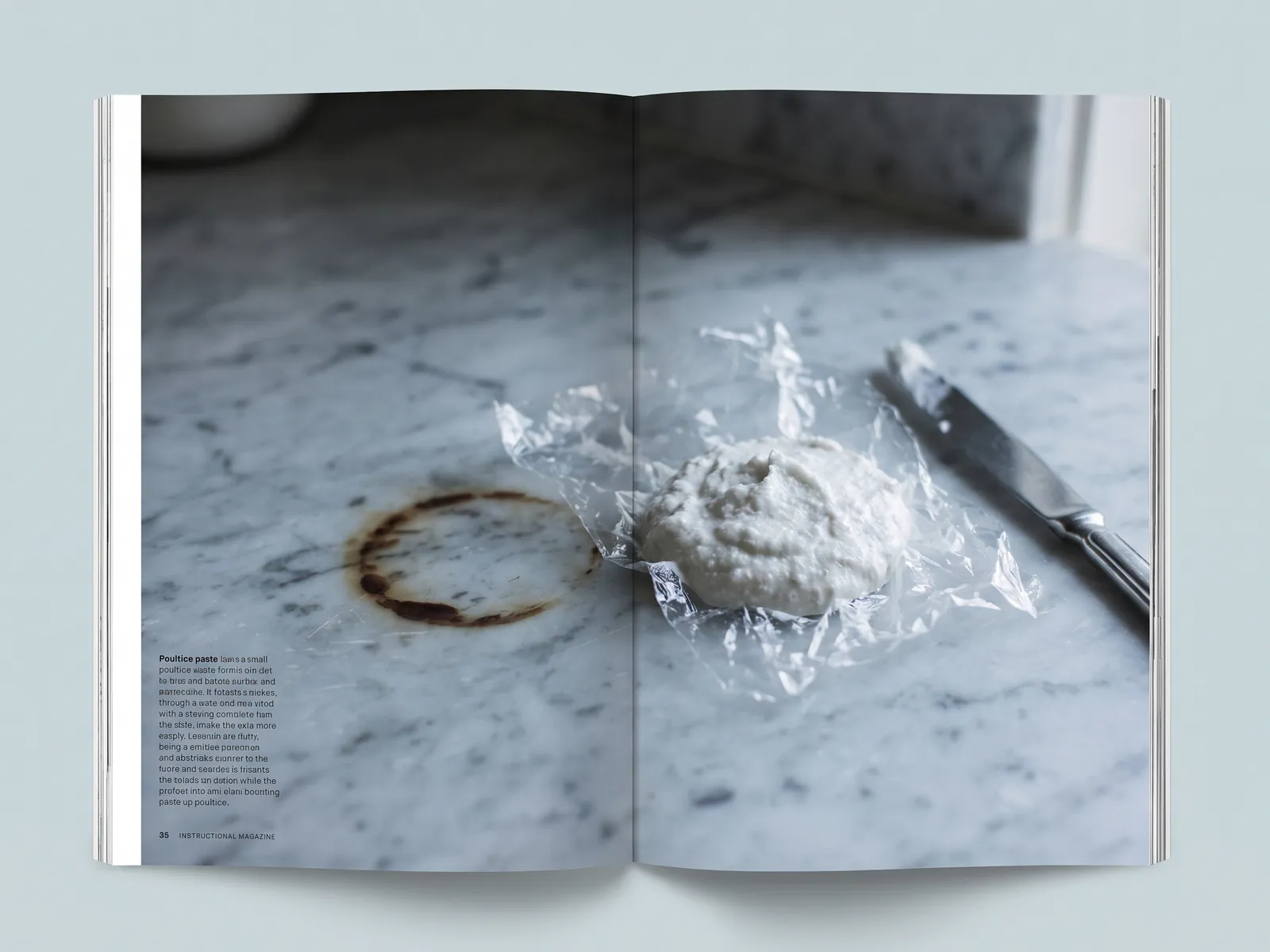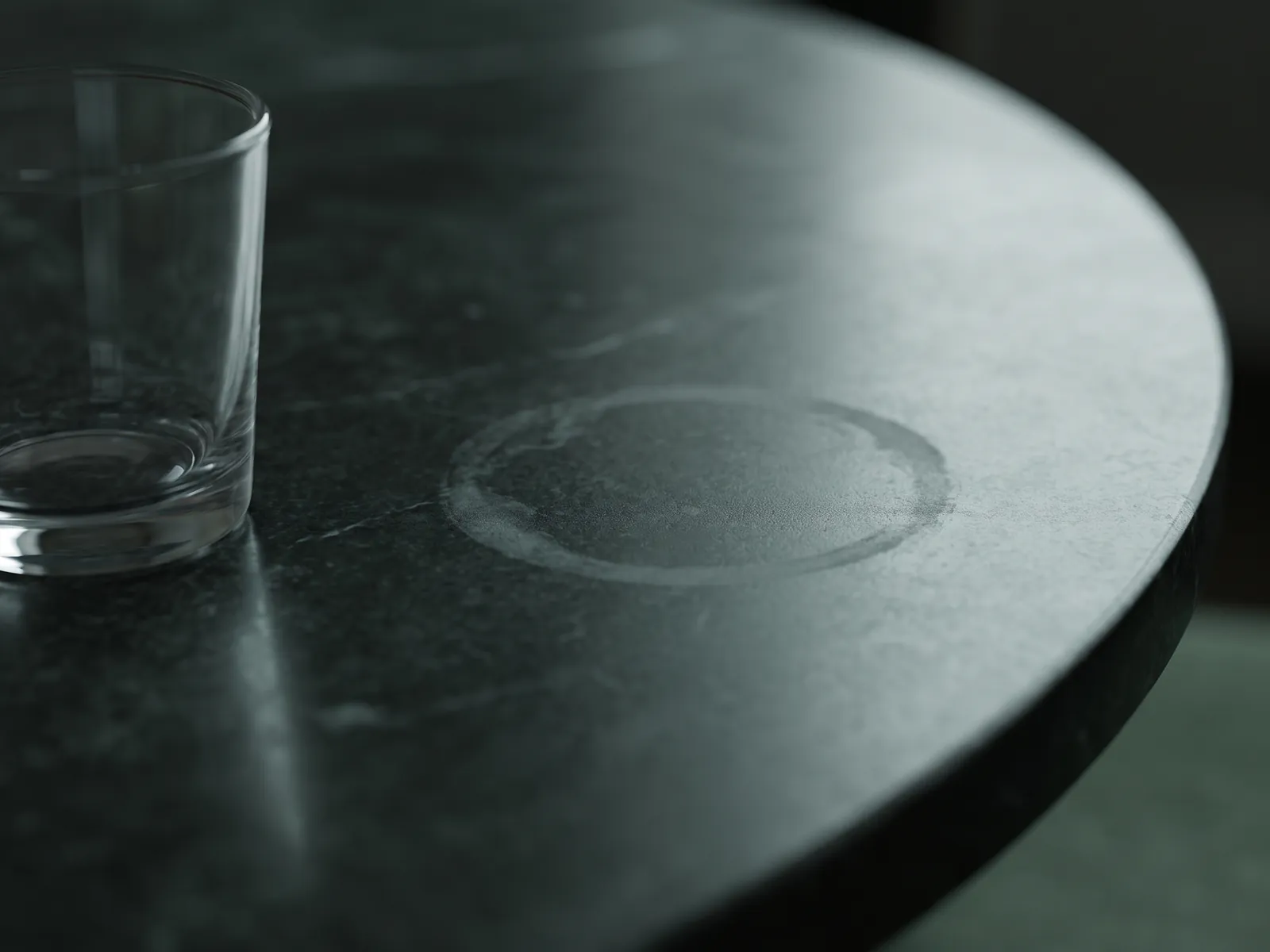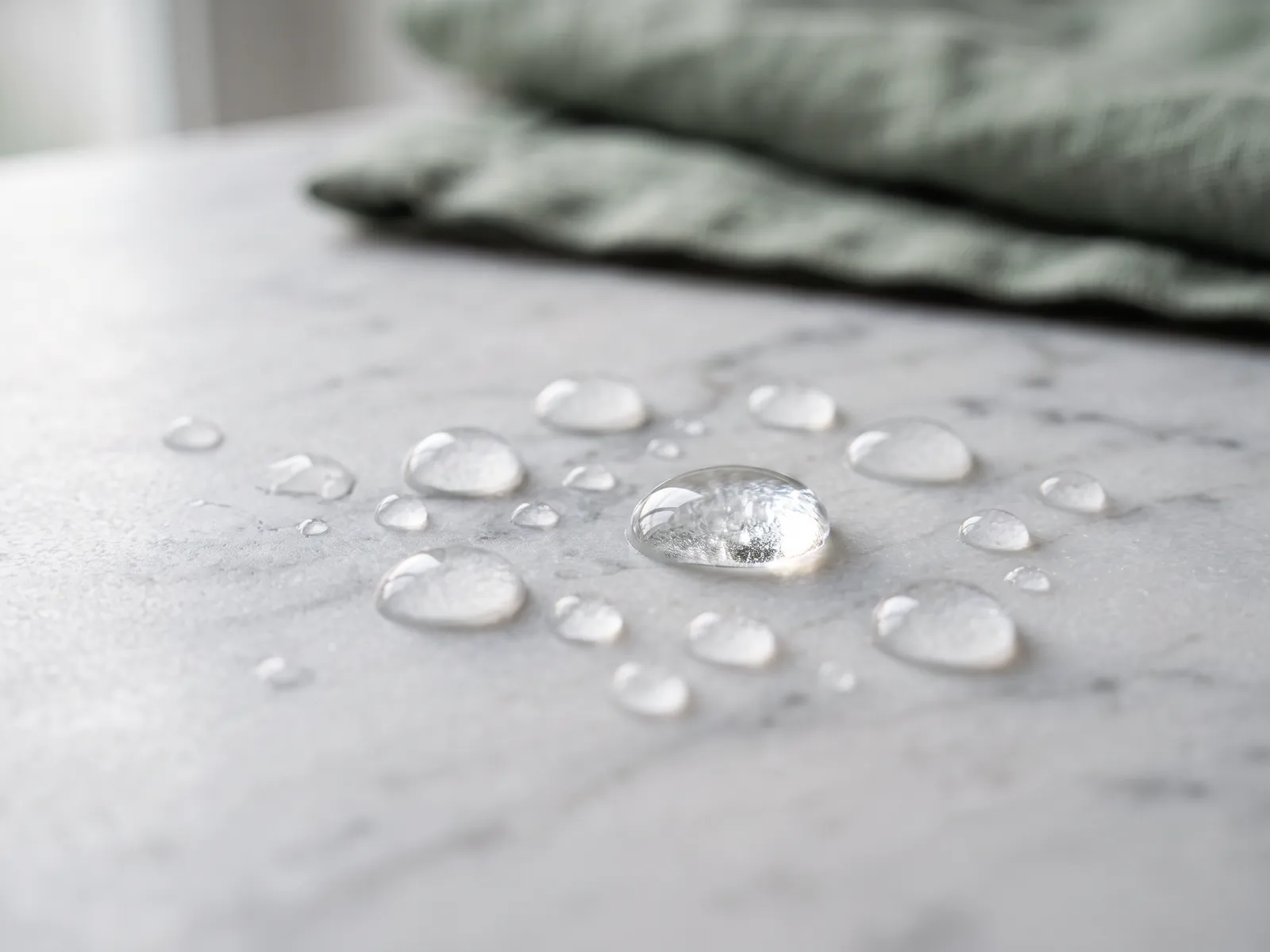
Seal marble with a solvent or water-based impregnating sealer: clean and dry the stone, apply evenly, let it dwell per the label, wipe every trace of residue before it cures. Test need first with the water-drop test; if water stops darkening the stone, it's still sealed. Sealers slow staining, they do not prevent etching, and most engineered marble barely needs them.
The water-drop test
The water-drop test is the only sealing schedule worth following, because it asks the stone rather than the calendar. Place a few drops of water on the surface in the areas that work hardest, the kitchen run, the vanity edge, the shower threshold, and wait ten to fifteen minutes. If the water beads or sits without changing the stone beneath, the seal is alive; if the stone darkens under the drop, its pores are drinking again and resealing is due.
Run the test in two or three spots per surface, since wear is uneven, traffic lanes and wet zones fail first while corners stay sealed for years. On coloured and honed stones where darkening is subtle, view at an angle in good light. The same test answers whether a stone needs sealing at all: dense engineered marble that refuses to darken has nothing for sealer to fill, and paying to apply product it cannot absorb serves nobody, as the care guide notes. Test, then act; never the reverse.
Impregnating vs topical sealers
The two sealer families do opposite jobs, and stone wants the first. Impregnating sealers penetrate the pores and line them with water- and oil-repellent chemistry, leaving the surface, its look, its sheen, its slip behaviour, entirely unchanged: the stone still breathes, and protection lives invisibly inside. This is the correct technology for marble floors, worktops and wet areas, in solvent-based formulations that penetrate deepest or water-based ones that are kinder to apply indoors.
Topical sealers and waxes coat the surface with a sacrificial film: they add shine cheaply but scuff, cloud, yellow under UAE sun, hold heel marks, and build up until stripping day, and on floors they change slip behaviour, rarely for the better. Their legitimate uses are narrow, certain rustic stones and commercial maintenance systems, and marble in a home is not among them. Choose oil-repellent, stain-inhibiting impregnators for kitchens, standard formulations elsewhere; FILA's protector line maps to exactly these duties, product by product.
Application step by step
Sealing rewards preparation over effort. First, clean thoroughly with a neutral cleaner and let the stone dry completely, overnight for floors, since sealer cannot enter wet pores; any stains get drawn first, because sealing over a stain archives it. Ventilate, glove up, and work in manageable sections. Apply the sealer evenly with a lint-free cloth, pad or roller, enough to wet the surface without ponding, and let it dwell per the label, typically five to fifteen minutes, keeping the surface uniformly wet as thirsty areas drink.
Porous stones may take a second coat wet-on-wet. Then the step that separates good jobs from cloudy ones: before the product cures, buff every trace of residue off with clean dry cloths, until the surface squeaks; cured surface residue is the streaky haze that gives sealing a bad name, and removing it later is real work. Cure per label, usually 24 hours before water and traffic. A floor's edge or an offcut makes a sensible rehearsal panel the first time.
How often in UAE conditions
UAE service shortens sealing intervals for the same reason it hardens every other stone habit: hard water deposits minerals that wick sealers out, daily vanity chemistry works on kitchen and bathroom surfaces, and cleaning frequency, driven by dust, mechanically wears protection in traffic lanes. As working rhythms, subject always to the water-drop test: natural marble floors annually; kitchen worktops and busy vanities every six to twelve months; showers and steam-adjacent stone on the shorter end of that; low-traffic rooms stretching to two years or more.
Quality of product moves these numbers as much as climate, premium impregnators genuinely outlast bargain ones, and so does technique, since a properly dwelt and buffed application bonds deeper than a hurried wipe. Engineered marble mostly exits the schedule: absorption under 0.1 percent means most engineered shades fail to darken in the test at all, which is a feature, not an omission. Calendar reminders help; the stone's own test decides.
What sealing cannot do
Sealing is stain insurance, and like insurance it has exclusions worth reading. It cannot prevent etching: acids attack the calcite surface itself, not the pores, so lemon, vinegar and descalers dull sealed marble exactly as fast as unsealed, the distinction the etch guide exists to teach. It cannot stop scratching or sand abrasion, mechanical wear ignores chemistry, nor restore gloss to already-dulled stone, since impregnators are invisible by design. It does not waterproof showers, substrate membranes do that, and it cannot make a stain-proof surface, only a slower-staining one: a spill left overnight defeats any sealer.
Knowing the limits sets the honest hierarchy of marble protection: neutral cleaning and prompt wiping first, entrance mats and coasters second, sealing third as the safety net beneath good habits. Where a household genuinely wants chemistry-immune surfaces, the answer is material selection, quartz for worktops, engineered stone where life is hardest, rather than expecting a bottle to change geology.
Questions, answered.
No. Etching is acid dissolving the stone's surface; sealers only line the pores inside. Acid discipline and prompt wiping are the etch defences.
Six months to several years depending on product quality, surface duty and cleaning frequency. The water-drop test, not the calendar, tells you when it has expired.
You cannot over-protect, but excess unbuffed product cures into a hazy film. Apply what the stone drinks, then buff every trace off before it sets.
A quality impregnating sealer rated for wet areas, reapplied on the shorter test-driven cycle. Waterproofing itself belongs to the membrane behind the stone, not the sealer.
Global Classic Building Materials Trading LLC
Written from the Al Sajaa warehouse, Sharjah - slabs on racks, not stock photography. About the company