Marble stains lift with a poultice: a paste of absorbent powder and the right drawing agent, left covered on the stain for 24 to 48 hours. Oil stains take acetone or ammonia poultices, organic stains take hydrogen peroxide, rust needs a dedicated non-acid rust remover. If the mark is lighter than the stone and feels rough, it's an etch, which needs repolishing, not drawing.
Stain or etch: the water test
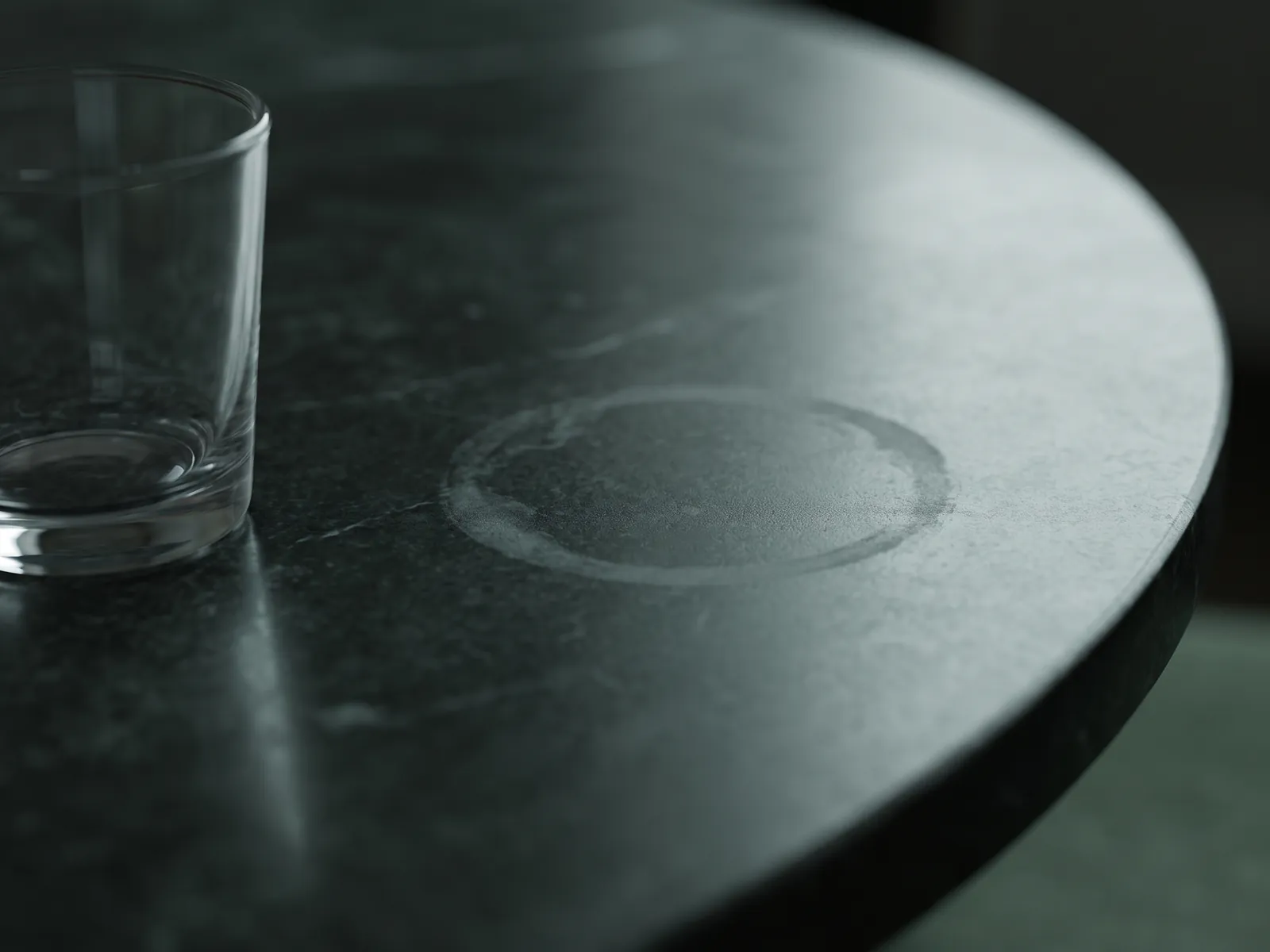
Before any chemistry, diagnose, because the two common marble marks need opposite treatments. A stain is matter absorbed into the stone: it reads darker than the surrounding marble and the surface above it still shines. An etch is acid damage to the stone itself: lighter and duller than its surroundings, often faintly rough under a fingertip, with the gloss locally gone.
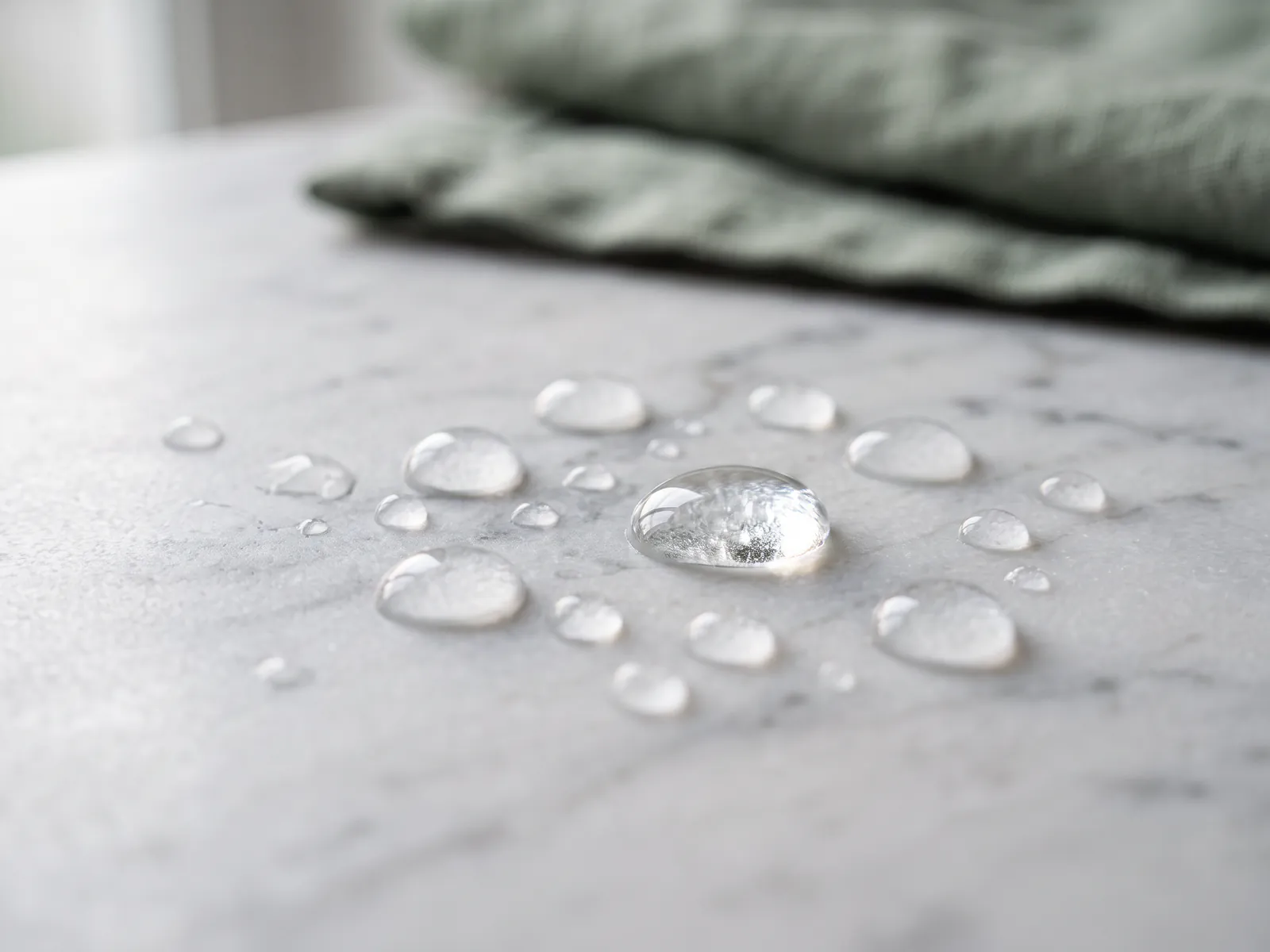
The ten-second read: darker means stain, lighter means etch. Where light angles confuse things, the wet test helps, a drop of water darkens the area and momentarily restores clarity over an etch, telling you the surface, not the interior, is the problem. Poultices treat stains only; etches need repolishing, and scrubbing them with cleaners deepens the damage. Mixed marks exist, red wine both stains and etches, and get treated in sequence: draw the stain first, repolish the etch after. The full etch-versus-stain explainer covers the borderline cases.
Making and applying a poultice
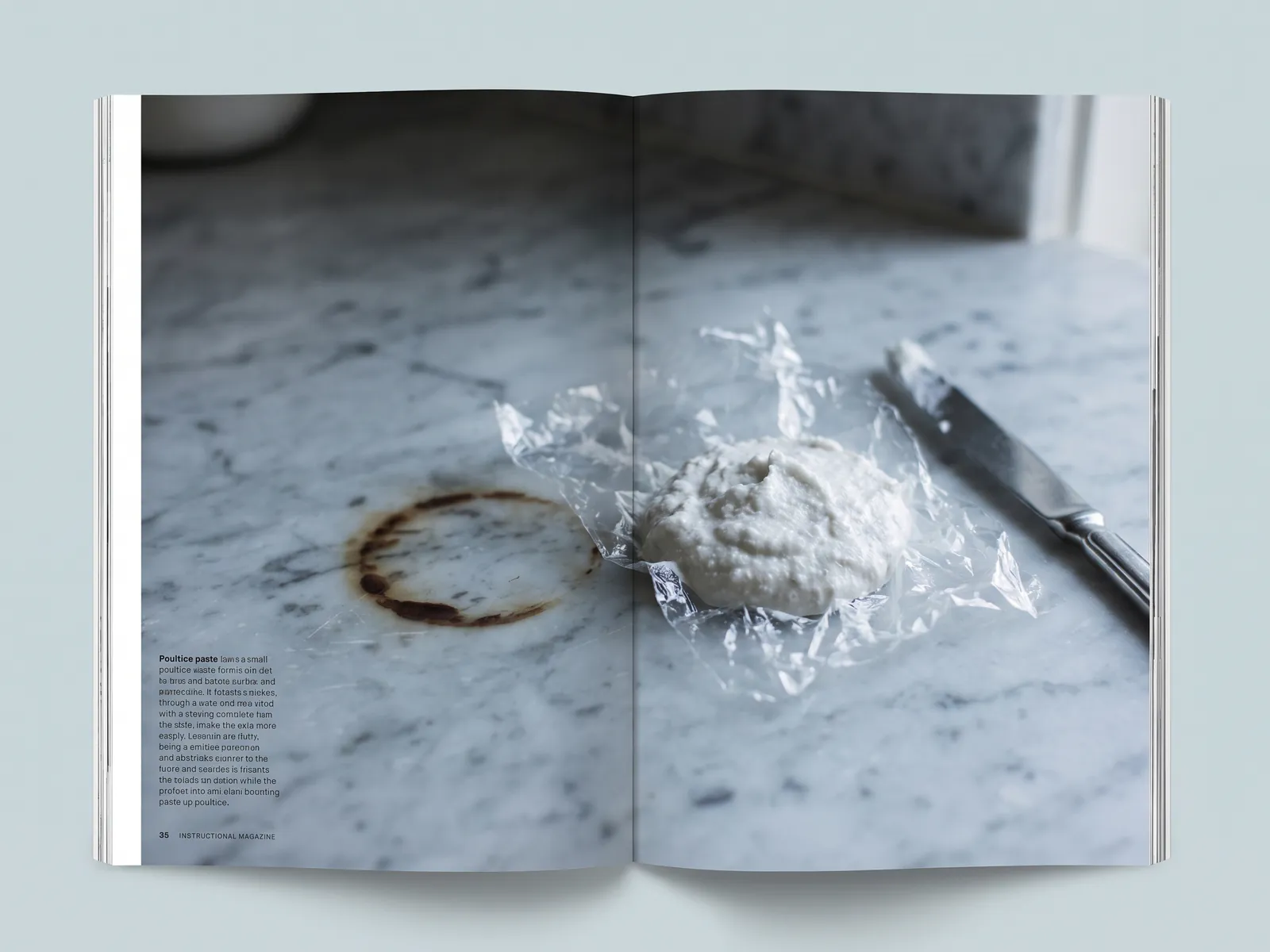
A poultice is absorbent powder wetted with a drawing agent into a peanut-butter paste, and its job is to dissolve the stain and pull it up into itself as it dries. The powder: kaolin clay, whiting, or even white paper towel for small marks. The liquid: matched to the stain type per the table below. The method: wet the stain area with the agent first, spread the paste six millimetres thick and slightly beyond the stain's edge, cover with plastic film taped at the edges, and slow-dry it for 24 to 48 hours.
Then lift the dried paste with a plastic scraper, rinse with water, dry, and assess: stubborn stains repeat the cycle, two or three rounds is normal for old marks. Never scrub mid-process, the poultice works by capillarity, not force. Ready-mixed professional poultices, FILA's problem-solver line among them, remove the mixing variables and are the sensible route for statement floors and light-coloured stone where experimentation shows.
By stain type: oil, organic, rust, ink
Match the drawing agent to the stain's chemistry. Oil and grease, cooking oil, cosmetics, butter, the dark patch with soft edges: poultice with acetone or a few drops of ammonia; degreasing dish soap solution for fresh marks. Organic stains, tea, coffee, karak, fruit, turmeric, flowers left on the sill: poultice with 12 percent hydrogen peroxide, which bleaches the tannins out; sunlight assists on pale stones. Rust, from cans, furniture feet, hard-water iron, orange-brown and stubborn: only a dedicated non-acid stone rust remover, never acids and rarely a DIY win; this is the stain most worth buying the professional product for.
Ink and dye: acetone on dark stones, peroxide on light. Water rings and mineral film: usually surface deposits, not true stains, lifting with neutral cleaner or a stone-safe descaler. Biological spotting in shaded damp corners: diluted peroxide. Unknown marks: start with peroxide, escalate to acetone, and reread the etch test before blaming absorption.
Etch marks: polishing powder and pros
Etches are surface damage, so their repair is resurfacing, scaled to severity. Light etches, water rings, faint lemon ghosts on polished stone: a marble polishing powder, tin-oxide based, worked over the mark with a damp cloth in small circles, re-abrades the surface to match its surroundings; patience and thin passes beat pressure. Kits pair the powder with pads and make the job kitchen-table simple on small areas.
Deeper etches that shadow under raking light, clusters across a vanity, or any etching on honed finishes, where home powder can create shiny patches worse than the mark, belong to a stone professional with diamond pads, who blends the repair invisibly at modest cost. Widespread etching across a floor is a repolish visit, not a spot repair, as the cleaning guide sequences. The lasting fix is upstream: neutral cleaners only, coasters and trays where acids live, and prompt wiping, because etches are chemistry appointments the stone keeps instantly.
Preventing round two: sealing
Every drawn stain is an argument for slowing the next one, and that is what impregnating sealer does: soaked into natural marble's pores, it repels water and oil long enough to turn a spill from an absorption event into a wipe. After any successful poultice, reseal the treated area once fully dry, the drawing process pulls sealer out along with the stain, leaving that patch the floor's most vulnerable.
Sealing's honest limits keep expectations straight: it slows staining, buys reaction time, and does nothing whatsoever against etching, which attacks the stone's surface rather than entering its pores; the sealing guide covers products, the water-drop test and application. UAE service, hard water, cosmetics, kitchens in daily use, argues for annual resealing of natural marble and more frequent attention to worktops and vanities. Engineered marble largely opts out of this chapter, its near-zero absorption resisting stains natively, one of the reasons the engineered range gets specified where life is messiest.
Questions, answered.
As a gentle poultice powder, no; as a scouring paste, its mild abrasion can dull polish. Use it for drawing, never for scrubbing.
24 to 48 hours per application under film, plus drying. Old or deep stains commonly need two or three cycles; the process rewards patience, not pressure.
Usually, with repeated poulticing matched to the stain type. Long-set rust is the stubborn exception; deep historical marks sometimes need professional extraction or honing.
That is an etch, not a stain: the acid dissolved the polished surface. No cleaner will lift it; polishing powder or professional repolishing restores the gloss.
Global Classic Building Materials Trading LLC
Written from the Al Sajaa warehouse, Sharjah - slabs on racks, not stock photography. About the company