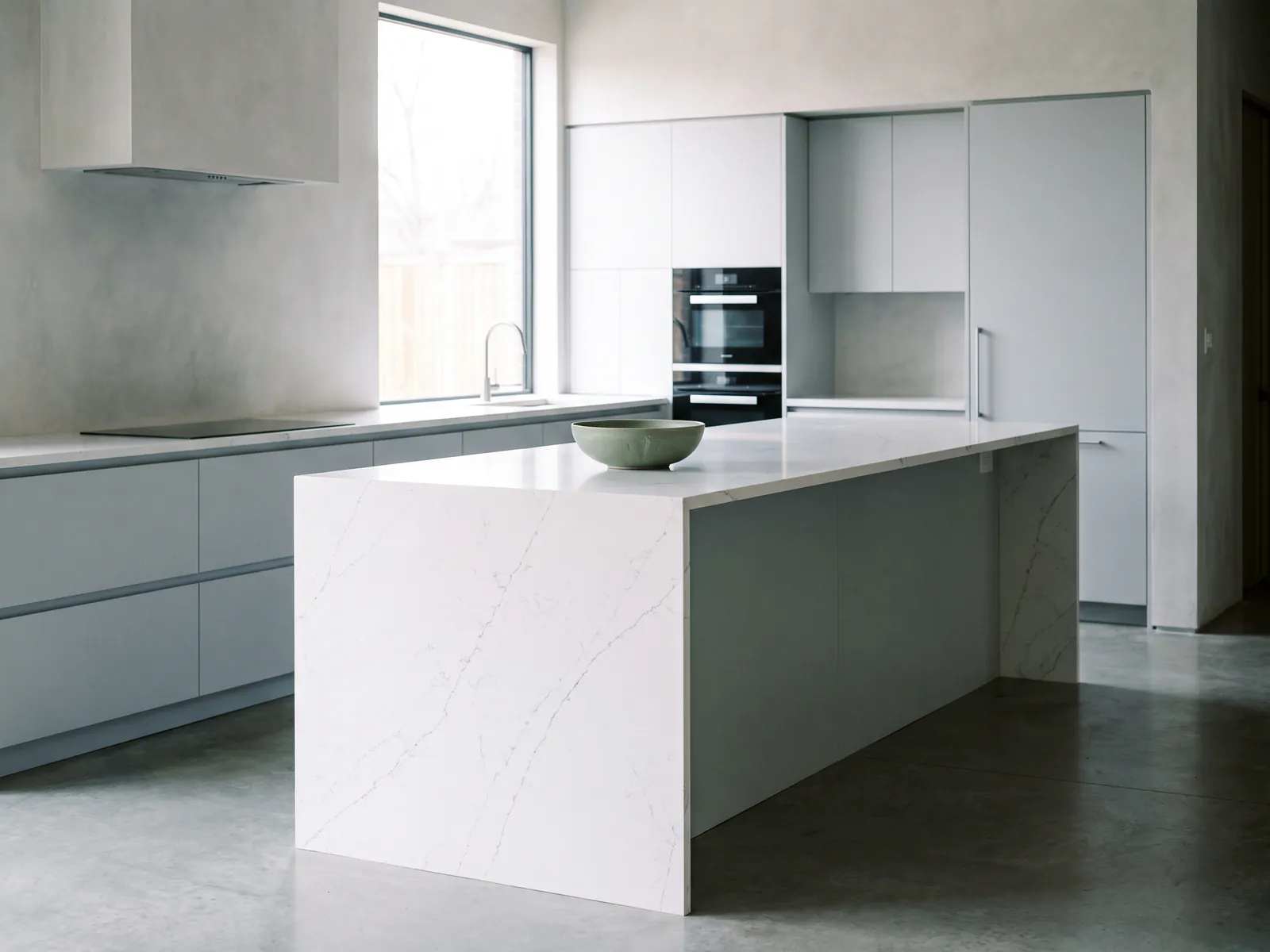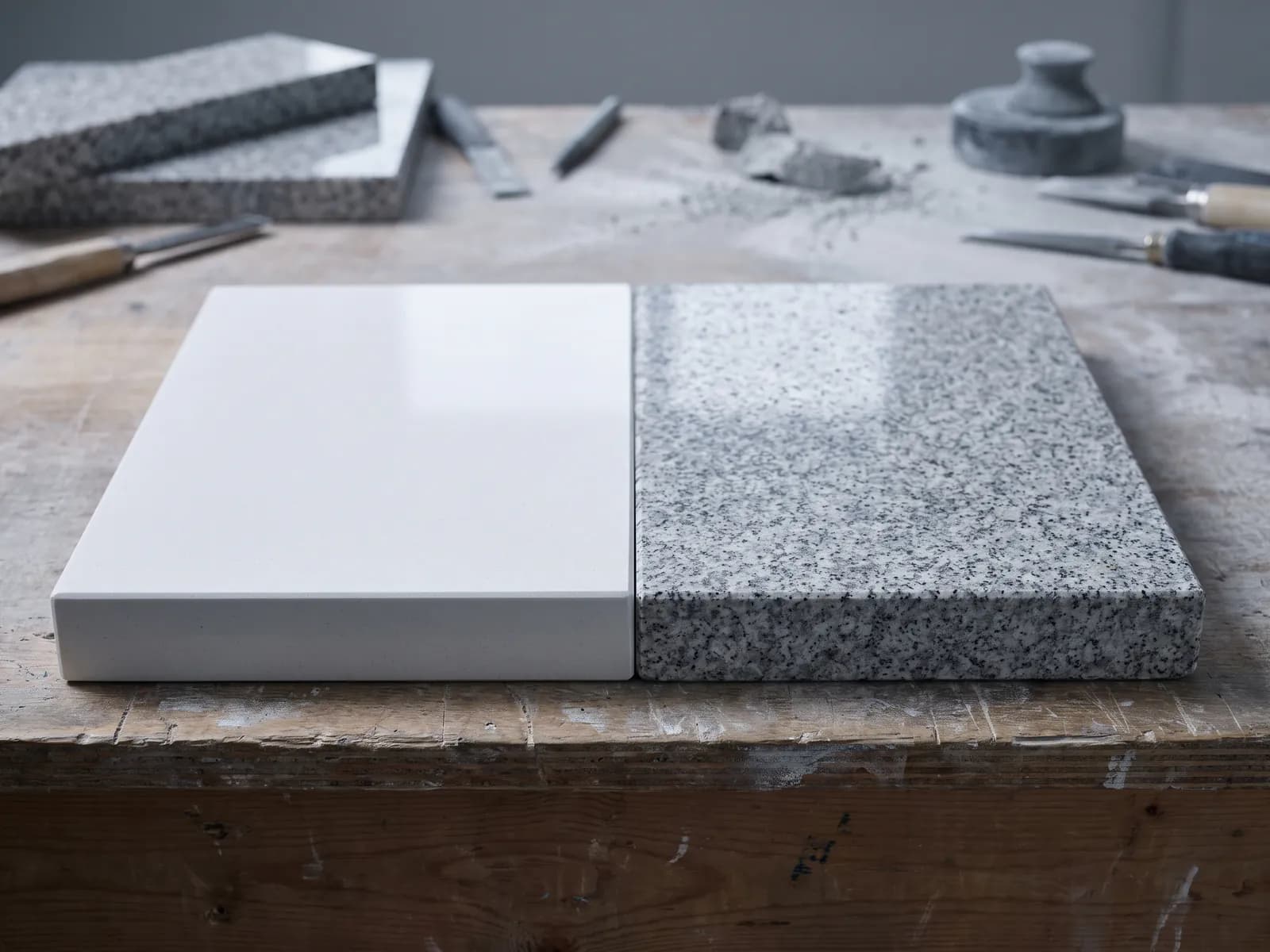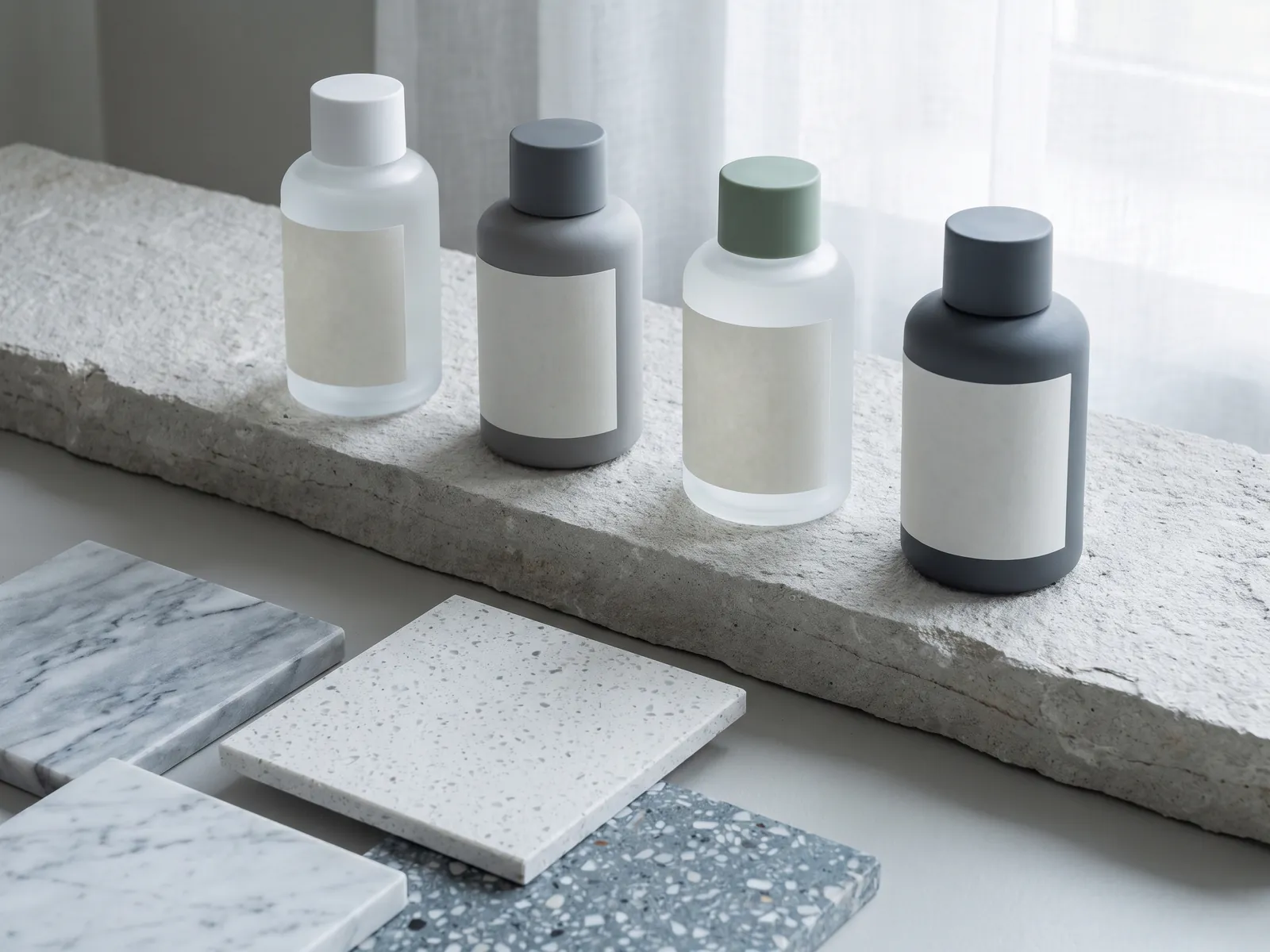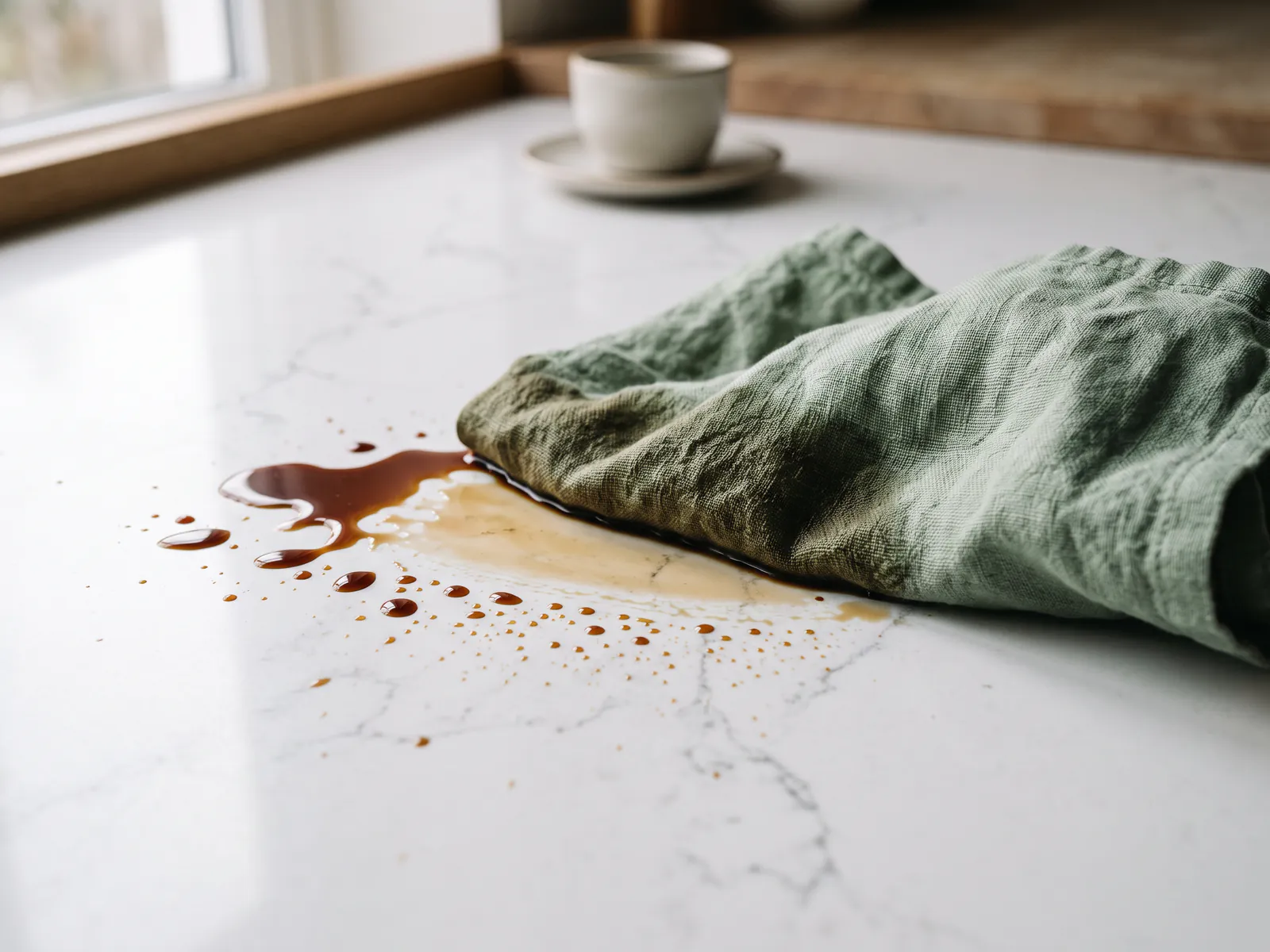
Quartz resists stains because it is non-porous: coffee, wine and oil wipe off even after hours. It can scratch under deliberate abuse, knives, unglazed ceramic, and can discolour from prolonged direct heat or harsh solvents. Use boards and trivets and a quartz worktop stays essentially unmarked for decades.
Why non-porous changes everything
Every staining mechanism in stone runs through pores: liquid enters, pigment stays, and the surface owns the memory. Quartz's resin-bound body closes that door, with water absorption effectively at zero, so karak, coffee, saffron oil, beetroot and red wine sit on the surface as beads and films with nowhere to go. Cleanup is not a technique; it is a cloth.
This is also why quartz never needs sealing, sealers exist to plug pores, and quartz offers none to plug, and why hygiene certifications come easily to the material: bacteria share the pigments' problem of having nowhere to live. The practical translation for UAE kitchens, where milky tea and slow-cooked oils are the daily chemistry: the worktop is not a surface you protect from breakfast. What remains are the few genuine vulnerabilities, heat and solvents, covered next, and they are habits, not maintenance. The complete quartz guide sets the whole material in context.
The short list of real threats
Four things genuinely mark quartz. Direct high heat: hot pans and airfryer bases above roughly 150 degrees can permanently whiten or crack the resin; trivets end the risk. Deliberate cutting: knives can scratch the surface, less because the blade beats the quartz than because repeated strokes score the resin between crystals; boards end that too, and save the knives. Harsh chemistry: bleach left sitting, paint strippers, oven cleaner overspray and other aggressive solvents can dull or discolour the binder. And impact on edges: a heavy pot dropped on an overhang corner can chip it, as with any stone.
What is absent from the list is instructive: no sealing schedule, no acid panic, lemon and vinegar are non-events on quartz, unlike marble, no special products. The material asks for two pieces of wood and one habit of rinsing cleaning chemicals off rather than letting them dwell. As threat models go, it is the shortest in the kitchen.
Heat marks: how they happen
A quartz heat mark is resin damage: above its tolerance, the polymer binding the crystals yellows, whitens or micro-crazes, and because the change is chemical, it is permanent, no polish or cleaner reverses it. The classic causes are a pan straight off the flame parked while plating, a portable grill or airfryer run directly on the counter, and, more slowly, a countertop oven radiating into the same spot daily.
The threshold sits around 150 degrees sustained; brief warm contact, hot mugs, warm plates, sun through the window, does nothing. Thermal shock adds a second mechanism: extreme local heat can expand the surface unevenly enough to crack it near cutouts and edges. Prevention is trivets without exception and appliance feet for anything that cooks on the counter, planned as landing zones at design time. It is the one discipline quartz demands; honour it and, as the quartz versus granite comparison concedes, granite's sole advantage never gets exercised.
Cleaners to avoid (bleach, solvents)
Quartz cleaning is a subtraction exercise: a drop of washing-up liquid or a pH-neutral cleaner with a microfibre does everything, and the errors are all additions. Avoid letting bleach dwell, it can lighten resin and pigments; avoid oven cleaners, paint strippers, drain chemicals and acetone in quantity, all solvent-aggressive toward the binder; skip abrasive powders and green scouring pads, which dull the polish mechanically; and pass on wax-based stone polishes, which quartz cannot absorb and merely smear.
Brief contact with common sprays is rarely a drama, the operative sin is dwell time, so the household rule is simply rinse after chemistry. Dried spills release with warm water and patience, or a plastic scraper held flat; mineral film from UAE tap water wipes with a damp cloth before it bonds. For the whole-house version of what chemistry belongs on which surface, the stone cleaning products guide maps cleaners to materials in one table.
What warranty actually covers
Quartz warranties, typically 10 to 15 years from established manufacturers, cover manufacturing defects: delamination, pigment instability, cracking without impact, and finish faults present from production. They exclude, almost universally, the damage this article describes: heat marks, cutting scratches, chemical dulling, edge chips from impact, and anything filed under misuse, plus fabrication and installation faults, which belong to the fabricator's workmanship guarantee, a separate document worth reading as carefully.
Two practical consequences. First, provenance matters: warranties travel through authorized supply chains, so slabs from an authorized reseller carry factory backing that grey imports may not. Second, registration and paperwork matter: keep the invoice naming the range and batch. Read warranty length as a manufacturer's confidence signal more than an insurance policy, the material's real protection is its own chemistry plus two wooden accessories, and the failure rate of respected ranges in normal service is close to a rounding error.
Questions, answered.
Fresh turmeric wipes off; left for days on lighter surfaces it can ghost faintly in the resin. Same-day cleaning, which non-porous surfaces make trivial, keeps even turmeric harmless.
Not practically: refinishing the resin surface uniformly is not a field repair. Minor marks can be improved professionally, but prevention with boards is the real answer.
No. Prolonged direct sun shifts resin colour, so quartz is an indoor material. Outdoor kitchens belong to granite or porcelain.
Occasionally, yes, ammonia-based sprays in passing do no harm. Daily, a neutral cleaner is kinder to the resin; always avoid letting any strong chemical dwell.
Global Classic Building Materials Trading LLC
Written from the Al Sajaa warehouse, Sharjah - slabs on racks, not stock photography. About the company