Quartz slabs in Dubai typically run AED 250 to 500 per square metre supply-only for standard ranges as of 2026, with imported designer shades and jumbo formats above that band, and a slab covers about 4 to 5 square metres. Fabrication and installation - cutouts, edge profiles, waterfall ends, splashbacks - are priced separately by the fabricator. The quote to trust itemises slabs, fabrication and installation rather than quoting one blended number.
Price bands by range
The Dubai market frames into three bands, per square metre of slab supply-only as of 2026 and varying by supplier and range. Standard ranges, solid whites, speckles and everyday patterns in standard formats, run roughly AED 250 to 500. Premium and designer territory, convincing Calacatta-look veining, branded imports, jumbo and superjumbo formats, prices above that band. At the top sits speciality work: rare patterns, heavy bookmatching, complex fabrication, where quotes are project-priced rather than banded.
Within each band, the drivers are the shade's production complexity, the format premium, since jumbo slabs cost more per slab but can reduce joints and waste, and the finish, with honed and leather textures typically carrying a margin over polish. Installed supply-and-fix totals sit above slab rates once fabrication and fitting join the bill; that basis difference explains half the confusing spread in quoted figures. Confirm any number's basis first, then compare. The quartz range quotes trade pricing in AED from Al Sajaa stock, usually within one working day.
What inflates a quote
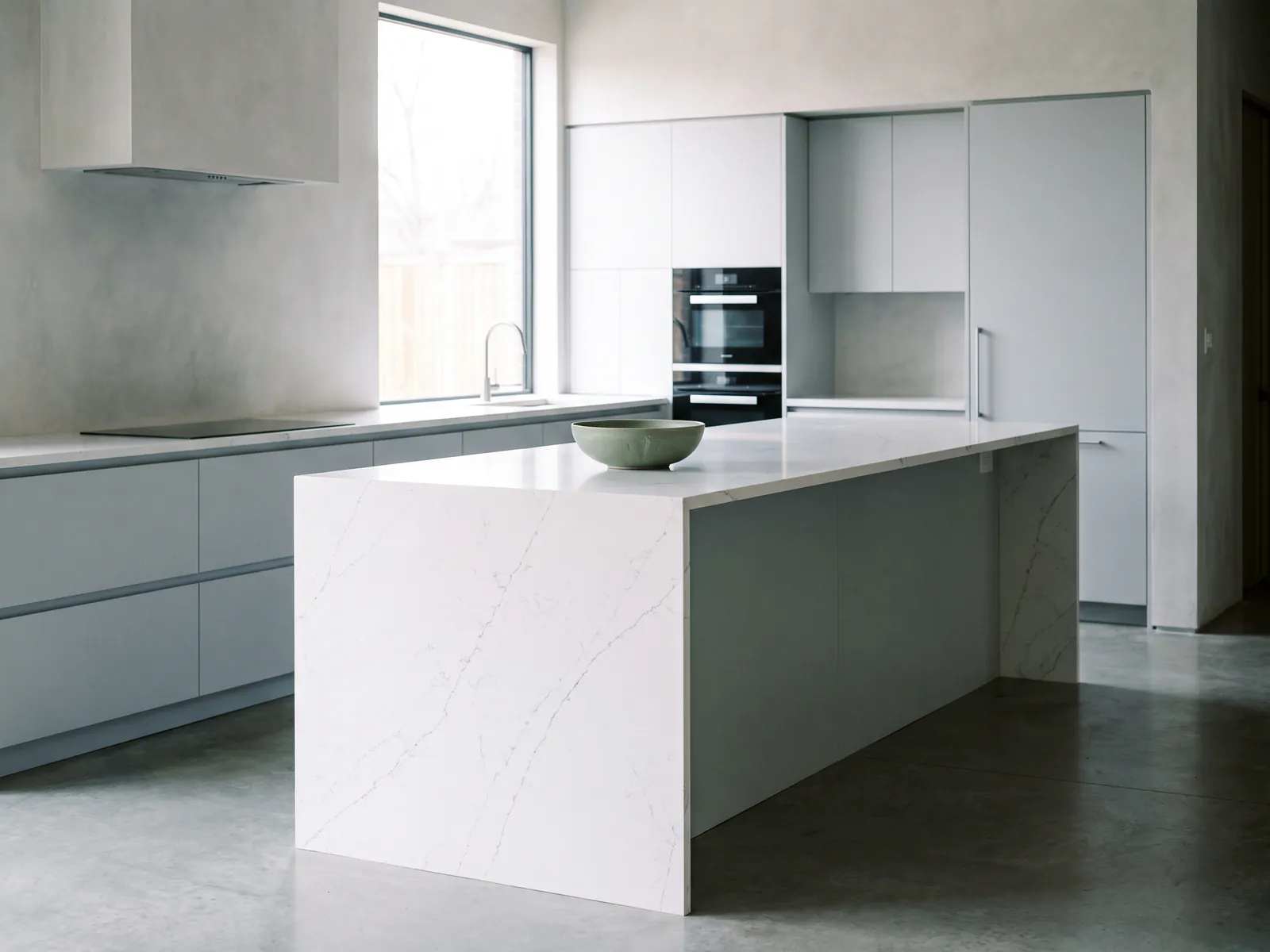
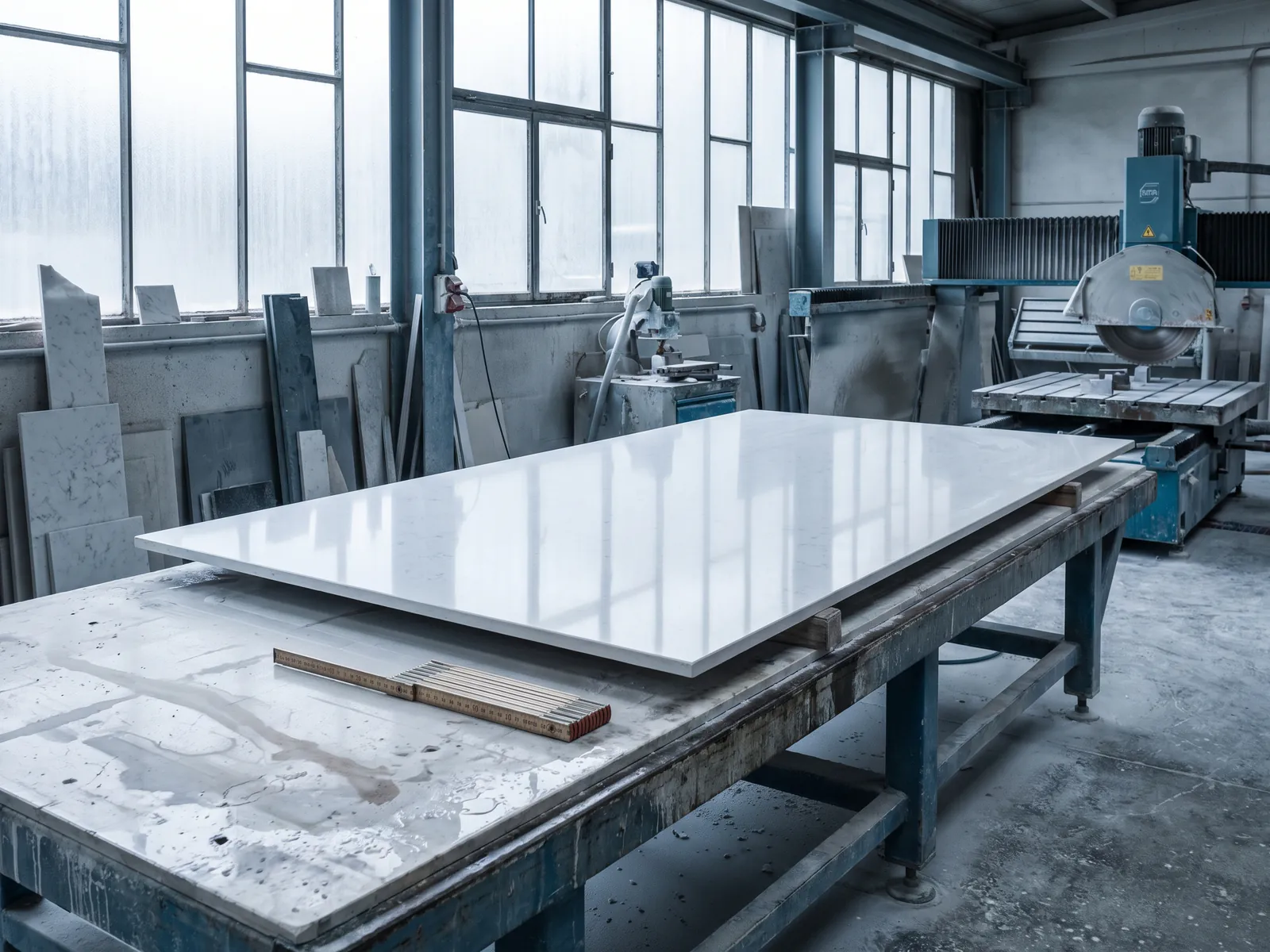
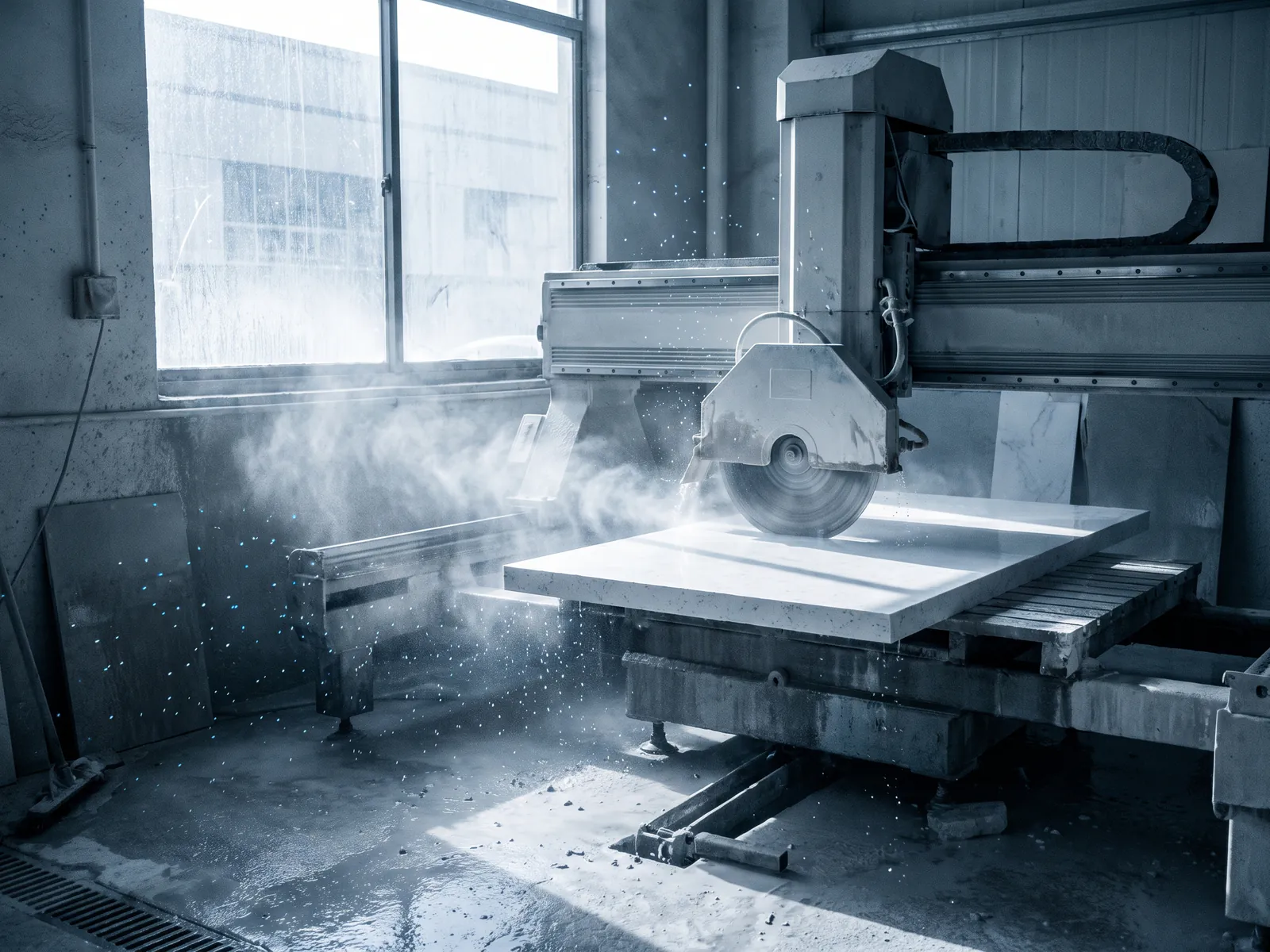
The slab is the anchor; the extras are the story. Cutouts come first: hob, sink, drainer grooves and tap holes each carry fabrication charges, and undermount sink polishing costs more than drop-in. Edges follow: simple eased profiles are near-free, while mitred built-up aprons consume slab material and bench hours, priced per linear metre. Waterfall ends are effectively additional panels with two mitres each; full-height splashbacks add material and precise site scribing.
Then geography and logistics: apartment towers with service-lift bookings, long carries and out-of-hours access all appear in installation lines, as do site templating visits. None of these are padding, they are real work, but each should appear as a number, because the blended-quote trick is to bury a high slab margin among unpriced extras. A fair Dubai quote reads like a menu; the moment extras are described as included, ask included at what value, and watch the itemisation rule do its work across materials.
Comparing supply-and-fix offers
Normalise, then compare. Fix the specification first: exact shade or agreed equivalent, format, thickness, finish, edge profile per run, cutout count, splashback heights. Then demand each offer on the same basis, supply, fabrication and installation as separate lines, with templating, delivery and access assumptions stated. Only now do the totals mean anything; a lower headline that assumed drop-in sinks and eased edges is not the cheaper kitchen.
Three comparison tells separate serious fabricators: they ask to template rather than quoting blind from a sketch; they provide the slab nesting layout showing how many slabs your design consumes, which is where the real economy lives; and they state lead time and a workmanship guarantee in writing. Weakest offers are strongest at hiding the slab count. Ask every bidder the same question, how many slabs does my kitchen consume and can I see the layout, and the spread between quotes usually explains itself within the hour, as the slab-size guide shows in detail.
Cheap quartz: what corners get cut
A quote dramatically under the band is answering a different question, and the savings hide in five places. Material: thin 12 or 15 millimetre slabs built up to look standard, or unbranded imports whose resin yellows and whose batches never match. Substitution: quoting a lookalike shade with a famous name's photograph. Fabrication: glued joints where one slab should run, unpolished cutouts that chip, missing reinforcement under spans. Installation: no templating visit, silicone instead of mechanical fixing on verticals.
And after-sales: no workmanship guarantee, no spare offcut retained, no answer when the joint opens in year two. Hard-water country adds its own tax, cheap resin surfaces dull faster under the daily wiping UAE maintenance demands. None of this argues against value ranges from honest fabricators, which exist; it argues against unexplained cheapness. Ask the vetting questions from the supplier guide, demand the slab layout, and let anyone who resists both compete for someone else's kitchen.
Getting value: design-to-slab
The biggest legitimate saving in a quartz kitchen is designed, not negotiated. Fabricators charge for slabs consumed, so value means nesting your pieces into the fewest slabs: an island sized to fit one superjumbo rather than forcing two slabs, splashbacks cut from the island's offcuts, apron strips nested along edges that would otherwise scrap. Five centimetres of dimensional flexibility at design stage routinely saves an entire slab.
Second-order value moves: choose standard-format-friendly designs when the shade you love lacks jumbo sizing; keep edge drama to one showpiece run and ease the rest; and resist the third cutout that adds a fabrication line for an appliance you may not keep. Volume buyers add a third lever, buying slabs supply-only at trade rates and controlling fabrication separately, which is how fit-out contractors price forty kitchens. For either scale, start from real formats and real stock: the quartz range publishes both, and a BOQ against it prices in one working day.
Questions, answered.
The slab is only part of it: fabrication labour, cutouts, edges and installation logistics carry real cost, and imported designer ranges add freight and brand margin. Itemised quotes show where each dirham goes.
Standard-range solids and speckles from established manufacturers, in standard format with eased edges, from fabricators who show their slab layout. Cheap plus unexplained is the combination to avoid.
In supply-and-fix quotes, yes, but confirm templating, delivery and access assumptions are inside the number. Supply-only rates exclude everything after the warehouse.
Regional production and established imports both serve the market well; judge by brand track record, batch consistency and warranty backing rather than geography alone.
Global Classic Building Materials Trading LLC
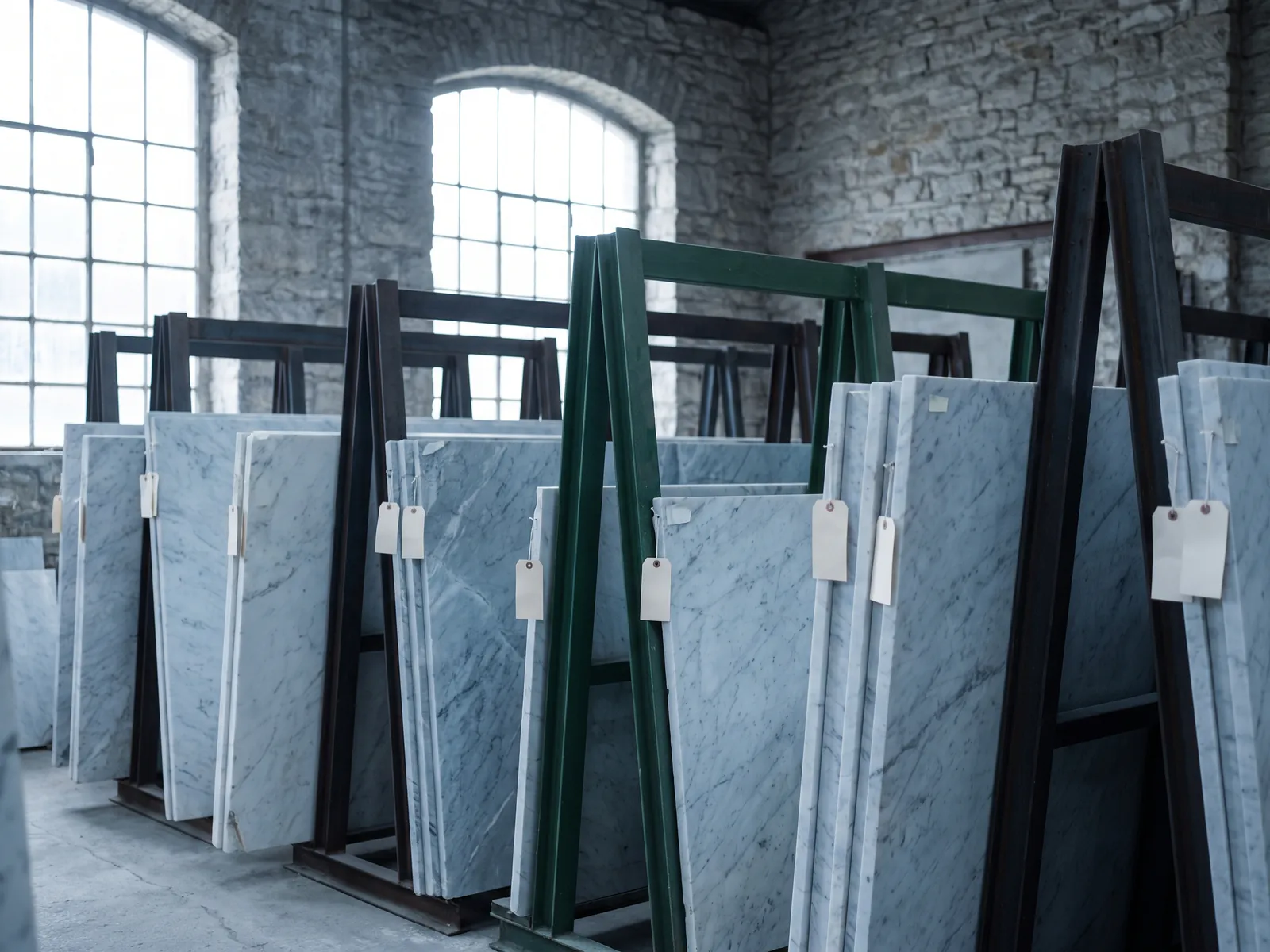
Written from the Al Sajaa warehouse, Sharjah - slabs on racks, not stock photography. About the company