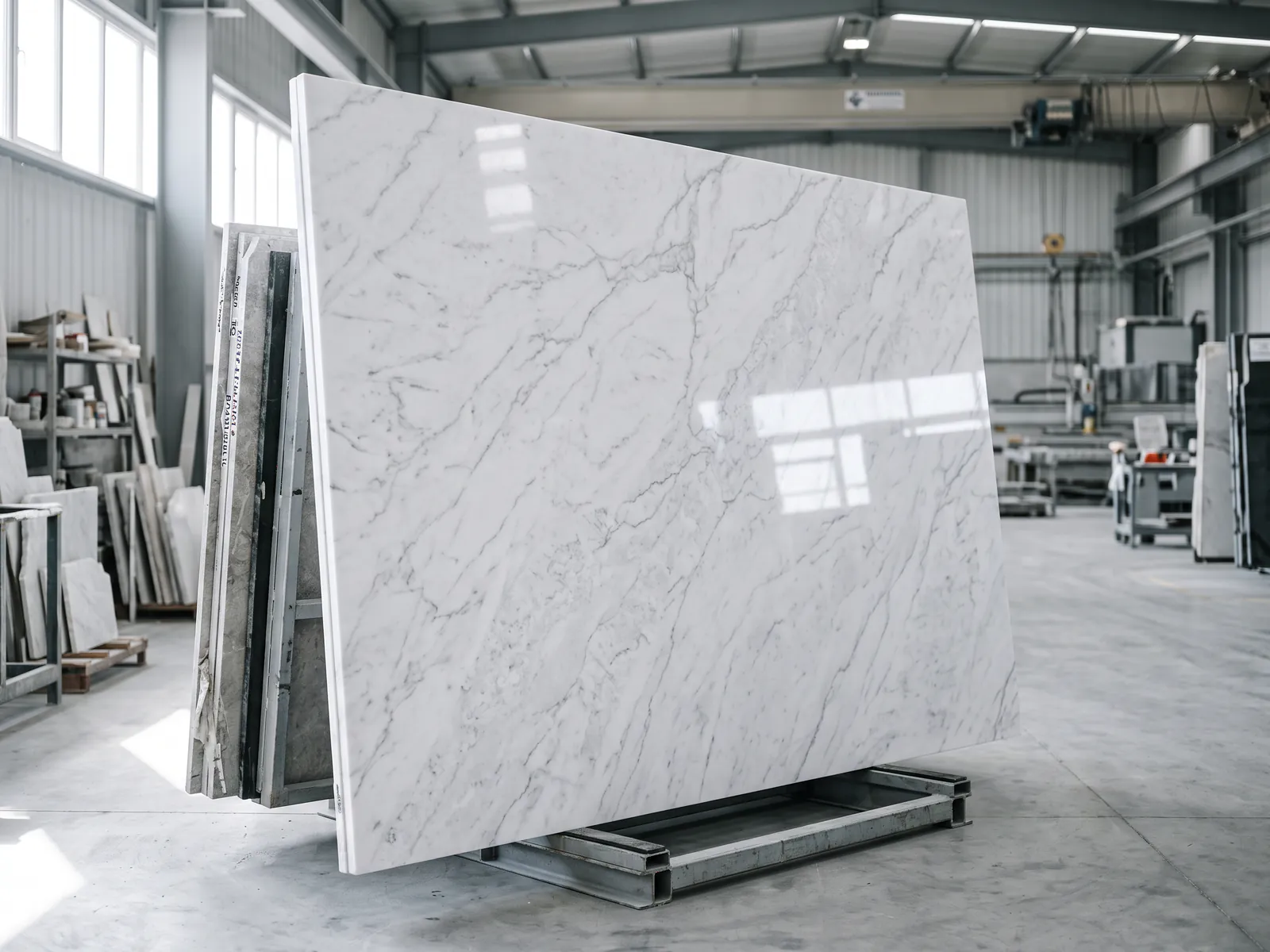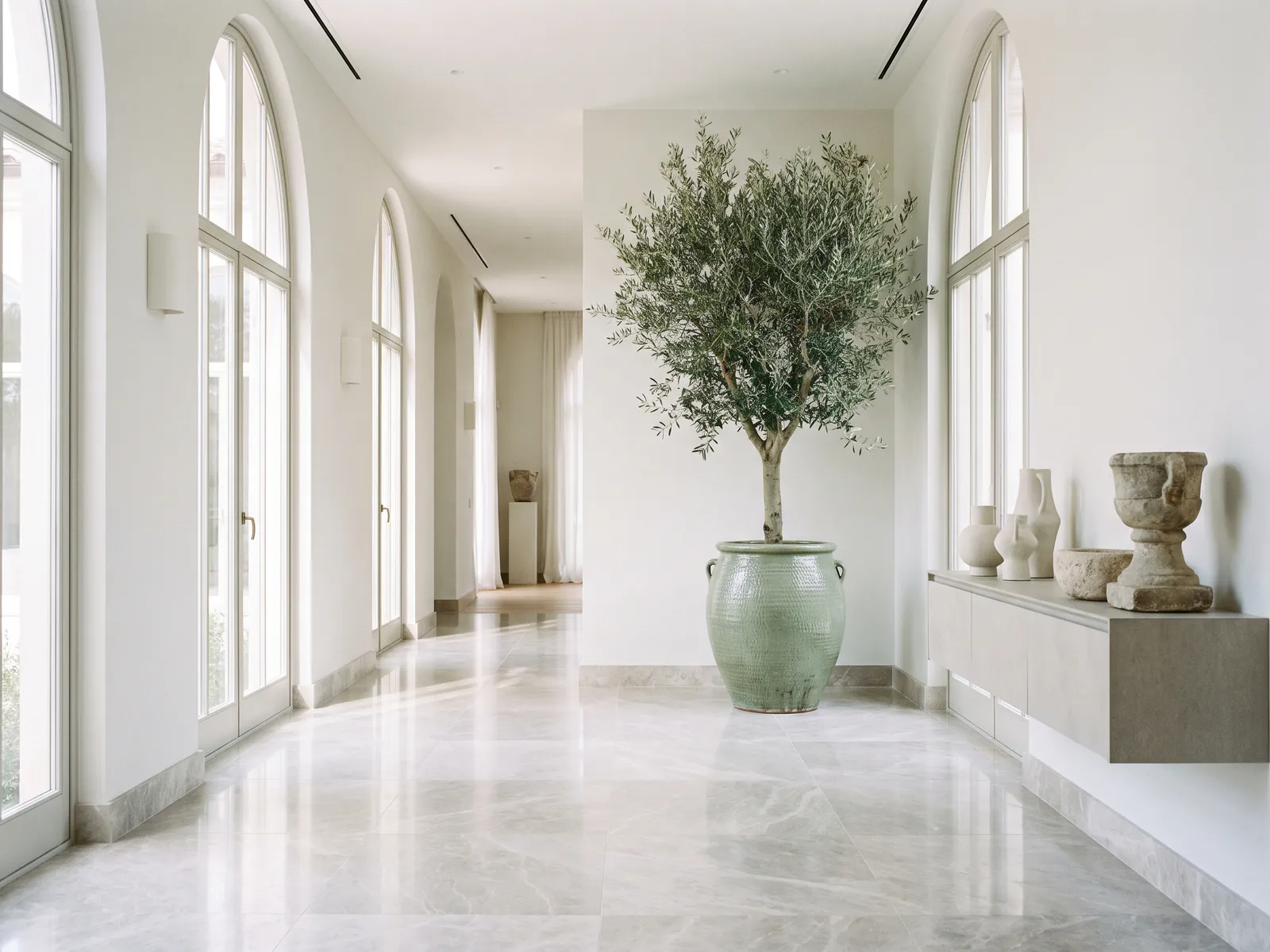
For UAE villas, light beige and greige marbles remain the default because they hide dust, bounce light and stay visually cool. Engineered marble in large formats gives the cleanest result: consistent tone across hundreds of square metres, minimal joints, absorption low enough to shrug off spills. Polished for formal areas, honed where glare or slip is a concern.
Why light tones dominate UAE villas
Light floors win here for physical reasons before aesthetic ones. Gulf dust is pale; on a light beige or greige floor it disappears between cleanings, while the same afternoon's settling reads as a film on espresso and black stones. Light surfaces bounce the region's abundant daylight deep into plans, halving the daytime lighting load, and they read cooler in a climate where the idea of coolness is worth money.
Aesthetically, pale stone grounds the white-and-neutral architecture UAE villas favour and flatters both warm and cool furnishing schemes, which matters across a decade of redecorating. Dark marble keeps its place as contrast, thresholds, powder rooms, feature strips, where its drama is not a maintenance subscription. The honest cost of light floors is that spills show until wiped; on low-absorption stone that is a feature, not a threat. Within the light families, warm beiges, cool greiges and veined whites split by scheme; the marble range covers all three directions in slab formats.
Engineered vs natural for large floors
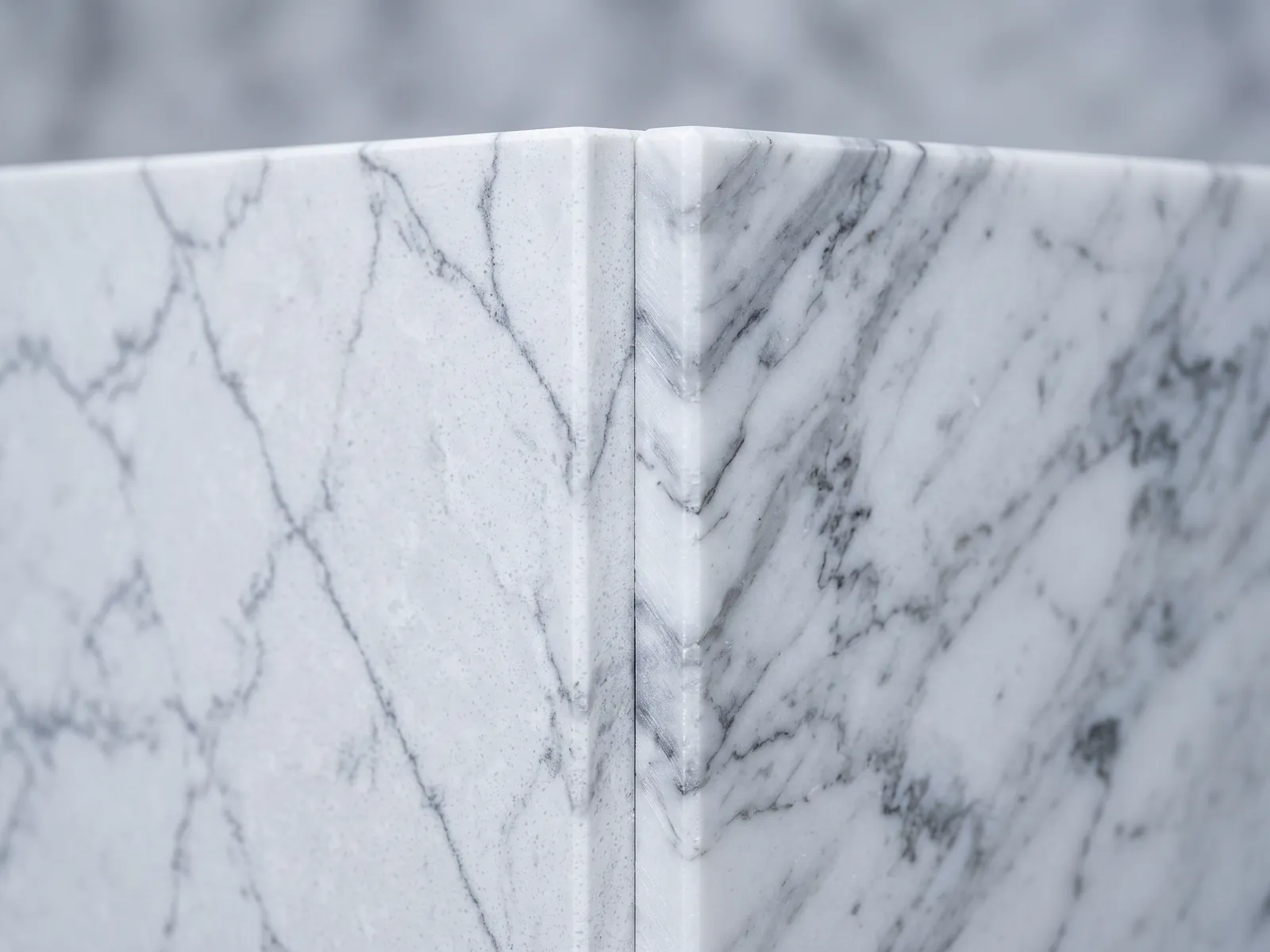
At villa scale the argument tilts engineered. A ground floor of three to five hundred square metres consumes dozens of slabs, and natural stone's slab-to-slab variation, charming in a bathroom, becomes visible banding across a big open plan; engineered marble delivers the same tone in slab one and slab sixty. Calibration consistency lays flatter with less lippage, absorption under 0.1 percent shrugs off the majlis coffee incident, and predictable wastage keeps the BOQ honest.
Natural marble still earns large floors when the design wants stone that reads alive, and premium lots laid by patient fixers are glorious. But they demand grade discipline, higher wastage and sealing forever. The pragmatic villa pattern in 2026: engineered fields with natural stone reserved for features and stairs. The full engineered versus natural comparison runs the decision in detail, including where the quarry keeps its crown.
Polished vs honed: glare, slip, upkeep
Polished marble is the formal default: maximum depth of colour, maximum light bounce, and the finish most buyers picture. Its costs are glare along sun-struck axes, visible micro-scratching from sand in traffic lanes, and slipperiness when wet. Honed, the satin alternative, trades some colour depth for calm: no glare across the afternoon-facing living room, sand scratches that stay invisible far longer, and meaningfully better grip.
The villa answer is usually both, zoned. Polished through the double-height entrance and formal majlis, where drama is the brief and traffic is slippered. Honed through family living, kitchens, corridors and any room with direct low sun or pool access. Bathrooms take honed underfoot without debate. The same shade in both finishes keeps the palette seamless while the behaviour changes room by room, one of engineered marble's quiet conveniences since both finishes ship from the same series. Upkeep differs mainly in honesty: polished shows neglect sooner; honed forgives.
Format: bigger slabs, fewer joints
Joints are where floors age: grout lines collect, edges chip first, and a grid of small tiles imposes its rhythm on rooms that wanted calm. Large formats reverse all three. Engineered marble's 304 by 125 centimetre slabs cut into 120 by 60, 120 by 120 and larger modules that carry an open plan with a fraction of the joints, and full slabs run stairs, risers and thresholds as continuous pieces.
The limits are practical: bigger modules demand flatter screeds and defter handling, and format should scale with room size, a 120 by 120 grid in a small bedroom reads oversized. The specifier's rule: choose the largest format the substrate and rooms can dignify, then align joints to architecture, centred on axes, resolved at doorways. On the budget side, larger formats shift cost from fixing labour toward material and preparation, usually netting close to even while looking twice the price. Formats per shade are listed across the marble range.
Pairing floor marble with walls and stairs
A villa reads coherent when floor, stairs and key walls speak one material language. The reliable pattern: the floor shade continues up the staircase as treads and risers cut from the same series, skirting runs in the floor stone rather than paint, and one or two walls, entrance backdrop, majlis feature, take the same marble or a deliberate contrast in the same temperature. Wet areas borrow the palette: vanity tops and shower walls in the floor family keep bathrooms from feeling like a different house.
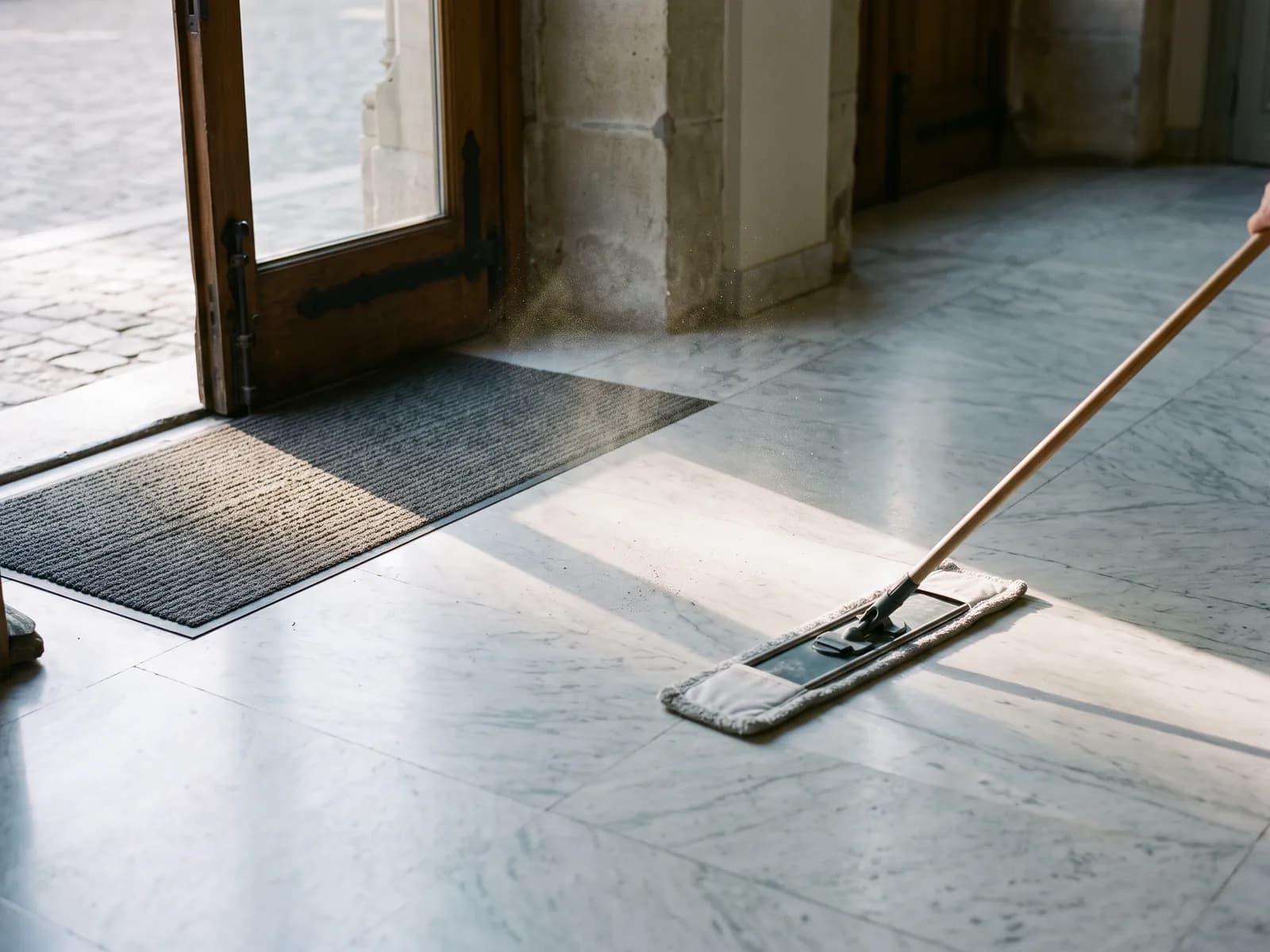
Contrast belongs in doses: a dark threshold line, a veined feature slab, bronze-toned metals against greige stone. What kills coherence is accumulation, three beiges from three suppliers that almost match. Sampling floor, stair and wall material together, from one range, under the villa's own light, prevents the almost. Once the stone is laid, protecting the investment is a routine, not a project; the UAE marble care guide is the whole discipline in one read.
Questions, answered.
It holds the temperature you give it: deliciously cool under air conditioning in summer, cool in winter too. In the UAE that trade is almost entirely favourable; rugs solve the brief cool season.
Light beiges and greiges, because Gulf dust is pale. Mid-tone patterned stones hide everything longest; dark polished marble shows every settling and every footprint.
When wet, yes. Keep polished finishes to dry formal zones and specify honed for bathrooms, kitchens and pool-adjacent rooms. Mats at wet transitions close the gap.
Eighteen to twenty millimetres is standard for floor slabs and cut modules. Thickness matters less than calibration consistency and a properly prepared, flat substrate.
Global Classic Building Materials Trading LLC
Written from the Al Sajaa warehouse, Sharjah - slabs on racks, not stock photography. About the company