Vanity tops meet cosmetics, toothpaste, hot tools and standing water daily, so the material call matters more here than almost anywhere. Quartz is the low-maintenance default; engineered marble brings warmth with slightly more care; integrated stone basins remove the silicone joint where grime lives. Whatever the top, specify the upstand and the waste finish with it.
The daily abuse list
No surface in the house works a harder shift in a smaller area. The vanity top's daily docket: standing water pooling at the basin rim, evaporating into hard-water film; toothpaste, alkaline and abrasive, wiped in circles; cosmetics and skincare, many quietly acidic or deeply pigmented; perfume overspray, which is alcohol and aromatics landing as etch-capable mist; hair tools parked at genuine heat; and midnight cleaning with whatever spray lives in the cabinet.
The UAE sharpens two entries: desalinated hard water prints every dried droplet, making the wipe-dry habit the top's real protector, and year-round humidity keeps the surface working even between uses. Reading the list explains the specification: this is a duty cycle closer to a kitchen than to a floor, and it is why the material decision, next, defaults toward the engineered families rather than porous natural stone, whatever the moodboard first wanted. The bathroom fittings guide sets this surface among the room's other hard-working decisions.
Quartz vs engineered marble at the basin
Both engineered families serve vanities well; they differ at the margins the abuse list probes. Quartz is the zero-thought answer: non-porous against every cosmetic and pigment, indifferent to toothpaste and perfume chemistry, unmarked by a curling iron parked briefly, cleaned with anything sensible. Its cost is character, quartz reads composed rather than warm, though veined whites have closed much of that gap.
Engineered marble is the romance answer with a rulebook: near-zero absorption resists the staining that ruins natural stone vanities, but its calcite content still etches under acids, so perfume and certain toiletries want a tray, and hot tools want a rest. Warmth, depth and the marble read are the reward, and repolishing erases years when they accumulate. Household honesty decides: disciplined adults enjoy engineered marble; family bathrooms and rentals thank quartz. Natural marble remains the collector's choice, on the sealing schedule the care guide prescribes.
Integrated basins: the jointless case
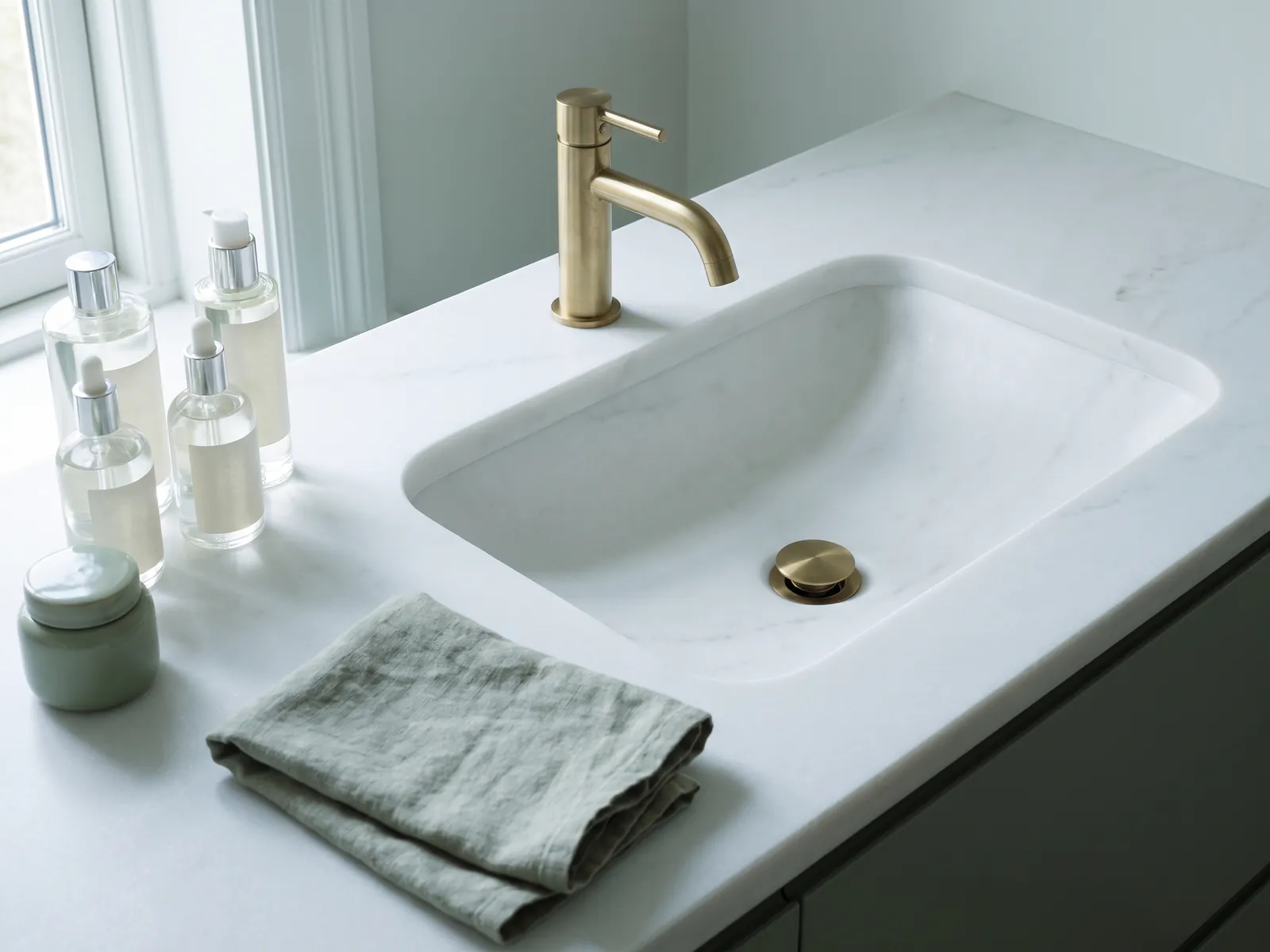
The silicone joint around a drop-in or undermount basin is the vanity's weakest resident: a soft line that collects paste and film, greys despite scrubbing, and eventually wants recaulking. Integrated basins delete it, the bowl formed or fabricated from the same stone as the top, in one continuous washable surface with nowhere for grime to live. Cleaning becomes one wipe; the look becomes monolithic, which contemporary UAE bathrooms prize.
Options run from solid-surface and stone-composite one-piece tops to fabricated integrations where a quartz or engineered marble bowl is mitred and bonded into the slab, seams polished to disappear. Considerations: repairs are less modular, damage to the bowl involves the top; fabrication quality decides everything, since a visible bonded seam forfeits the point; and formats constrain very large double-vanity spans. Undermounts in the same stone family remain the flexible runner-up, with the joint managed rather than eliminated. Either way the bowl's finish should join the room's single-family coordination via its waste and tap pairing.
Upstands, drips and edges
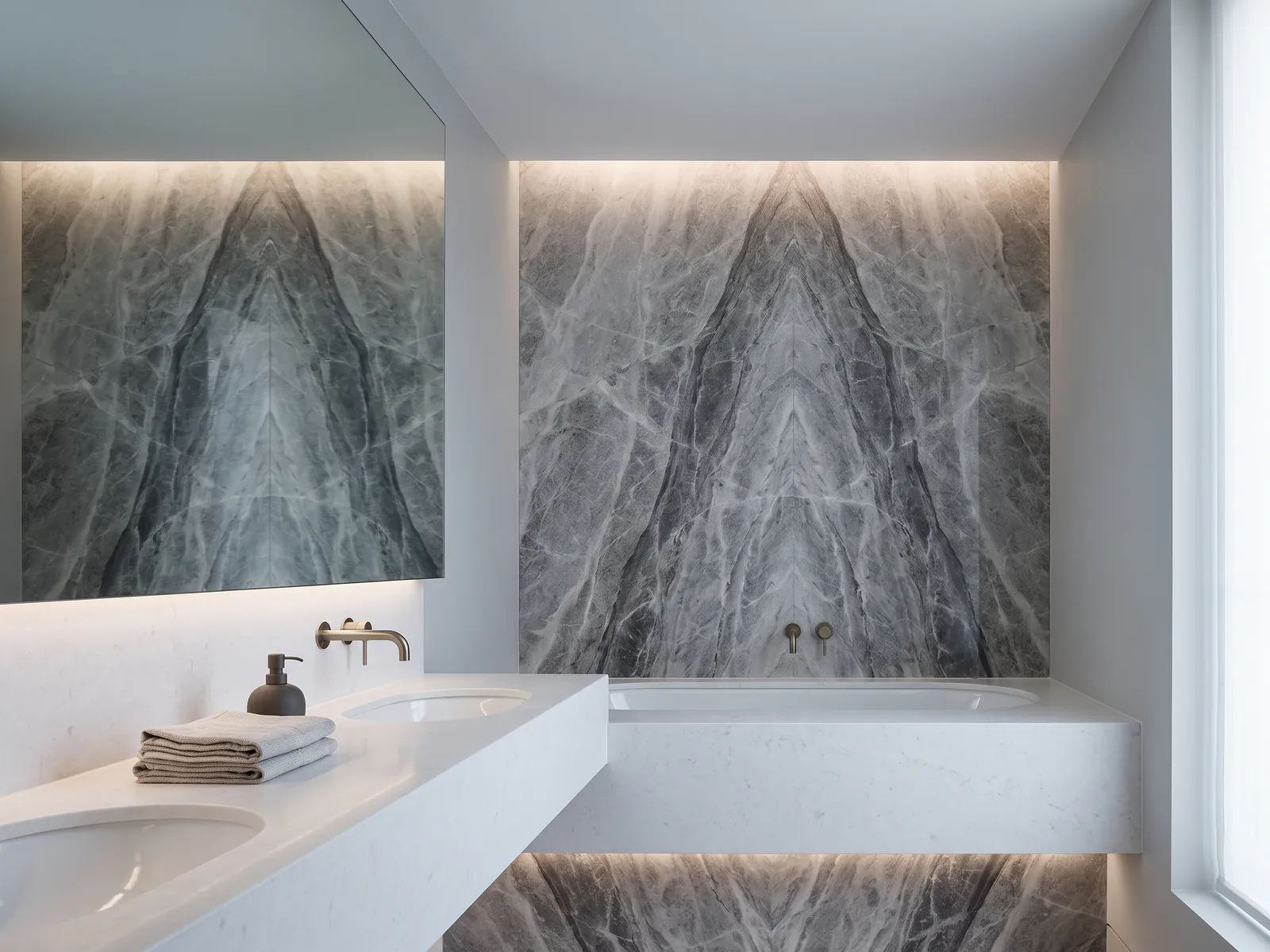
The details around the slab decide how the vanity ages. The upstand first: a 60-to-100-millimetre skirting of the same stone where top meets wall, closing the splash gap that otherwise stains paint and opens silicone; full-height stone splashbacks behind basins are the luxury version and earn their keep behind twin sinks. The drip edge second: a slight overhang with a groove or eased profile at the front stops basin water tracking under to the cabinetry, the quiet cause of swollen carcass bottoms everywhere.
Edges third: eased and pencil-round profiles shrug daily knocks better than crisp square arrises, and mitred aprons build visual thickness while keeping weight sane, the same grammar as kitchen slab work. Specify all three with the top, in the same stone and finish, cut from the same slab where veining matters. They are small lines on a quotation and the difference, five years in, between a vanity that still reads fitted and one that reads endured.
Matching wastes and taps
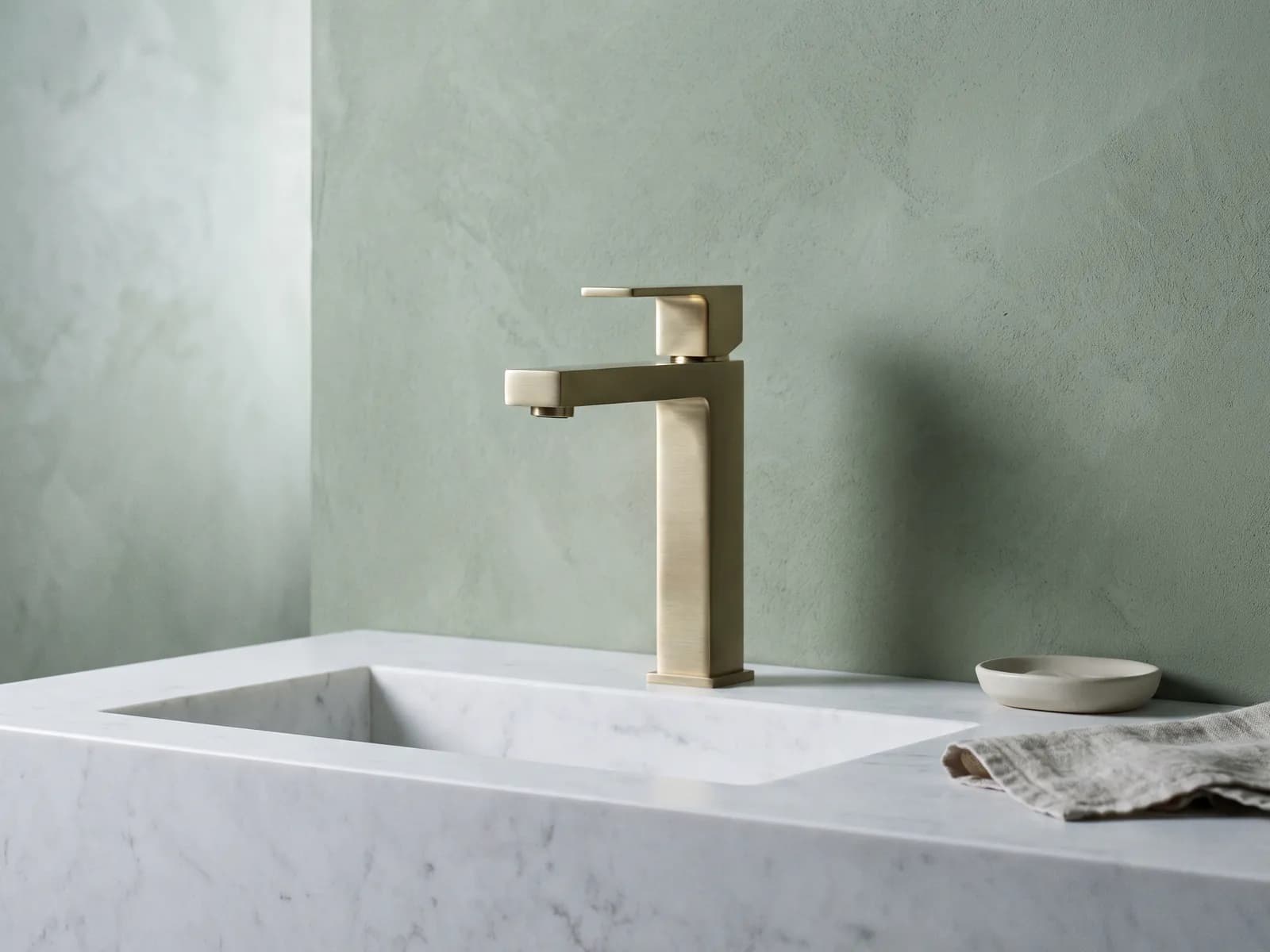
The vanity completes at its metal: the tap, the basin waste, the bottle trap if exposed, and any visible fixings, all in the room's one finish family, all PVD if they are to meet UAE water daily and stay handsome. The waste is the classic slip, orders default to chrome while the tap arrives in brushed brass, and the mismatch sits centimetres apart at eye level forever; specify the waste's finish code explicitly with the tap's.
Format pairing matters too: wall-mounted taps clear the slab for cleaning and suit shallow tops but commit at first fix; deck-mounted taps want their holes drilled by the fabricator to the basin's geometry, splash tested rather than guessed. Height and reach follow the basin, integrated and vessel bowls each wanting their matched spout projection. One manufacturer's finish family across taps, wastes and accessories turns all of this into a single coordinated order, which is, as everywhere in the bathroom, how the composed look actually gets bought.
Questions, answered.
On porous natural marble, it can; on quartz and engineered marble, pigments wipe off. Acidic products can still etch marble-content surfaces, so trays and prompt wiping remain wise.
Integrated wins on hygiene and looks by deleting the silicone joint; undermount wins on flexibility and modular repair. Fabrication quality decides how close undermount gets.
Twenty millimetres, with mitred aprons where a chunkier look is wanted, the standard slab grammar. Structure comes from the cabinet, not extra stone.
Around vessel basins with diligent sealing, briefly beautiful; against the daily water and chemistry list, stone outlasts them decisively in UAE bathrooms.
Global Classic Building Materials Trading LLC
Written from the Al Sajaa warehouse, Sharjah - slabs on racks, not stock photography. About the company