Hard water stains on marble are mineral deposits left when UAE tap water dries on the stone: fresh film wipes off with a damp microfibre and neutral cleaner, while bonded scale needs a stone-safe descaler, never household limescale removers, which etch marble on contact. The lasting fix is habit: wipe wet stone dry daily and seal natural marble so minerals cannot anchor.
Why UAE water marks marble so fast
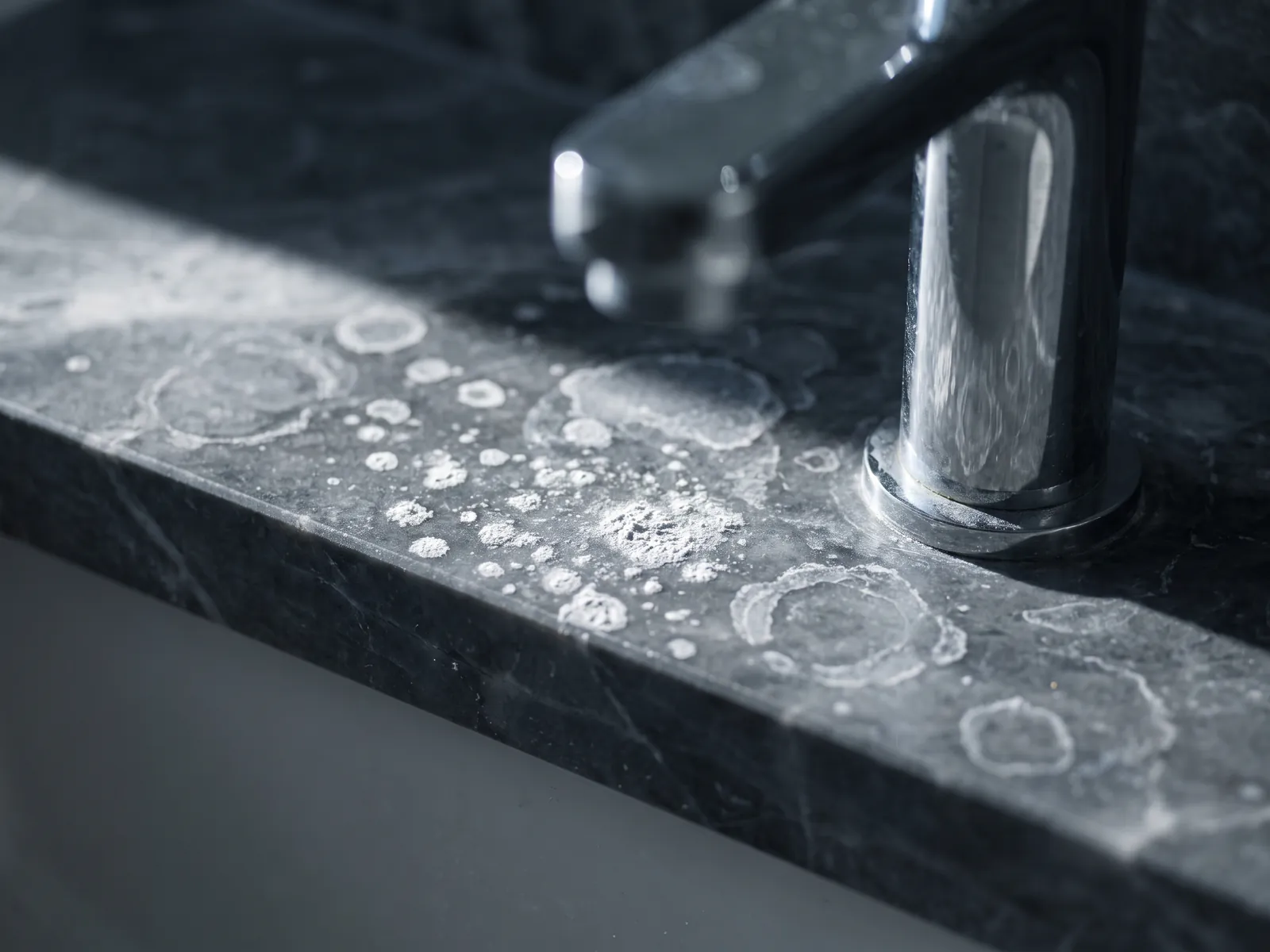
UAE tap water is desalinated and re-mineralised, and it carries enough dissolved calcium and magnesium that every droplet leaves its minerals behind as it evaporates. On glass that is an annoyance; on marble it is a compounding problem, because the deposits are chemically similar to the stone itself and bond to it as they build, layer on layer, into the white film and droplet rings that own most UAE vanities within a year of neglect.
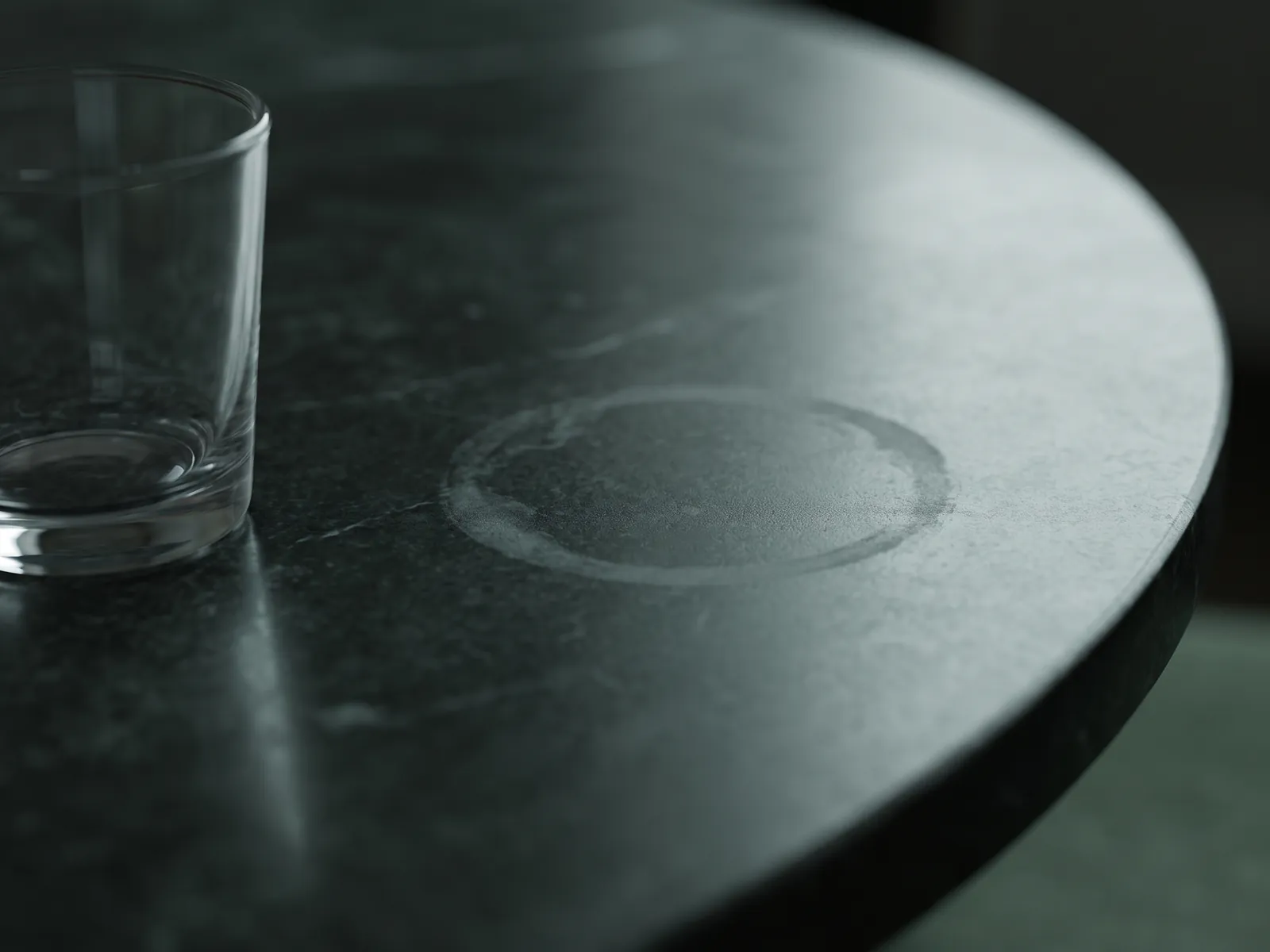
Heat accelerates everything: fast evaporation in a warm bathroom prints droplets before they can be wiped, and daily use keeps the surface wet on schedule. Dark polished marble shows the marks cruelly; light stone hides them while they quietly accumulate. None of this is a flaw in the stone, and none of it requires living with, but the fix depends entirely on catching the right stage, fresh film, bonded scale, or the etch damage caused by treating the first two wrongly, which the next sections separate.
Fresh film: the daily wipe that ends it
Fresh mineral film, hours to days old, has not yet bonded: it sits on the polish and surrenders to a damp microfibre cloth with a drop of pH-neutral stone cleaner, followed by a dry cloth. That is the entire treatment, and done daily it is also the entire prevention: a surface that is wiped dry after use never accumulates the minerals that become scale.
The thirty-second routine for vanities and shower surrounds: after the morning rush, wipe standing water off the stone, around tap bases especially, where droplets pool and dry in rings, then leave it dry. A small squeegee earns its keep on marble shower walls exactly as it does on glass. What does not belong in this routine is anything acidic or abrasive chasing a stubborn spot; if the neutral wipe no longer clears the mark, the film has bonded into scale and graduated to the next section, not to a harsher scrub. The daily marble routine folds this habit into the wider cleaning discipline.
Bonded scale: removing it without etching
Bonded scale is the hard white crust that ignores neutral cleaner, and it creates marble's cruellest trap: every household limescale remover, bathroom descaler and vinegar trick is an acid, and acids dissolve marble faster than they dissolve the scale sitting on it. Treat scale with a supermarket descaler and the mark you remove is replaced by an etch, a dull ghost in the polish that only repolishing removes.
The safe route is a stone-safe descaler, chemistry formulated to attack mineral deposits without the calcite beneath, used exactly per label: applied to the scale, allowed its dwell time, agitated gently with a white pad, rinsed and dried. FILA's problem-solver line covers this territory alongside the rust and residue removers in the same family. Thick crusts may take two passes; edges around tap bases may want a plastic scraper held flat. What never joins the process: green pads, powders, blades on polish, or patience running out into the acid cupboard.
The mark that isn't scale: etches in disguise
Half the hard water complaints on UAE marble are not deposits at all: they are etches already inflicted, usually by exactly the acidic cleaners this guide warns against, sometimes by cosmetics or citrus. The distinction takes ten seconds and decides everything. Scale sits on the stone: it reads as white build-up you can sometimes feel as a raised crust, and the polish around it still shines. An etch is missing polish: lighter and duller than the surrounding stone, perfectly flush, often ring-shaped where a droplet of something acidic sat.
The treatments are opposites. Scale dissolves with the stone-safe descaler above; an etch has nothing to dissolve, the surface itself is damaged, and the fix is repolishing, polishing powder for faint marks, a stone professional for deep or clustered ones. Scrubbing an etch with descaler deepens it. The full etch-versus-stain diagnosis covers the borderline cases, including marks that are both at once, scale over an old etch, treated in sequence.
Keeping it gone: sealing and habits
Prevention is two layers, habit and chemistry. Habit does most of the work: dry the stone after use, daily on vanities, per shower on surrounds, and the mineral cycle never starts; trays under bottles stop the ring-forming drips; and the neutral-cleaner-only rule keeps well-meaning maintenance from becoming the damage. Chemistry backs the habit: an impregnating sealer on natural marble fills the pores where mineral-laden water would otherwise anchor, making every wipe more complete and every film slower to bond.
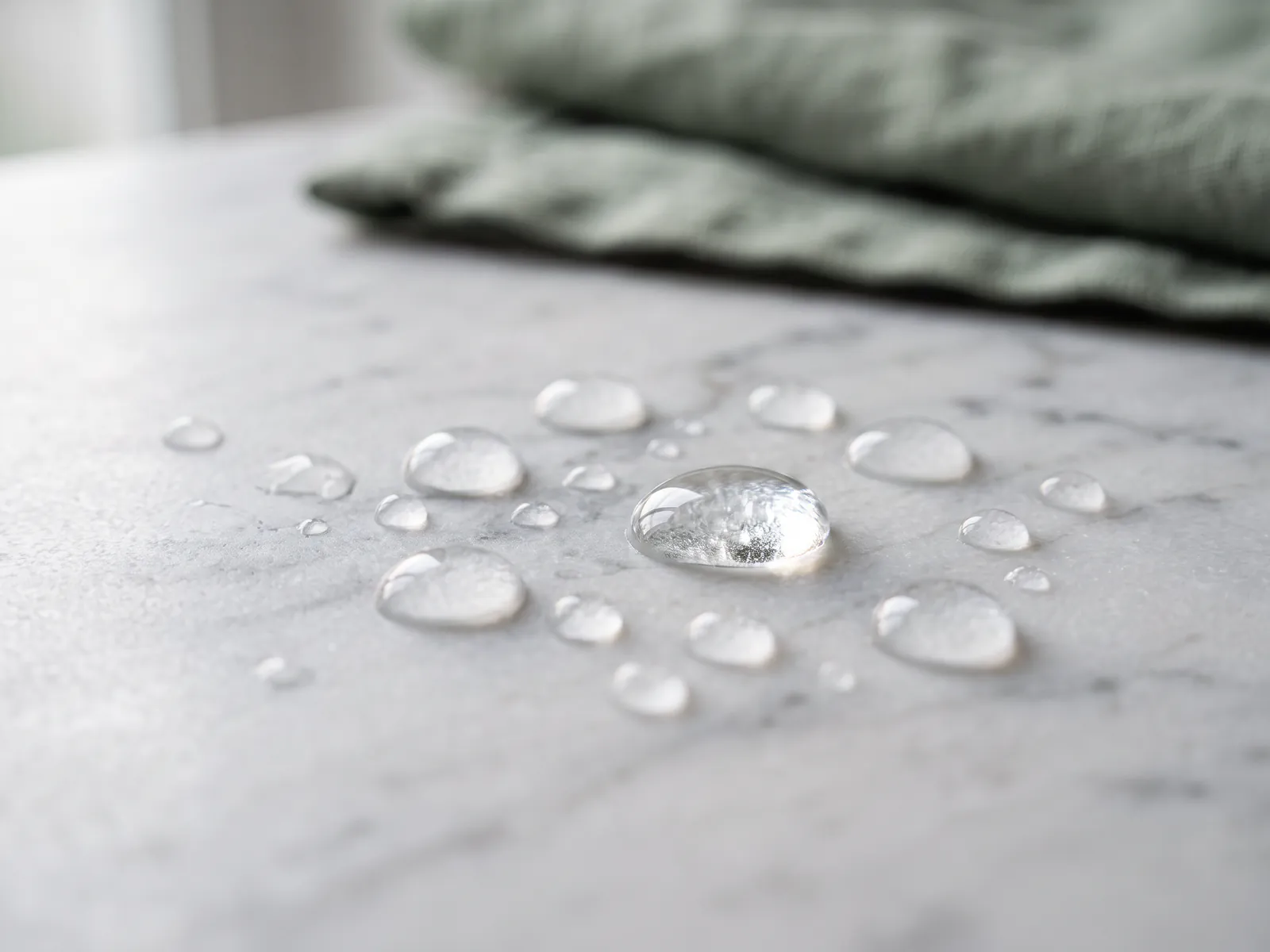
Seal on the water-drop test's schedule, typically annually in UAE bathroom service, per the sealing guide; engineered marble, at near-zero absorption, mostly skips the sealer but keeps the wiping habit, one of the reasons the engineered range gets specified for hard-working vanities in the first place. A marble surface in the UAE is not high-maintenance; it is specific-maintenance, and the specificity fits inside a minute a day.
Questions, answered.
Never. Limescale removers are acids and etch marble on contact, trading a removable deposit for permanent polish damage. Use a stone-safe descaler instead.
Fresh film: a damp microfibre with neutral stone cleaner, then dry. Bonded scale: a stone-safe descaler per label. Dull marks that remain are etches and need repolishing.
It helps: sealed pores give minerals less anchor and make wiping more complete. It does not replace the drying habit, and it does nothing against acids.
Dark polished stone shows white mineral deposits at maximum contrast. The stone is no more affected than light marble; it just reports the problem honestly.
Global Classic Building Materials Trading LLC
Written from the Al Sajaa warehouse, Sharjah - slabs on racks, not stock photography. About the company