Terrazzo in 2026 has split into two directions: quiet, tonal micro-chip surfaces that read almost as solid stone, and statement palladiana floors with oversized irregular chips. Fluted terrazzo panels bring the material to walls and joinery, and solid terrazzo furniture, tables, benches, basins, turns the floor material into objects.
Tonal micro-chip minimalism
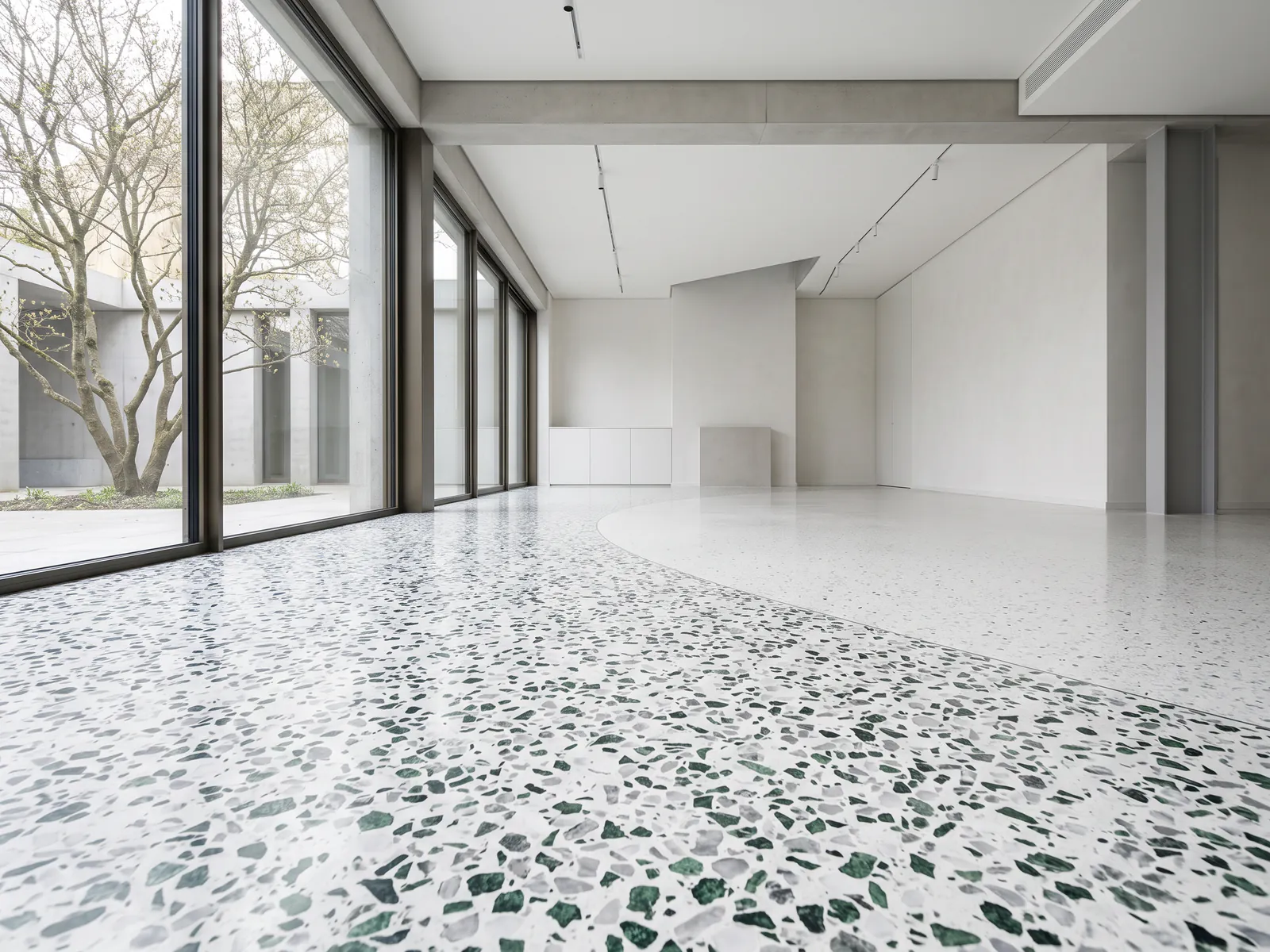
The quiet direction shrinks the chip until the pattern almost disappears: fine aggregate in near-monochrome recipes, cream on cream, grey on grey, produces surfaces that read as solid stone at three metres and reveal their terrazzo nature only up close. The appeal is texture without pattern, warmth without noise, which suits the pared-back interiors UAE residential design has settled into: micro-chip floors ground a room the way limestone does, while keeping terrazzo's durability and cleanability.
Specification notes for the look: honed finishes serve it best, since polish adds glare to an intentionally quiet surface; joints matter more when the field is calm, arguing for large formats; and undertone discipline is everything, a warm micro-chip beside cool walls reads as a mistake in a way busier patterns would disguise. The tonal collections in the terrazzo range anchor this direction, and pair naturally with the fluted panels covered below, same recipe, different geometry.
Palladiana and oversized chips
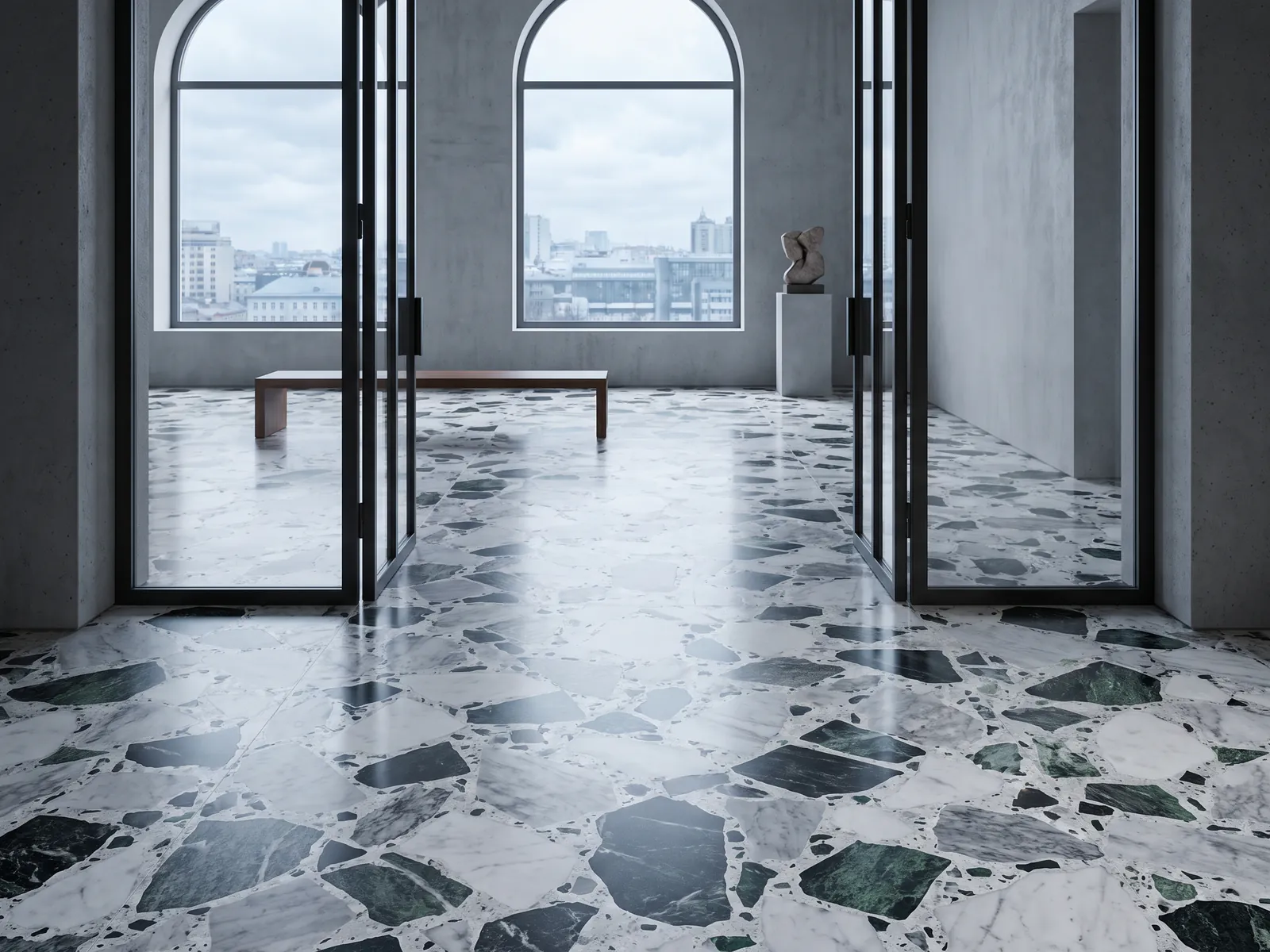
The loud direction goes the other way entirely: palladiana sets irregular broken-slab fragments, palm-sized and larger, into the binder, while big-chip collections scatter oversized cut aggregate across the field, and either way the floor becomes the room's protagonist. It is a look with mid-century Italian lineage now thoroughly revived in hospitality, and it rewards exactly what it demands: space, sightlines and confidence.
Using it well means scale discipline, oversized chips want lobbies, restaurants, generous living floors, and viewing distance, since a giant fragment field in a corridor reads as clutter, and palette restraint elsewhere, one statement floor per architecture. Colour strategies split between naturalistic, marble fragments in whites, greys and greens, and graphic, high-contrast chips on pale grounds. In the UAE market this is the terrazzo that photographs, which is not a criticism: cafes and boutique fit-outs specify it precisely because guests remember the floor. The Elite-direction collections carry the statement recipes at slab scale.
Fluting: light on grooves
Fluting is the trend that moved terrazzo off the floor: panels cut with parallel vertical grooves turn any recipe into a light instrument, every ridge catching and shading as the day moves. It answers a real design problem, how to give flat feature walls life without adding another colour or material, and it explains the technique's spread across reception backdrops, vanity fronts, island aprons, headboard walls and lift lobbies.
The design rules are simple: fluting is texture, so it pairs best with tonal and mid-scale recipes, big-chip drama fights the grooves; raking light, from washers or windows at an angle, is what makes the surface perform, so plan the lighting with the panel; and one fluted plane per room keeps the move architectural rather than decorative. Cleaning is an occasional brush along the grooves. The fluted panels are the range's signature, with an interactive raking-light demonstration on the page that shows the effect better than any paragraph.
Terrazzo objects and furniture
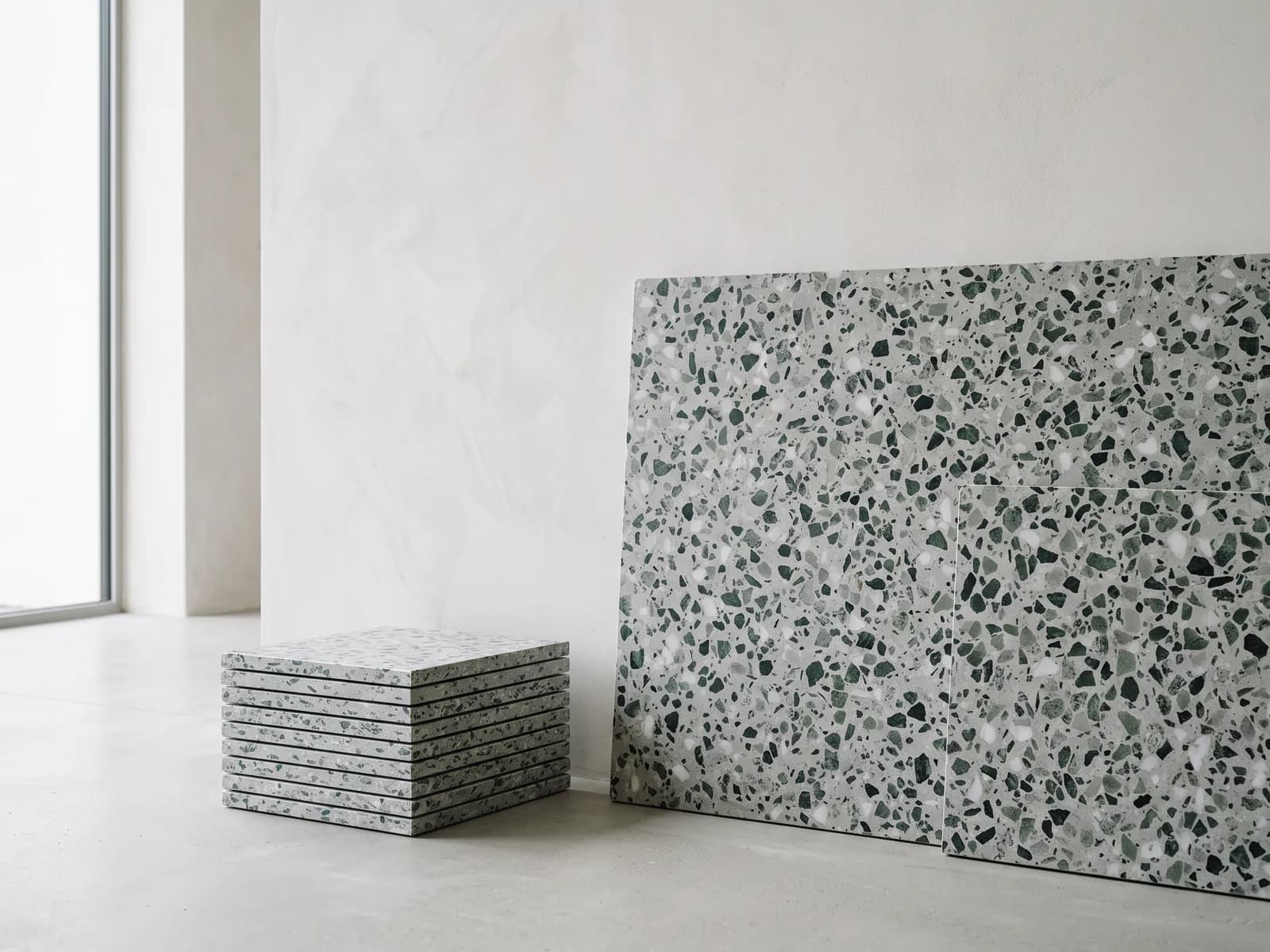
The material's third act is leaving surfaces altogether: solid block terrazzo now cuts into dining tables, benches, coffee tables, console tops, basins and side pieces, the same recipe as the floor rendered as an object. Design-wise this closes a loop, a basin cut from the vanity's material, a bench matching the lobby field, and it explains the trend's traction with UAE hospitality and villa projects chasing coherence: the floor literally furnishes the room.
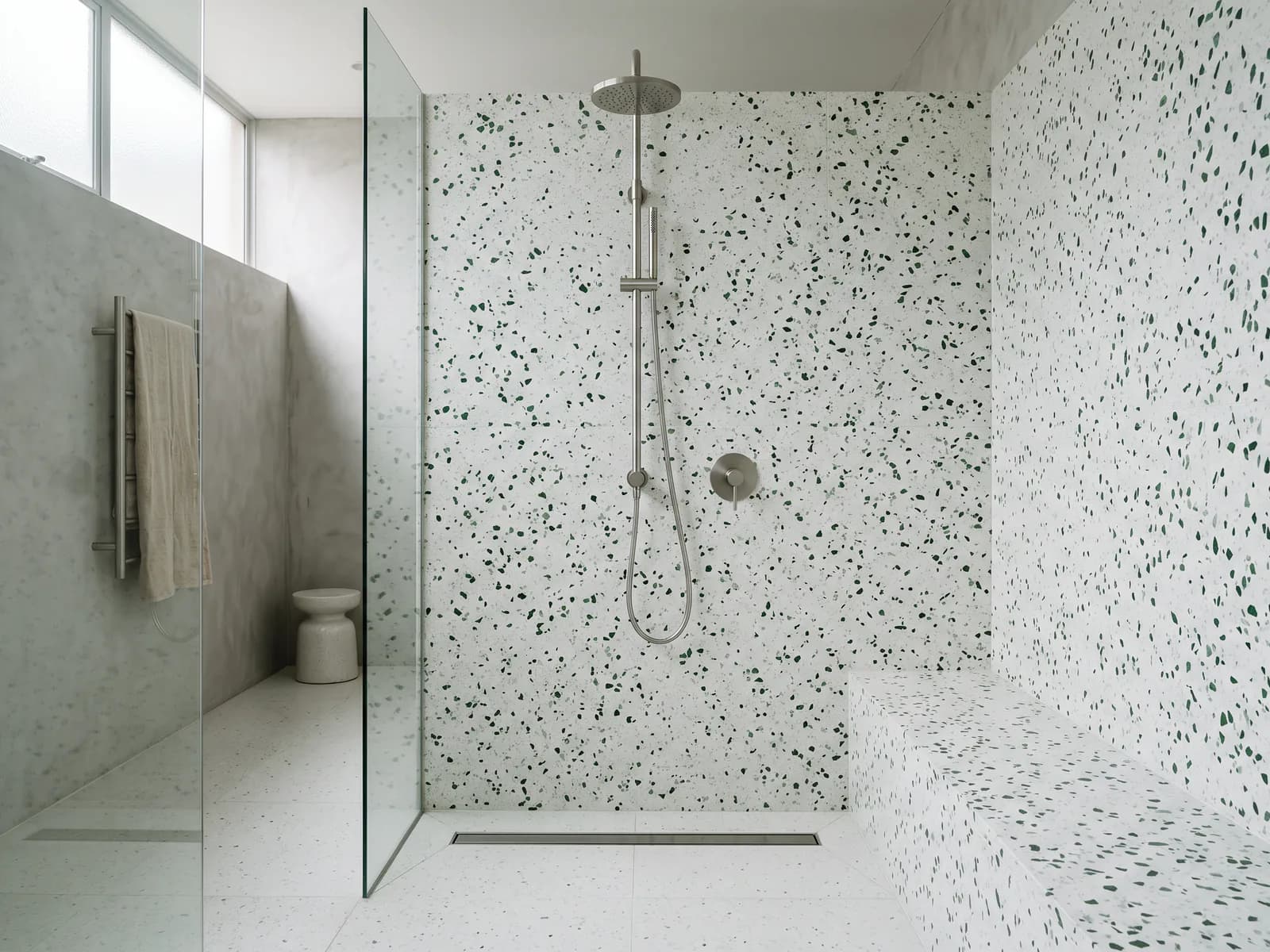
Practically, block terrazzo is furniture-grade by nature: dense, polishable, repairable, and heavy, which is the one planning note, since a solid table wants a team to place and a floor that will not mind. Basins and worktops follow wet-area logic, sealed appropriately and finished honed. The move works best in doses, one or two objects per space, not a showroom, and works brilliantly against timber and linen, which soften the mineral mass. Any slab collection can become the object; matching batch to floor remains the coherence trick.
Colour direction: warm neutrals, green accents
The 2026 palette has settled into two reliable moves. The ground is warm neutral: cream, bone, greige and soft grey fields have displaced both the stark white and the primary-confetti terrazzo of the revival's first wave, reading calmer and ageing better against timber and plaster. The accent is green: sage, olive and deep forest chips, sometimes as whispers in a tonal field, sometimes as the statement in a palladiana, echoing the wider interiors shift toward botanical colour, and, conveniently, the exact territory of collections like Exotic Green.
Supporting notes: terracotta and rust chips warm hospitality schemes; black-and-white graphic recipes hold their niche in retail; and blue remains rare, dating fast in this material. The practical advice is to choose the ground for the architecture and the accent for the story, then repeat the accent once elsewhere, a green vanity top, a fitting finish, so the floor belongs. The green-accent collections map this direction shade by shade; the wet-room applications guide shows where the palette performs hardest.
Questions, answered.
Firmly, and it has matured: the market has moved from novelty confetti to tonal fields, palladiana statements and fluted walls. The material now reads as architecture rather than trend.
The technique setting large irregular fragments of marble slab into the binder, producing floors of oversized interlocking pieces, a mid-century Italian signature revived at slab and poured scale.
Yes: block terrazzo cuts into grooved panels for walls, vanity fronts and joinery, where raking light turns the ridges into the room's texture.
Warm neutral grounds, cream, bone, greige, soft grey, with green chips as the leading accent, from sage whispers to forest statements. Primary-colour confetti has receded.
Global Classic Building Materials Trading LLC
Written from the Al Sajaa warehouse, Sharjah - slabs on racks, not stock photography. About the company