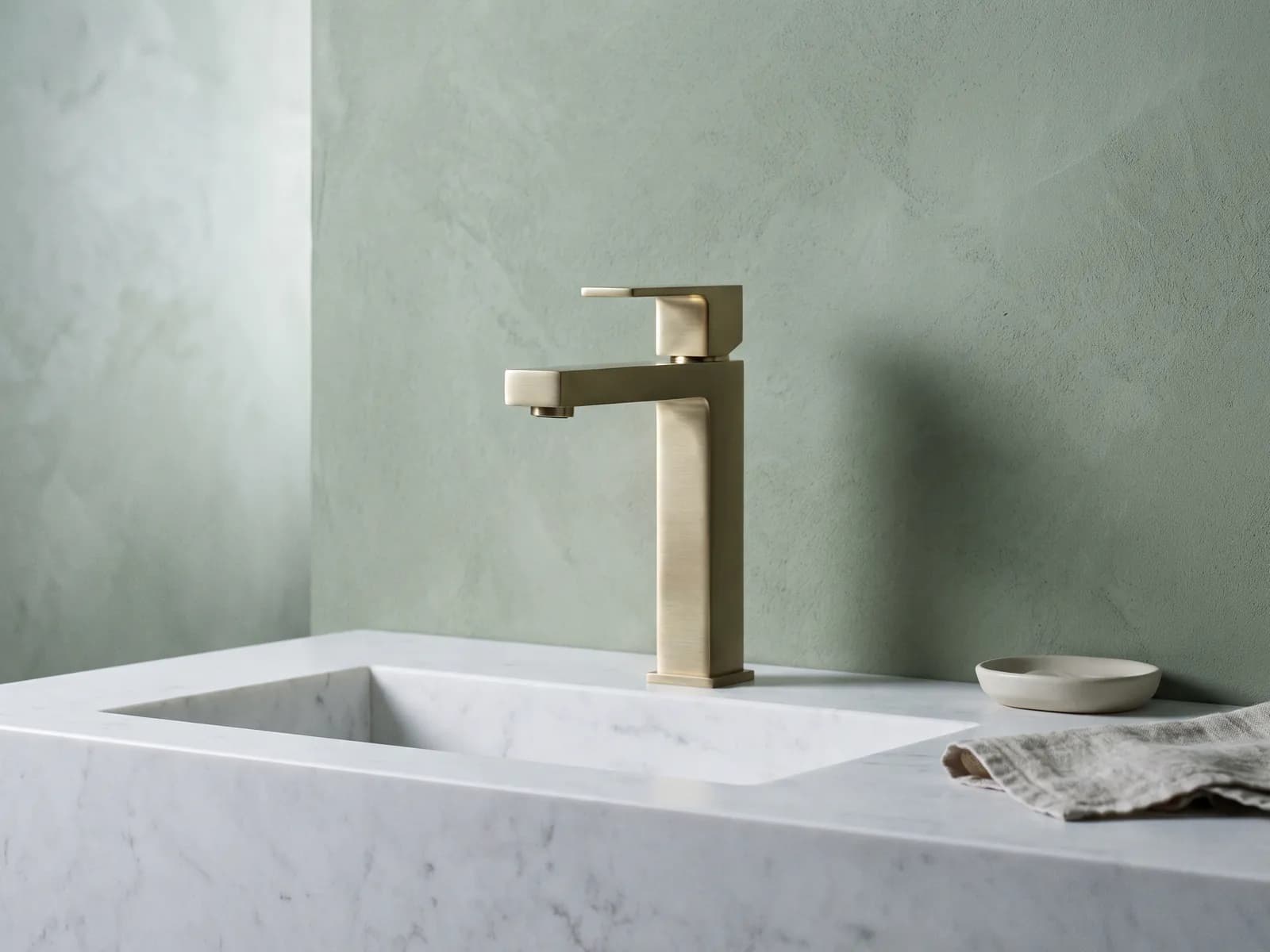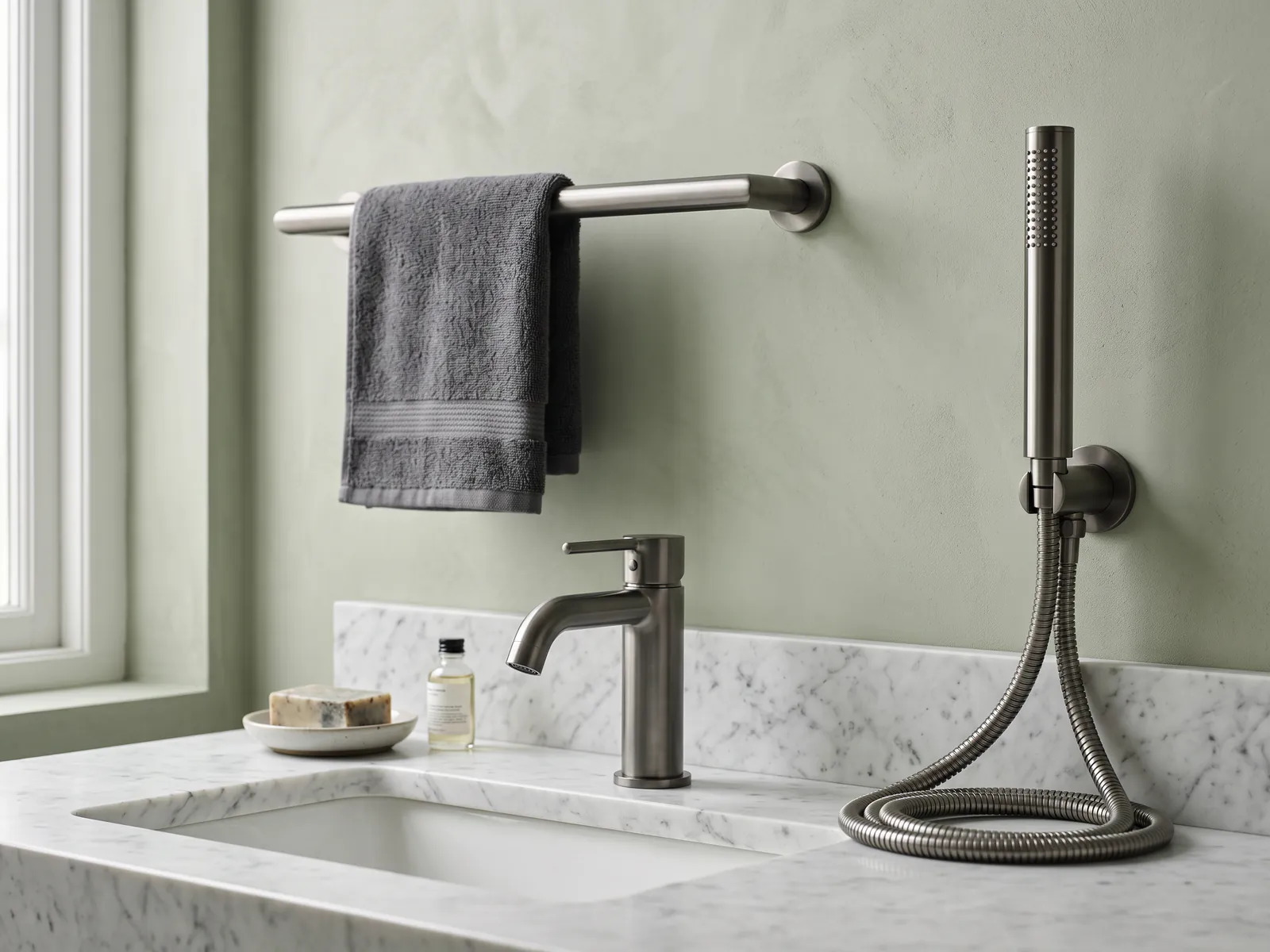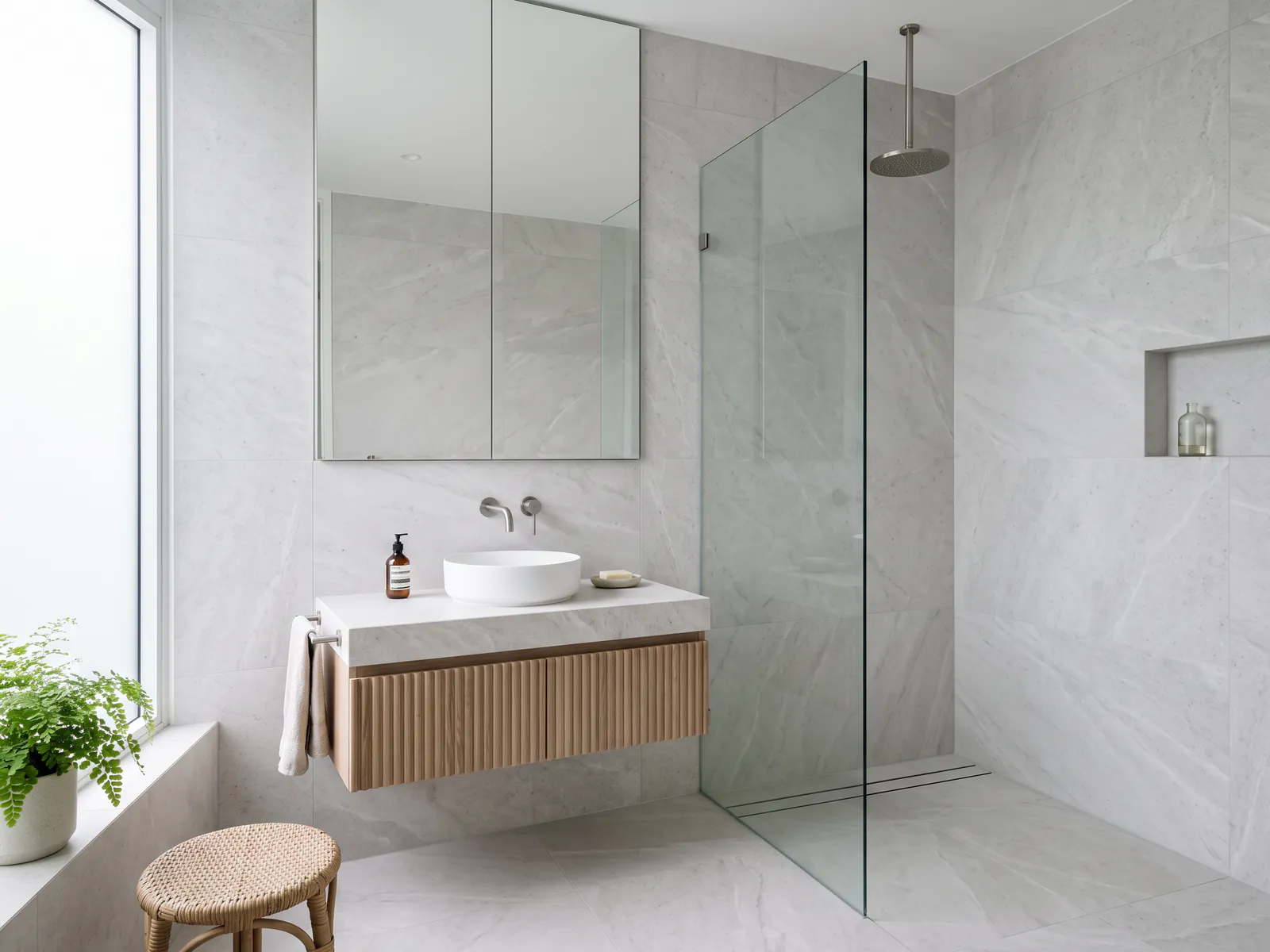
A shower system is four decisions: head type (rain, hand, or both), valve type (manual or thermostatic), mounting (exposed or concealed), and whether your building's pressure supports it. Thermostatic valves hold temperature when someone opens a tap elsewhere, worth it in villas. Concealed systems need the plumbing decision before tiling, not after.
Rain head sizes and flow
Rain heads run from 200 millimetre rounds to 400-plus statement squares, and size is a pressure equation before it is a style one. A 250 to 300 millimetre head is the sweet spot for most UAE homes: full-shoulder coverage with enough pressure per nozzle to feel like a shower rather than drizzle. Oversized heads spread the same flow across more nozzles, which is why a 400 head on modest apartment pressure disappoints, while the same head on a villa's pumped system delivers the hotel experience it promises.
Mounting affects feel too: ceiling-mounted heads rain vertically and need the plumbing run planned early; wall-arm heads angle slightly and retrofit more easily. Two UAE-specific notes: specify silicone rubber nozzles, which shed hard-water scale with a finger wipe, and consider flow sensibly, comfort and water bills both live in the litres-per-minute figure. Match head to measured pressure, covered below, and the Jaquar shower ranges span every size with the nozzle detail as standard.
Thermostatic vs manual valves
A manual valve is a mixer you aim: one or two controls blending hot and cold, simple, reliable, cheapest, and entirely at the mercy of the building's other taps, when the kitchen opens or a WC refills, your blend shifts. A thermostatic valve holds a set temperature automatically: a wax element inside compensates for pressure and supply swings in real time, so the shower stays at 38 degrees regardless of what the house does, with a safety stop against scalding.
Who needs which: villas with multiple bathrooms drawing one system, family homes showering children, and anyone who has flinched at a mid-shower temperature spike benefit from thermostatic control daily; a single-occupant apartment with its own heater can live happily manual. UAE summers add a quirk worth knowing, roof-tank cold lines run warm in August, narrowing the blend range for any valve, which argues for generous hot-water capacity rather than against thermostatics. The premium is modest; the calm is permanent.
Concealed vs exposed: plan early
Exposed systems mount everything on the wall surface, valve, pipes, riser, head, install in a day on existing plumbing, and remain fully serviceable forever; modern exposed columns are handsome, and they are the correct retrofit answer. Concealed systems bury the valve body and pipework inside the wall, presenting only trim plates, heads and controls, the minimal look UAE renovations overwhelmingly want, at the price of commitment: the wall opens, the valve sets, waterproofing rebuilds, tiles close, in that order, before finishes.
The planning rule is absolute: concealed decisions belong to the design stage, since moving an embedded valve after tiling means demolition. Specify the exact system before first fix, confirm the rough-in depths with the plumber, and photograph the wall before it closes. Serviceability is the honest trade: quality concealed valves service through their faceplates for cartridges and filters, but a failed body is a wall job, which is precisely why the brand and spares tier matters double for anything buried.
Water pressure: apartments vs villas
Pressure decides what a shower can be, and the UAE splits into two regimes. Towers generally deliver decent, consistent pressure floor by floor, though upper floors and older buildings vary; the practical move before buying any oversized head is a measurement, plumbers gauge an outlet in minutes, or the honest bucket test against the litres-per-minute a chosen head needs. Villas run on roof tanks and transfer pumps: gravity alone rarely powers a rain head convincingly, so the shower's real specification is the booster pump, sized and installed once for the whole house.
System choices then follow the number: high-flow heads, multi-outlet systems running rain and hand shower together, and body jets all demand pressure budgets; a thermostatic diverter running two outlets needs supply to match. Mismatches show up as drizzle and blame the head unfairly. Right-sizing costs nothing but the question asked early, which is why the fittings buyer's guide puts pressure beside finish on the pre-purchase checklist.
Finishes that match your fittings family
The shower is the bathroom's largest metal moment, and it must belong to the room's single finish family: the rain head, arm, hand shower, rail, valve trim and drain all in the same brushed brass, graphite, blush gold, chrome or matte black as the basin mixer across the room. Mixed metals in one enclosure read as replacement-part shopping, not design.
Durability discipline doubles inside the spray zone: shower components live wet, so PVD coatings are not a preference here but a requirement, budget painted finishes fail fastest exactly where water and wiping never stop; the finish comparison ranks the technologies. Practical extras that keep finishes honest: silicone nozzles on heads and handsets, and a squeegee habit on dark finishes that show mineral spotting soonest. Buying the shower from the same manufacturer's finish family as every other fitting, the entire logic of coordinated ranges, is what makes the ten-year bathroom still look composed.
Questions, answered.
For most UAE homes, 250 to 300 millimetres balances coverage and pressure. Go larger only with measured pressure to support it, typically pumped villa systems.
Somewhat: you stop running water while hunting the right temperature, and stable blending avoids wasteful correction. Their main dividend is comfort and scald safety.
Quality valves service through the faceplate for cartridges and filters without touching tiles. Full body failure means opening the wall, which is why brand and spares matter most for concealed systems.
Usually scale-clogged nozzles, a partially closed isolation valve, or a head oversized for the supply. In villas, an absent or undersized booster pump is the classic cause.
Global Classic Building Materials Trading LLC
Written from the Al Sajaa warehouse, Sharjah - slabs on racks, not stock photography. About the company