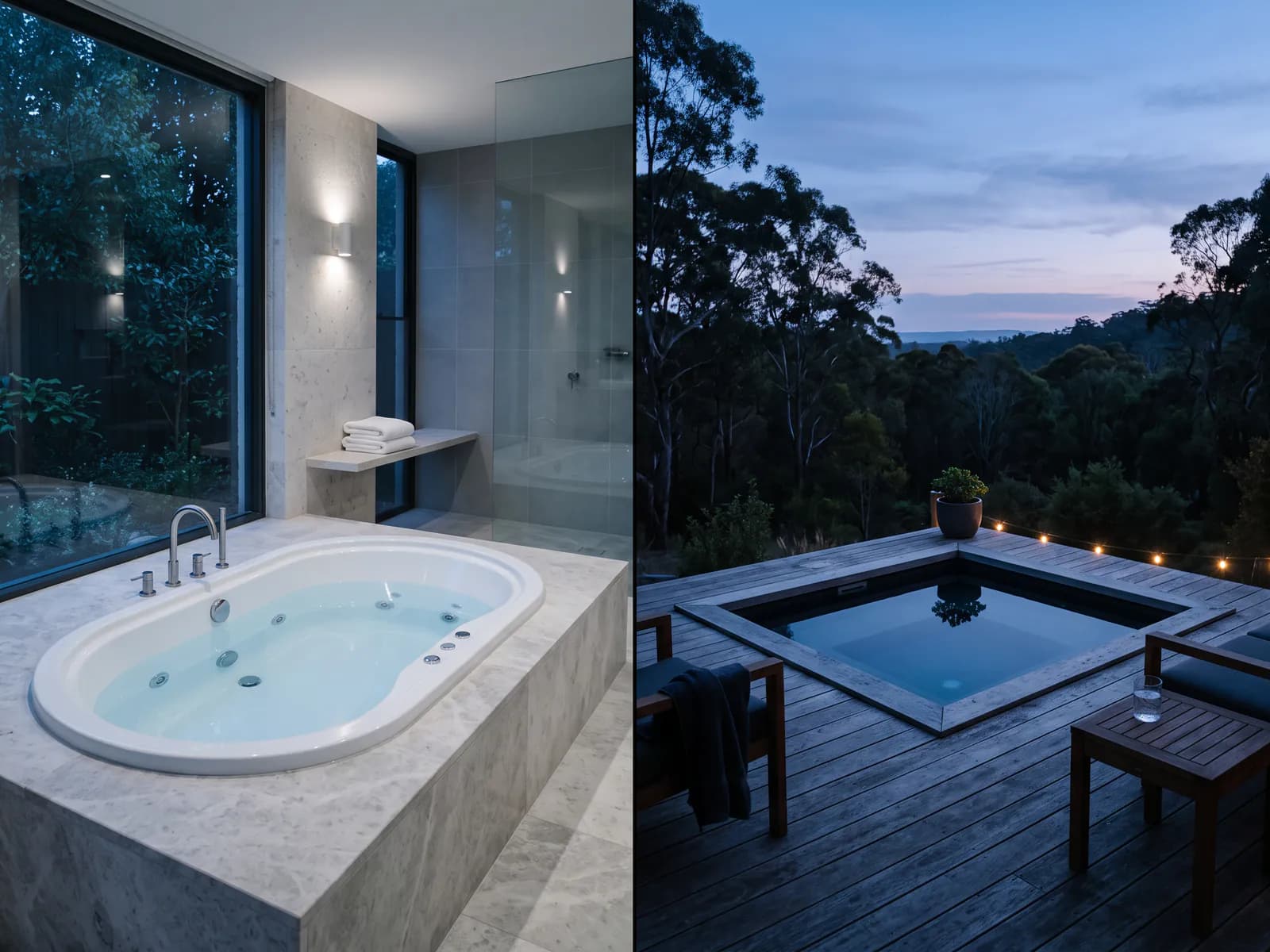
A whirlpool bath needs four things planned before tiling: a dedicated electrical connection with proper isolation, hot-water capacity sized to fill 200-plus litres, an access panel to reach the pump, and floor structure confirmed for the filled weight. Retrofit is possible in most UAE bathrooms; the access panel is the requirement everyone forgets.
Electrical: isolation and load
A whirlpool pump is an electrical appliance living in the wettest room of the house, and its connection is the one corner nobody may cut: a dedicated circuit from the distribution board, protected by an RCD, terminating in a proper isolation point outside the splash zones, installed and certified by a licensed electrician to local wiring regulations. Extension of the nearest socket is not an installation; it is a hazard with jets.
Load itself is modest, typical pumps draw around one horsepower, with larger and combination systems more, and the exact figure is per-model, so specify from the datasheet rather than folklore; heaters and lighting options add their own lines. In apartment renovations, confirm the distribution board has the spare way; in villas, the addition is rarely material to overall load but still deserves its dedicated way. Plan cable routes at first fix alongside the plumbing, before walls close, which is the entire theme of this guide: the whirlpool ranges publish per-model electrical specifications precisely so this paragraph becomes a checklist.
Hot water: sizing the fill
The unglamorous number that decides whirlpool happiness is litres of hot water available at fill time. A generous whirlpool holds 200 to 300 litres, filled typically half from the hot side, and a standard apartment's 50-to-80-litre storage heater delivers precisely one lukewarm disappointment. The bath's engine matters less than the water that feeds it.
Sizing options, in ascending ambition: a larger storage heater dedicated to the bathroom, twin heaters in series, a centralised system in villas, or instantaneous heating where power supply allows. UAE seasonality helps and hurts: summer cold lines run warm, flattering fill temperature for half the year, then winter reveals honest capacity. The practical test before buying: run the intended fill from existing heaters into the current tub and time what arrives warm. If the answer disappoints, budget heater capacity alongside the bath, not after it, and route the installation conversation through both plumber and electrician together, since capacity solutions usually involve each.
The access panel rule
Every whirlpool bath contains a pump, unions, non-return valves and electrical connections, and every one of those will want human attention someday: a seal, a blockage, a winter's disuse, a control fault. The access panel is how that day costs an hour instead of a demolition, and it is the requirement most UAE installations forget in the pursuit of a seamless tiled apron.
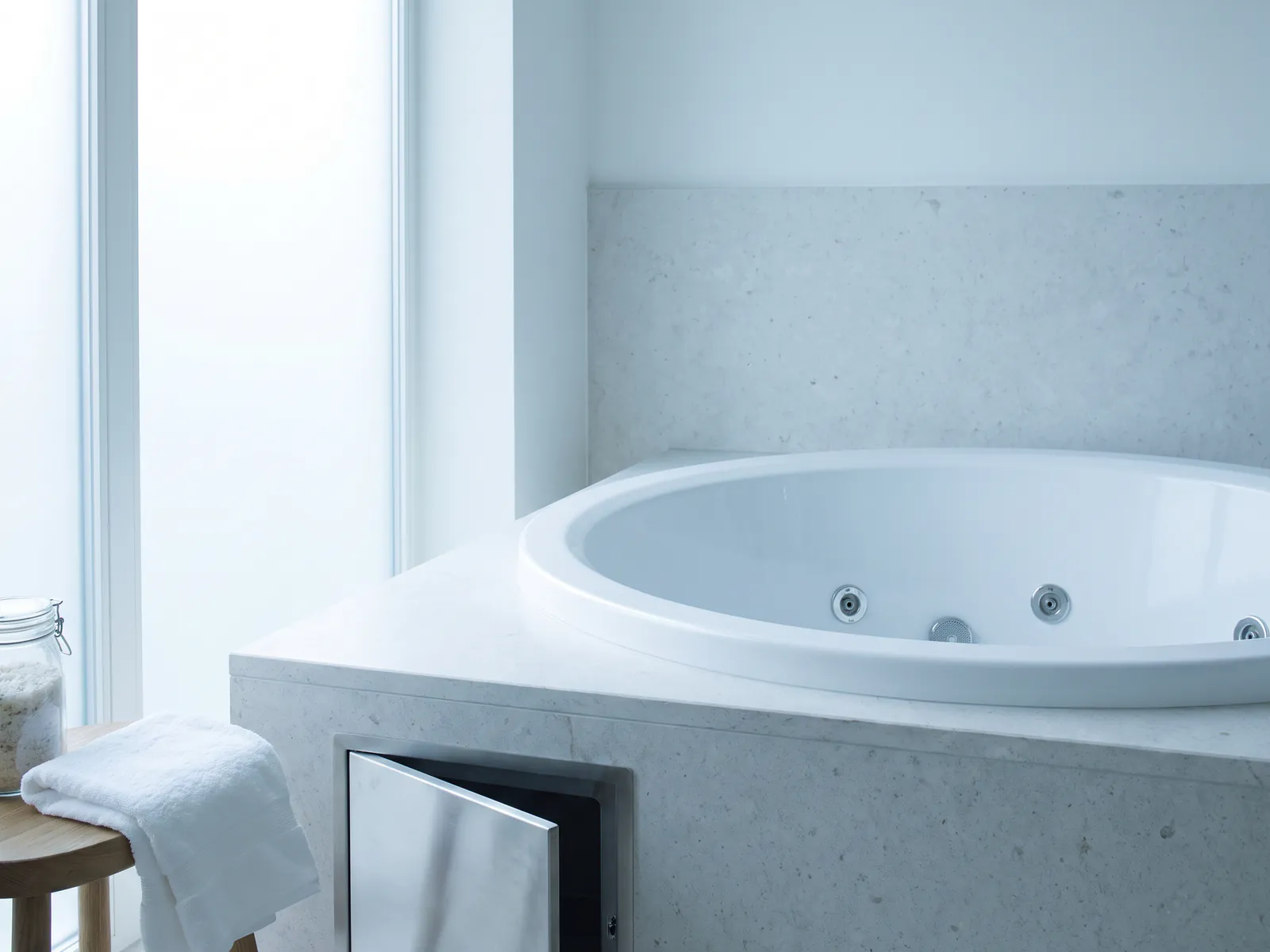
The rule: a removable panel, sized per the manufacturer's manual and positioned at the pump end, built as a discreet feature, a magnet-fixed tiled panel, a framed stone door, a push-latch marine hatch, rather than omitted for looks. Freestanding whirlpools solve it by design; built-in installations must design it in. The failure mode is well documented across the Emirates: a jet era ends, the pump needs a seal, and the quotation begins with cutting tiles. Insist on the panel in the fit-out drawings, photograph the connections before the apron closes, and file the manual; the bathroom planning guides treat serviceability as a design input for exactly this reason.
Weight and floor checks
A filled double whirlpool is roughly half a tonne of bath, water and bathers concentrated on a couple of square metres, and while modern concrete slabs carry that within normal design allowances, the check costs one question and prevents the expensive kind of surprise. Ground floors on grade pass by inspection; suspended slabs in villas and apartments pass on standard loadings in nearly all cases; the exceptions worth an engineer's look are lightweight mezzanines, timber-framed additions, penthouse insertions and any bath upgrade dramatically heavier than the original.
Distribution matters as much as totals: baths land their weight through feet and cradles, and the installation should bed them per manual so load spreads to structure rather than point-loading tiles. While the floor is open, plan the falls and the waste route, a 250-litre drain wants a properly sized, accessible trap, and waterproof beneath the whole footprint, since pumps and unions live there. None of this is exotic; all of it is sequence, decided before tiling with the rest of this guide's checklist.
Choosing jets: air, water, combined
Jet systems are the product decision inside the product. Water jets, pump-driven and adjustable, deliver directed massage with real pressure, targeting back and feet through positioned nozzles: the therapeutic choice. Air systems blow warmed air through floor perforations for an all-over champagne effervescence, gentler, quieter, and simpler to keep hygienic since lines purge dry. Combined systems fit both, the full menu at the top of the range.
Beyond type, judge the livable details: jet count matters less than placement, lumbar and foot zones earning their keep; pump noise varies audibly between models, worth hearing at a showroom; controls run from pneumatic buttons to electronic panels with lighting and heaters; and hygiene design, purge cycles and accessible lines, decides how the system smells in year three. Maintenance is honest but light, a jet-line flush monthly in soft use. Jaquar's whirlpool ranges span the three systems with per-model pump and jet specifications, which turns this choice from guesswork into a datasheet comparison inside one finish family.
Questions, answered.
A dedicated RCD-protected circuit with proper isolation, installed by a licensed electrician, yes. It is a fixed appliance in a wet room; ordinary sockets are not an option.
Most can: standard formats match normal tub footprints. The gating checks are hot-water capacity, the dedicated circuit, the access panel and, rarely, floor structure.
Model-dependent: quality pumps hum, budget ones announce themselves through the apron. Listen before buying and mount per manual; rigid contact with tiling amplifies noise.
A monthly flush: fill warm with a jet-line cleaner, run the system, drain and rinse. Air systems purge dry automatically, one of their hygiene advantages.
Global Classic Building Materials Trading LLC
Written from the Al Sajaa warehouse, Sharjah - slabs on racks, not stock photography. About the company